

What is a Manganese Sulfate Powder Pneumatic Conveying System? What Are Its Design Principles?
Understanding the Manganese Sulfate Powder Pneumatic Conveying System is crucial for industries that handle fine powders, particularly in the chemical and mining sectors. This system is designed to efficiently transport manganese sulfate, a critical raw material used in various applications such as battery production, fertilizers, and steel manufacturing. The effectiveness of this system hinges on its design principles, which ensure optimal performance, reliability, and safety.
Company Introduction: HeadPowder
HeadPowder, formally known as Shandong HeadPowder Engineering Co., Ltd., is a leading provider of specialized engineering solutions for powder handling systems. With headquarters in Shandong, China, the company has built a strong reputation for delivering high-quality, customized pneumatic conveying systems tailored to the unique needs of its clients. HeadPowder’s expertise lies in integrating advanced technology with practical application, ensuring that each system meets the specific requirements of the end-user.
Design Principles of the Manganese Sulfate Powder Pneumatic Conveying System
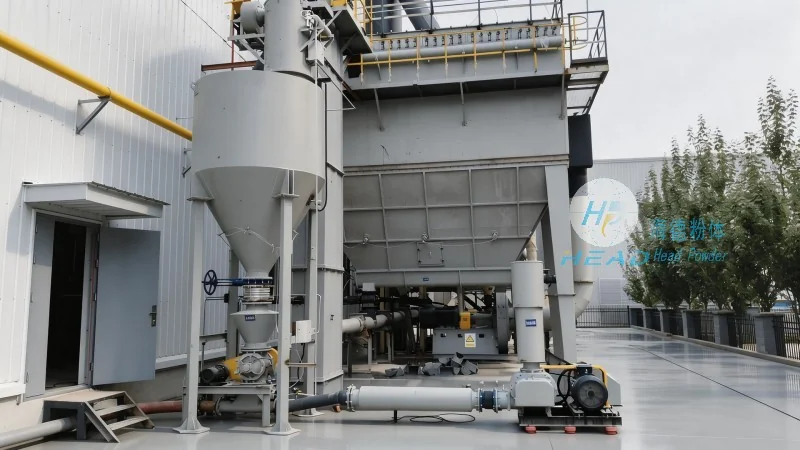
The core design principle of a pneumatic conveying system is to use air as the medium to transport powder particles through a pipeline. For manganese sulfate, which is a fine, hygroscopic powder, the system must be engineered to prevent caking, agglomeration, and moisture absorption. Key design considerations include the selection of appropriate air flow rates, pressure levels, and pipeline materials. The system typically consists of several components: a feed hopper to introduce the powder, a rotary valve or feeder to control the flow rate, a blower or compressor to generate the air pressure, and a pipeline network that transports the powder to the destination. The design also incorporates separation equipment, such as cyclones or filters, to separate the powder from the air at the end of the line, ensuring that the material is delivered in a clean and dry state.
Key Components and Their Functions
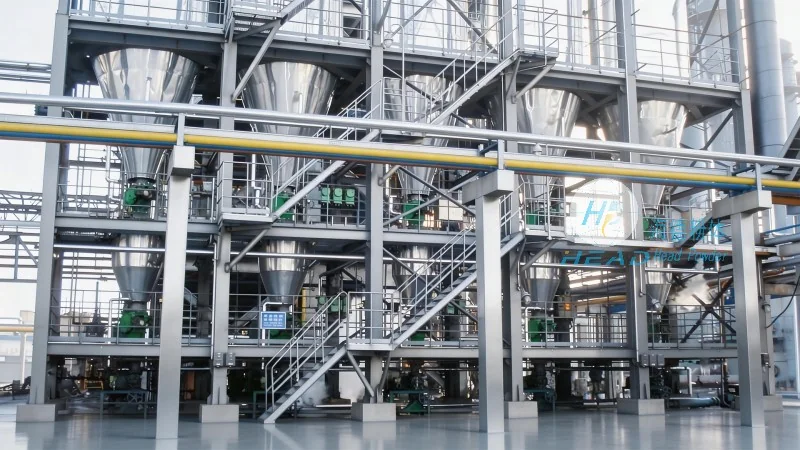
Each component of the manganese sulfate powder pneumatic conveying system plays a vital role in ensuring efficient operation. The feed hopper is designed to store and feed the powder in a controlled manner, preventing blockages and ensuring a steady supply. The rotary valve or feeder regulates the flow rate, preventing overloading of the system and maintaining consistent air pressure. The blower or compressor generates the necessary air pressure to move the powder through the pipeline. The pipeline network, often made of stainless steel or other corrosion-resistant materials, is designed to withstand the abrasive nature of the manganese sulfate powder and prevent material buildup. The separation equipment, such as cyclones, uses centrifugal force to separate the powder from the air, ensuring that the powder is collected in a clean and dry form, ready for further processing or storage.
Advantages of the Pneumatic Conveying System for Manganese Sulfate
Compared to traditional mechanical conveying methods, the pneumatic conveying system offers several advantages for handling manganese sulfate. These include the ability to transport the powder over long distances without the need for intermediate transfer points, reducing the risk of contamination and material loss. The system is also more flexible, allowing for changes in the route or destination without major modifications. Additionally, the system can handle varying flow rates and powder characteristics, making it suitable for different production scales. The use of air as the conveying medium also minimizes the risk of dust explosions, as the powder is contained within the pipeline and separated from the air at the end of the line. This enhances safety in the workplace and reduces the need for additional dust control measures.

Application Examples and Industry Impact
The manganese sulfate powder pneumatic conveying system is widely used in various industries where manganese sulfate is a key ingredient. In the battery industry, for example, the system is used to transport manganese sulfate to the production line, ensuring a consistent supply of raw material for battery manufacturing. In the fertilizer industry, the system is used to blend manganese sulfate with other nutrients, creating customized fertilizers. In the steel industry, the system is used to add manganese sulfate to the steel-making process, improving the quality and properties of the final product. The system’s ability to handle fine powders efficiently and safely has made it an essential component in many industrial processes, contributing to increased productivity and reduced operational costs.
Conclusion
In conclusion, the manganese sulfate powder pneumatic conveying system is a sophisticated engineering solution that combines advanced design principles with practical application. HeadPowder, with its expertise in powder handling systems, has developed systems that meet the specific needs of industries handling manganese sulfate. The system’s ability to transport fine powders efficiently, safely, and reliably makes it an indispensable tool in modern industrial operations. As industries continue to demand higher efficiency and productivity, the pneumatic conveying system remains a critical component in the processing of manganese sulfate and other fine powders.