

Working Principle and Features of Positive and Negative Electrode Material Pneumatic Conveying Lines
Shandong HeadPowder Engineering Co., Ltd., commonly known as headpowder, specializes in the design, manufacturing, and installation of advanced material handling systems, including pneumatic conveying lines for battery electrode materials. With a focus on precision and efficiency, the company provides customized solutions tailored to the unique requirements of the lithium-ion battery industry.
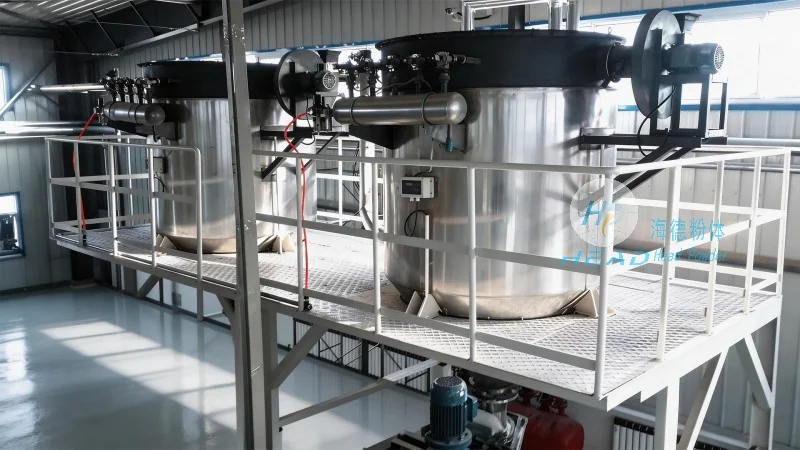
At the core of headpowder's offerings is the pneumatic conveying line for positive and negative electrode materials. This system is engineered to transport raw materials such as graphite, lithium iron phosphate, and other active ingredients with high accuracy and minimal loss, ensuring optimal performance in battery production processes.
Working Principle of the Pneumatic Conveying Line
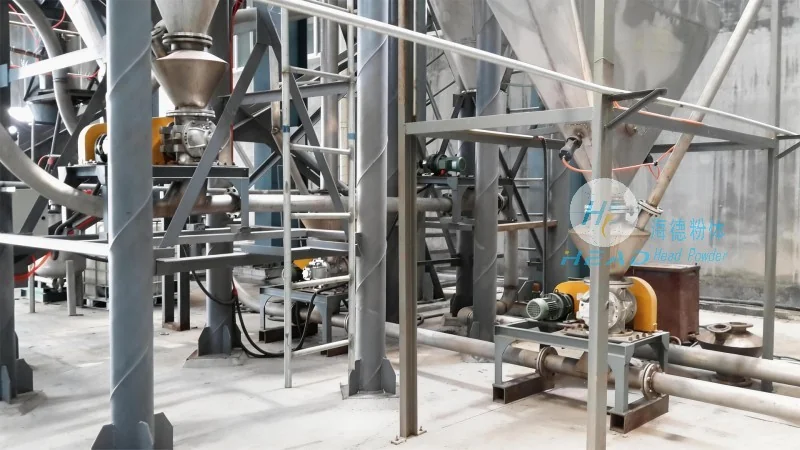
The pneumatic conveying line operates on the principle of air flow to move bulk materials. The system typically consists of a hopper, a feeder, a conveying pipe, and a receiver. The process begins when the material is fed from the hopper into the feeder, which controls the flow rate. Compressed air is then introduced into the conveying pipe, creating a pressure differential that propels the material through the system. The material is carried by the air stream, and the receiver collects the material at the end of the line. This method eliminates the need for mechanical components like belts or screws, reducing maintenance and increasing operational reliability.
Key Features of the Pneumatic Conveying Line
Several distinct features make the pneumatic conveying line for electrode materials an ideal choice for battery manufacturers. Firstly, it offers high efficiency in material transport, with the ability to handle a wide range of particle sizes and densities. The system is also highly flexible, allowing for easy integration into existing production lines and modifications to accommodate changes in material types or production volumes. Another significant advantage is its ability to maintain material purity, as the enclosed system prevents contamination from external sources. Additionally, the pneumatic conveying line is designed for low energy consumption, contributing to cost-effective operations and reduced environmental impact. The system's compact design also saves space in production facilities, making it suitable for both large-scale and small-scale battery manufacturing plants.
Customization and Application
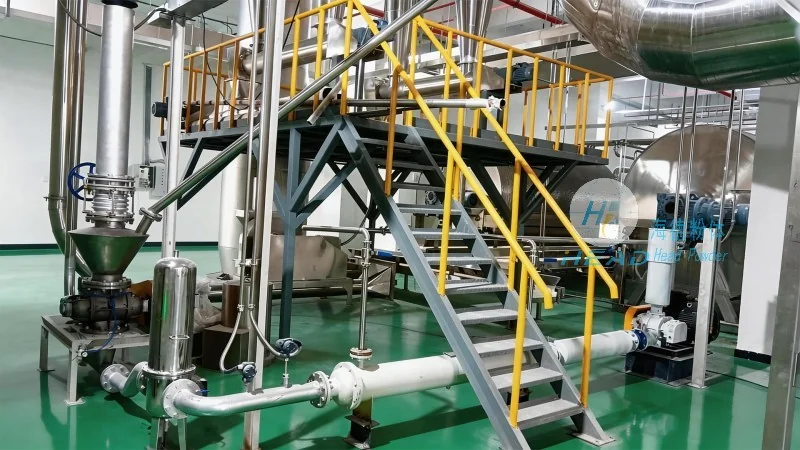
headpowder understands that each battery production facility has unique operational needs. Therefore, the company offers customized pneumatic conveying solutions that are tailored to specific requirements. This includes adjustments to the conveying speed, pressure levels, and material handling capacity to match the production rate of the battery cells. The company's engineers work closely with clients to assess their material characteristics, such as particle size distribution and moisture content, to ensure the most effective conveying method is selected. Whether for large-scale production of lithium-ion batteries or specialized applications in research and development, the pneumatic conveying line provides a reliable and efficient solution.
Reliability and Maintenance
Reliability is a critical factor in battery manufacturing, as any downtime can impact production schedules and product quality. The pneumatic conveying line from headpowder is designed with durability and low maintenance in mind. The use of high-quality materials for the conveying pipes and components ensures long service life, while the absence of moving parts reduces the risk of mechanical failure. Regular maintenance is straightforward, with easy access to components for cleaning and inspection. The company provides comprehensive support, including training for operators and maintenance personnel, to ensure the system operates at peak performance. This commitment to reliability helps battery manufacturers maintain consistent production and meet market demands efficiently.