

[W]Working Principle and Features of Light Calcium Powder Material Pneumatic Conveying System
Light calcium powder, also known as precipitated calcium carbonate (PCC), is a widely used industrial material in various sectors such as paper, plastics, and coatings. The efficient and reliable transportation of this fine powder is crucial for maintaining production efficiency and product quality. Pneumatic conveying systems have emerged as an effective solution for handling light calcium powder, offering advantages over traditional methods like belt conveyors or bucket elevators. This article explores the working principle and key features of a light calcium powder material pneumatic conveying system, providing insights into its operational mechanics and benefits.
Overview of Light Calcium Powder Pneumatic Conveying Systems
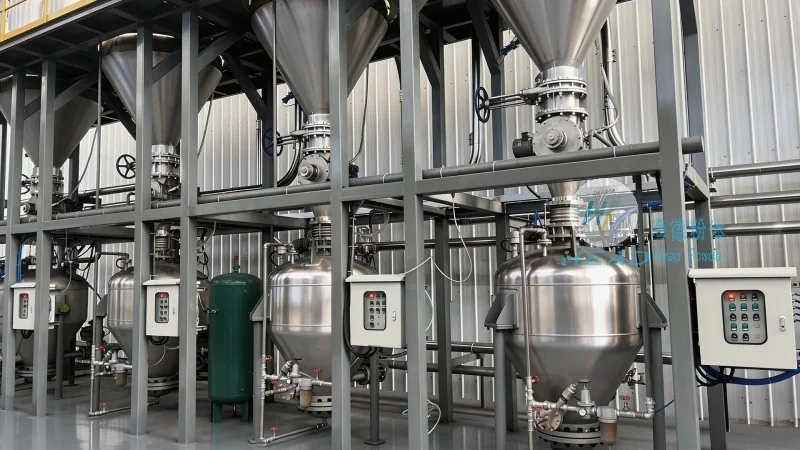
A light calcium powder pneumatic conveying system is a closed-loop system designed to transport dry powders, including light calcium powder, through a network of pipes using air or gas as the conveying medium. The system typically consists of several key components: a feeding device, a conveying line, a separation unit, and a discharge outlet. The feeding device ensures a consistent and controlled flow of the powder into the system, while the conveying line transports the material from the source to the destination. The separation unit, often a cyclone or a bag filter, separates the powder from the air stream, allowing the powder to be collected and the air to be recycled or discharged. This closed-loop design minimizes dust emissions and ensures environmental compliance.
The Working Principle of the Pneumatic Conveying System
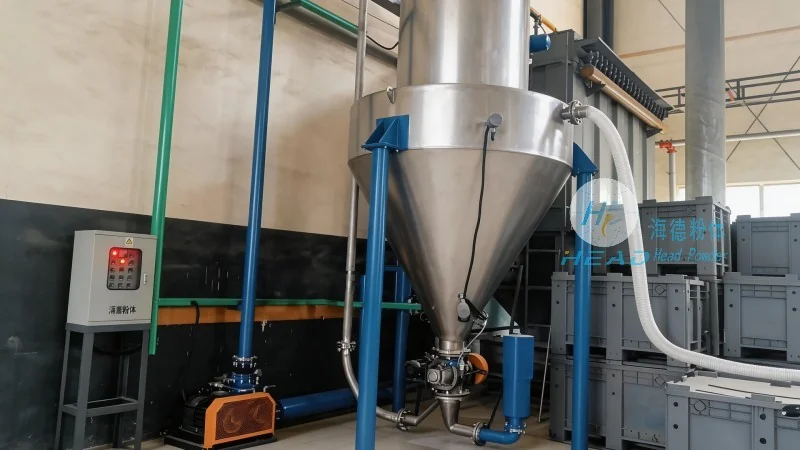
The core working principle of a light calcium powder pneumatic conveying system involves the use of differential pressure to move the powder through the pipeline. There are two main types of pneumatic conveying systems: pressure and vacuum systems. In a pressure system, a positive pressure is generated at the discharge end, pushing the powder through the pipeline. The system typically includes a blower or a positive displacement pump to create the pressure differential. The powder is fed into the pipeline at the inlet, and the high-pressure air forces the powder to move along the pipe. The separation unit at the receiving end uses centrifugal force to separate the powder from the air, collecting the powder in a hopper or storage tank. In a vacuum system, a negative pressure is created at the inlet, drawing the powder into the pipeline. The system uses a vacuum pump to generate the suction, and the powder is transported from the source to the destination as the air flows through the pipe. Both systems rely on the principle of air-powder mixture to achieve efficient transportation.
Key Features and Advantages of the System
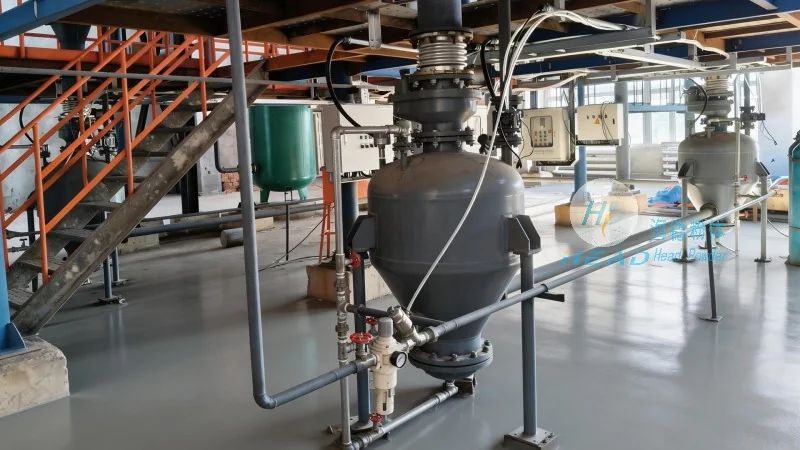
The light calcium powder pneumatic conveying system offers several distinct features and advantages that make it an attractive option for industrial applications. First, it provides a dust-free and clean operation, as the system is enclosed and the powder is contained within the pipeline. This reduces the risk of dust exposure for operators and minimizes environmental pollution. Second, the system is highly flexible and can be easily integrated into existing production lines. The modular design allows for adjustments in the conveying distance, capacity, and layout without major modifications. Third, the system offers high efficiency and low energy consumption compared to traditional methods. The use of air as the conveying medium reduces the need for mechanical components like belts or buckets, which can wear out and require frequent maintenance. Fourth, the system is capable of handling a wide range of powder characteristics, including varying particle sizes, moisture content, and bulk density. This adaptability makes it suitable for different light calcium powder applications. Additionally, the system provides consistent and reliable performance, ensuring a steady flow of material to downstream processes. The closed-loop design also helps maintain the quality of the powder by preventing contamination from external sources.
Application Scenarios and Operational Considerations
Light calcium powder pneumatic conveying systems are commonly used in various industrial settings, particularly in the production of paper, plastics, and coatings. In the paper industry, the system is used to transport light calcium powder from storage silos to the papermaking machines, ensuring a continuous supply of the material. In the plastics industry, the system is used to convey the powder to mixing and extrusion equipment, where it is incorporated into plastic formulations. In the coatings industry, the system is used to transport the powder to mixing tanks, where it is blended with other ingredients to form paint or coating formulations. Operational considerations for the system include the selection of appropriate air velocity, which must be high enough to prevent powder settling but low enough to avoid excessive pressure drop. The system also requires regular maintenance, including cleaning of the conveying line and the separation unit, to ensure optimal performance. Proper sizing of the components, such as the blower or vacuum pump, is crucial to match the system's capacity with the required conveying rate. Additionally, the system should be equipped with safety features, such as pressure relief valves and dust collection systems, to prevent accidents and ensure safe operation.
Conclusion
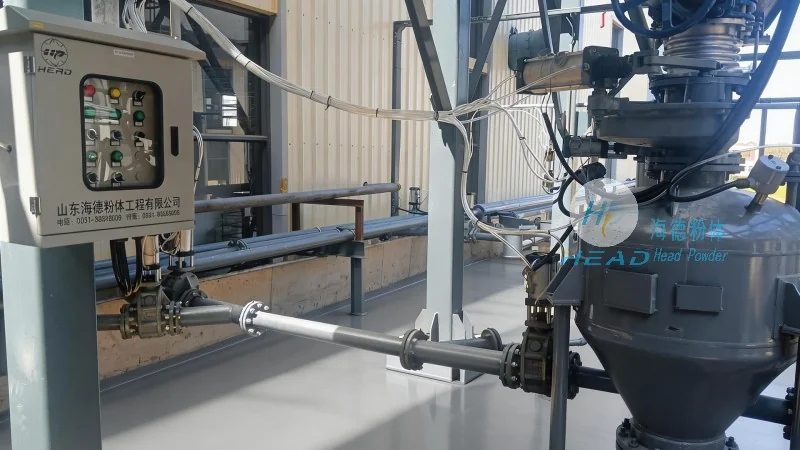
In conclusion, the light calcium powder material pneumatic conveying system is a sophisticated and efficient solution for handling fine powders like light calcium powder. Its working principle, based on differential pressure and air-powder mixture, enables reliable and dust-free transportation. The system's key features, including flexibility, low energy consumption, and adaptability, make it a preferred choice for various industrial applications. By understanding the operational mechanics and considerations of the system, industries can optimize their material handling processes and improve overall production efficiency. As a leading provider in this field, Shandong HeadPowder Engineering Co., Ltd. specializes in designing and manufacturing customized pneumatic conveying systems tailored to the specific needs of light calcium powder applications, ensuring high performance and durability.