

Working Principle and Features of a Salt Material Pneumatic Conveying Line
In the food processing industry, an efficient, hygienic, and reliable material conveying system is crucial for ensuring smooth production processes. For the conveying of dry granular materials like edible salt, a pneumatic conveying line serves as an advanced technical solution, increasingly adopted by more enterprises. This article delves into the working principle and core features of a salt material pneumatic conveying line, helping readers gain a comprehensive understanding of its application value.
Working Principle of a Salt Material Pneumatic Conveying Line
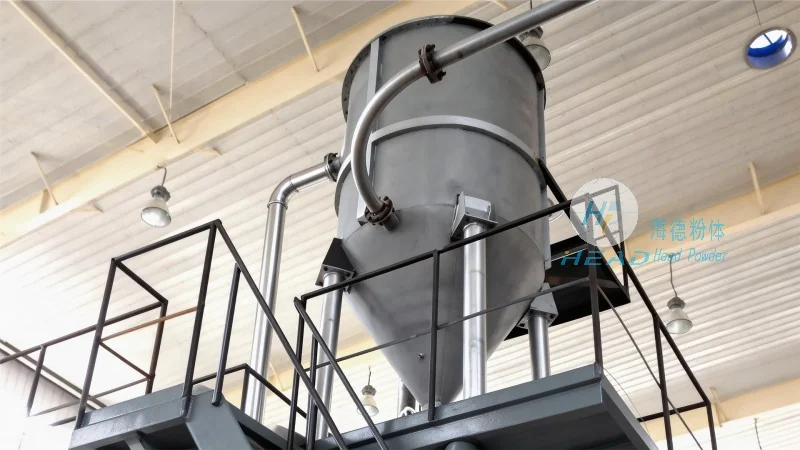
A pneumatic conveying line uses compressed air or gas as a power source to transport solid materials (such as edible salt) from the starting point to the endpoint. Its working principle is primarily based on aerodynamics, where high-speed airflow is formed inside the conveying pipe to suspend material particles in the air stream, moving with the airflow. Specifically, the system typically consists of feeding devices, conveying pipes, air source equipment (such as blowers or compressors), separation devices, and receiving equipment. When materials are fed into the conveying pipe by the feeding device, compressed air generated by the air source equipment enters the pipe, mixing with the material to form a gas-solid two-phase flow. During the conveying process, the airflow carries material particles forward along the pipe. Upon reaching the endpoint, the separation device separates the material from the air, collects the material, and the air is discharged through a filter. This non-contact conveying method effectively avoids contact between the material and the external environment, ensuring the hygiene and purity of edible salt while reducing material loss during the conveying process.
Core Features of a Salt Material Pneumatic Conveying Line
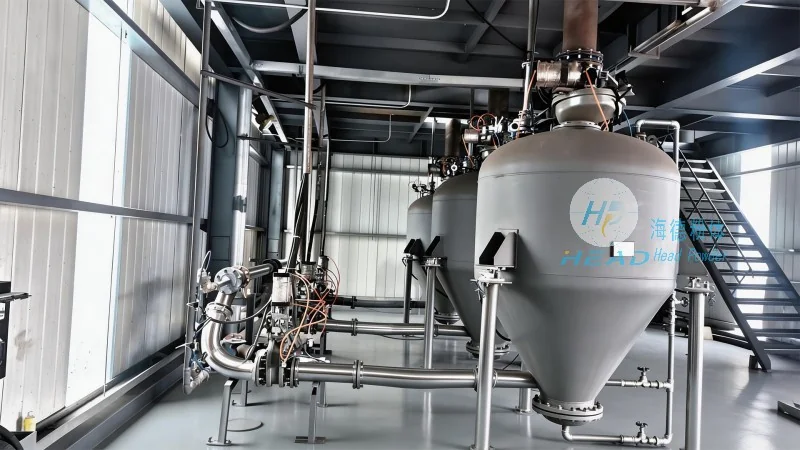
Compared to traditional conveying methods (such as belt conveyors, bucket elevators, etc.), a salt material pneumatic conveying line has numerous significant features, making it widely applicable in the food industry. First, hygiene and cleanliness is its most outstanding feature. Since the material is completely isolated from the external environment during conveying, it avoids contamination from dust, impurities, or microorganisms, especially suitable for food processing areas with high hygiene requirements. Second, high conveying efficiency enables large-capacity, long-distance material transport, reducing intermediate transfer times in the production process and improving production efficiency. Additionally, the pneumatic conveying line has flexibility and adaptability, allowing adjustment of conveying speed and flow according to production needs, suitable for different specifications of edible salt particles. Meanwhile, the system is compact with small floor space, facilitating installation and layout in food processing plants. Finally, low maintenance cost is achieved as there are no mechanical friction components, reducing equipment failures and maintenance frequency, and lowering long-term operating costs. These features collectively make the salt material pneumatic conveying line an ideal material conveying device for modern food processing enterprises.

About Shandong HeadPowder Engineering Co., Ltd.
As a professional industrial equipment manufacturer, Shandong HeadPowder Engineering Co., Ltd. (referred to as headpowder) specializes in providing high-quality pneumatic conveying solutions for the food processing industry. The company is located in Shandong, China, with advanced production technology and rich industry experience, dedicated to providing customized salt material pneumatic conveying equipment for customers. HeadPowder consistently focuses on customer needs, emphasizes product quality and technological innovation, ensuring that every conveying device meets the strict standards of the food industry. Whether for small food processing plants or large enterprises, HeadPowder can provide pneumatic conveying systems that meet their production needs, helping enterprises improve production efficiency and ensure product quality.