

Principle and Working Scene Characteristics of Trilithium Lithium-Ion Pneumatic Conveying Equipment
Shandong HeadPowder Engineering Co., Ltd., headquartered in Shandong, China, is a leading enterprise specializing in the research, development, and manufacturing of advanced pneumatic conveying equipment. With a strong focus on innovation and quality, the company has established itself as a trusted provider of customized solutions for diverse industrial sectors. The company's facilities are equipped with state-of-the-art technology and skilled professionals, enabling the production of high-performance equipment that meets international standards.
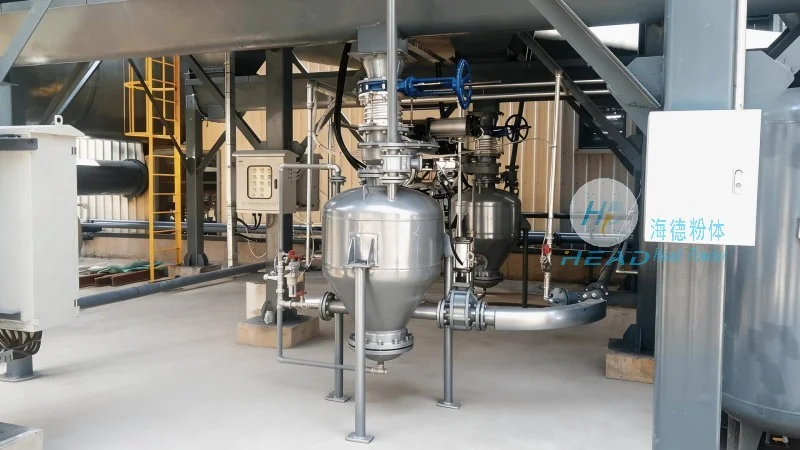
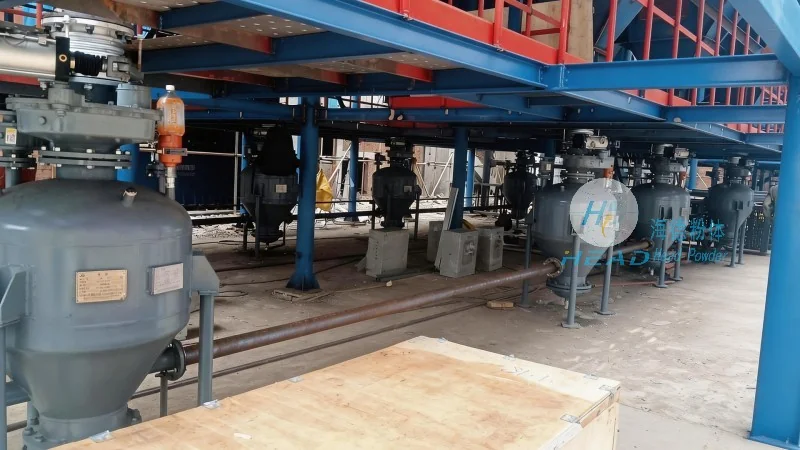
Principle of Pneumatic Conveying Systems
Pneumatic conveying systems operate by utilizing a gas stream, commonly air, to transport bulk materials through a closed pipeline. The core principle revolves around creating a pressure differential that propels the material from the source to the destination. Positive pressure systems, where air is forced into the pipeline, are suitable for applications requiring high material flow rates and long-distance transport. Negative pressure systems, which use suction to draw material into the pipeline, are ideal for handling fine powders and materials that are sensitive to pressure changes. The efficiency of pneumatic conveying depends on factors such as air velocity, material properties, and pipeline design. Proper air flow management is crucial to prevent material deposition and ensure consistent transport. This technology offers advantages over traditional methods like belt conveyors, including reduced dust generation, lower maintenance costs, and the ability to handle materials that are difficult to transport mechanically.
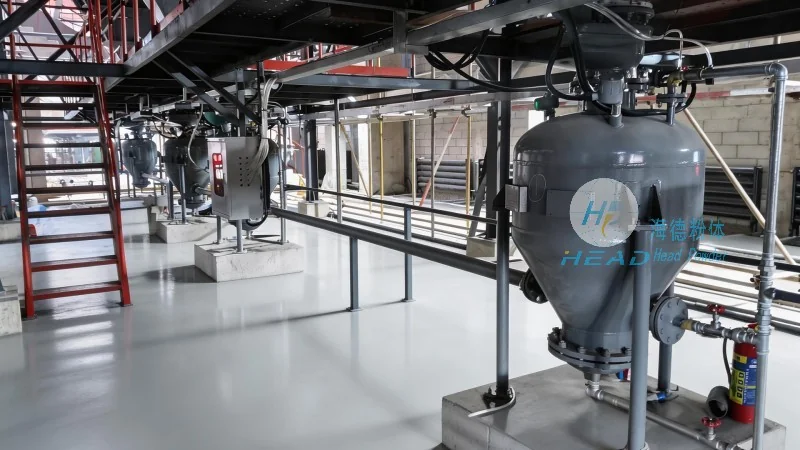
Features of Trilithium Lithium-Ion Pneumatic Conveying Equipment
Trilithium lithium-ion pneumatic conveying equipment is specifically engineered to handle the fine powders used in lithium-ion battery production, particularly the cathode materials like LiNiMnCoO₂. These systems are designed to address the unique challenges associated with lithium-ion battery materials, including high reactivity, dust explosion risks, and the need for precise control over material flow. Key features include advanced air flow control mechanisms that maintain consistent pressure and velocity, ensuring stable material transport. The equipment is equipped with dust collection and filtration systems to prevent contamination and comply with safety regulations. Explosion-proof designs are incorporated to mitigate the risk of dust explosions, which are a significant concern in battery material handling. Additionally, the systems are built with materials that are resistant to corrosion and chemical exposure, ensuring long-term durability in harsh industrial environments. The equipment also offers adjustable parameters, allowing operators to optimize performance based on the specific material being transported and the production requirements.
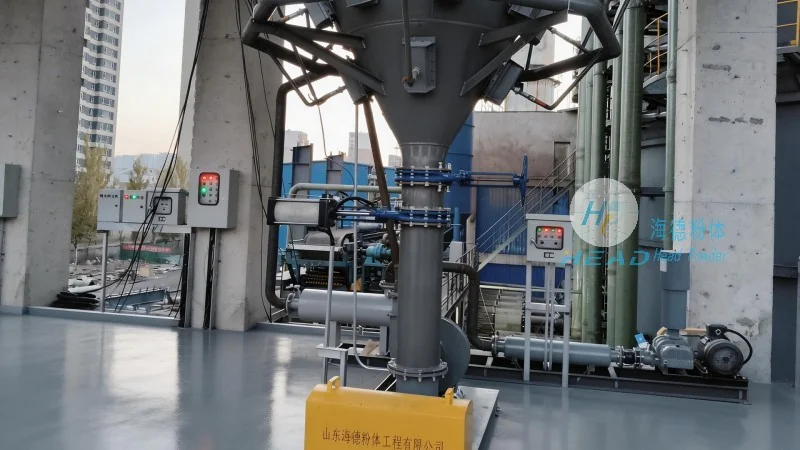
Working Scene Characteristics and Applications
The working scene characteristics of trilithium lithium-ion pneumatic conveying equipment are closely aligned with the operational demands of lithium-ion battery manufacturing facilities. These systems are typically integrated into production lines where raw materials are processed and transported to various stages, such as mixing, coating, and cell assembly. The equipment operates in environments that require stringent contamination control, as even minute impurities can impact battery performance and lifespan. In industrial settings, the equipment is designed to handle large volumes of material with minimal downtime, supporting continuous production processes. The systems are adaptable to different production scales, from small-scale research and development to large-scale commercial production, making them suitable for various manufacturing environments. For example, in a battery cell factory, the equipment may be used to transport cathode powders from storage silos to mixing equipment, ensuring a steady supply of material for the production line. The working scene also includes considerations for space optimization, as the equipment is often installed in confined areas within the factory, requiring compact and efficient designs. Furthermore, the systems are integrated with monitoring and control systems to provide real-time data on material flow and system performance, enabling operators to make informed decisions and maintain optimal operation.