

Operation Process and Working Principle of Crystal Powder Conveying Lines
Crystal powder conveying lines are essential in industrial settings for the efficient transportation of crystalline powders. These systems are designed to handle materials with specific characteristics, such as high moisture content, hygroscopic properties, or delicate particle structures. The operation of such lines involves a series of integrated components and processes that ensure safe, reliable, and efficient material handling. This article will explore the operation process and working principles of crystal powder conveying lines, providing insights into how they function and the key factors that contribute to their effectiveness.
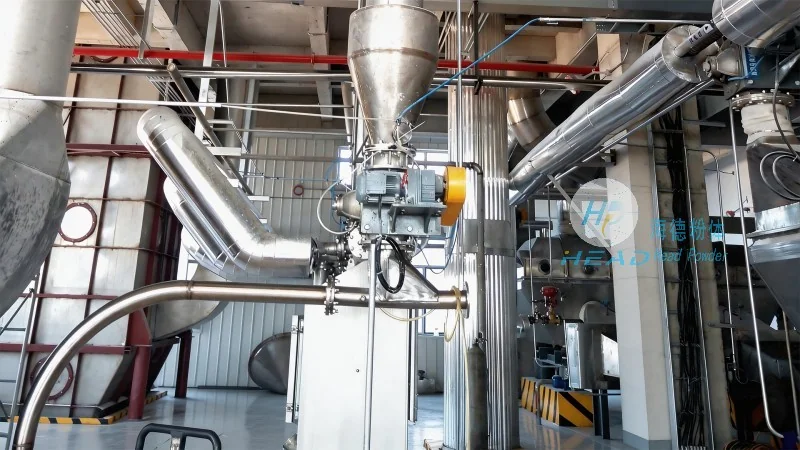
Company Overview: Shandong HeadPowder Engineering Co., Ltd.
Headpowder, the manufacturer behind these advanced conveying systems, is a leading company in the field of powder handling technology. Based in Shandong, China, Headpowder specializes in the design, manufacturing, and installation of customized powder conveying solutions. With years of experience and a commitment to innovation, the company has developed state-of-the-art crystal powder conveying lines that meet the diverse needs of various industries, including pharmaceuticals, chemicals, food processing, and more. The company’s expertise lies in understanding the unique challenges of handling crystalline powders and tailoring solutions to optimize performance and safety.
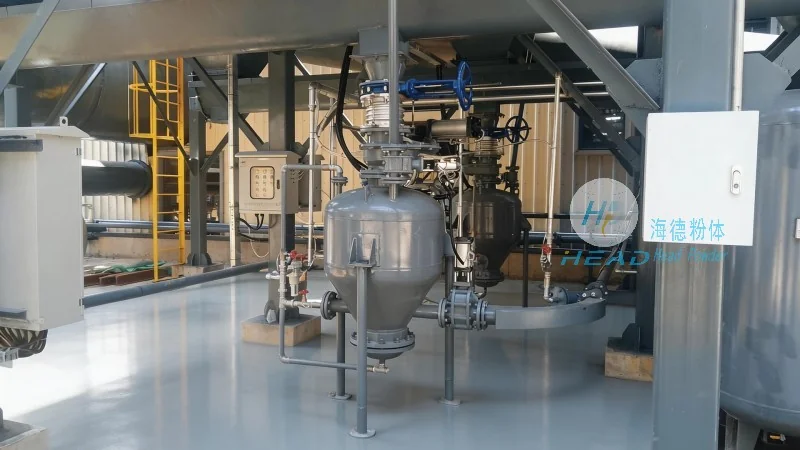
Key Components of Crystal Powder Conveying Lines
Crystal powder conveying lines typically consist of several critical components that work in harmony to transport materials. These components include hoppers for material storage, feeders to control the flow rate, conveying mechanisms such as screw conveyors or pneumatic systems, and control systems to regulate operation. The hoppers are designed to minimize material degradation by reducing exposure to air and moisture, while the feeders ensure a consistent and controlled feed of powder into the conveying system. The conveying mechanism, whether mechanical or pneumatic, is responsible for moving the powder from the source to the destination. In mechanical systems, screw conveyors or belt conveyors are commonly used, while pneumatic systems employ air pressure to transport the material through pipelines. The control systems, often integrated with sensors and automation technology, monitor the flow rate, pressure, and other parameters to maintain optimal operation and prevent issues like blockages or overloading.
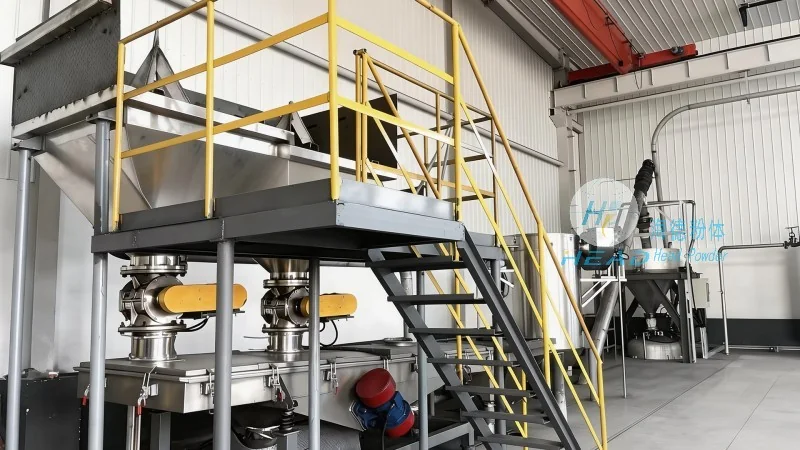
Operation Process of Crystal Powder Conveying Lines
The operation process of a crystal powder conveying line begins with the loading of material into the hopper. The material is then fed into the conveying mechanism at a controlled rate, ensuring that the system operates within its design capacity. The conveying mechanism moves the powder through the pipeline to the discharge point, where it is collected in a receiving container or directly fed into the next processing stage. Throughout the operation, the control system continuously monitors the system's performance, adjusting parameters as needed to maintain stable operation. For example, if the flow rate decreases due to a blockage or reduced material level, the control system may increase the feed rate or alert operators to address the issue. The process is designed to be continuous and automated, minimizing manual intervention and maximizing efficiency. Regular maintenance and cleaning are also essential to prevent material buildup and ensure the longevity of the system.
Working Principles of Crystal Powder Conveying Lines
The working principles of crystal powder conveying lines are based on the physics of material flow and the design of the conveying components. For mechanical systems, the screw conveyor operates by rotating a screw within a tube, pushing the powder forward. The pitch and speed of the screw determine the flow rate and pressure within the system. The design of the screw, including the number of flights and their angle, is optimized to handle the specific characteristics of the crystalline powder, such as particle size and density. Pneumatic systems, on the other hand, use compressed air to create a flow of air and powder through the pipeline. The pressure and flow rate of the air are carefully controlled to ensure that the powder is transported without causing excessive pressure drops or particle degradation. The pipeline design, including the diameter and bends, is critical to maintaining the flow and preventing blockages. The control system plays a vital role in maintaining the stability of the conveying process by adjusting the air pressure or feed rate based on real-time feedback from sensors. This feedback loop ensures that the system operates efficiently and safely, even with varying material conditions.

Benefits and Applications of Crystal Powder Conveying Lines
Crystal powder conveying lines offer numerous benefits to industries that handle crystalline materials. These systems enhance operational efficiency by reducing labor costs and minimizing downtime. The automated control systems ensure consistent material flow, which is crucial for maintaining product quality and meeting production targets. Additionally, the design of these lines minimizes material degradation, preserving the integrity of the crystalline powder and reducing waste. The systems are also designed for safety, with features such as explosion-proof components and dust collection systems to prevent hazards. The applications of crystal powder conveying lines are widespread, including the pharmaceutical industry, where precise handling of active pharmaceutical ingredients (APIs) is essential, the chemical industry for transporting raw materials and intermediates, and the food processing industry for handling ingredients like sugar or spices. Each application requires a customized solution tailored to the specific material and process requirements.