

Operation Process and Working Principle of Powder Pneumatic Conveying in Dust Collection Stations
Shandong HeadPowder Engineering Co., Ltd., a leading enterprise in the powder handling industry, specializes in the design, installation, and maintenance of advanced powder transport systems. The company's expertise focuses on optimizing material movement within industrial dust collection stations, ensuring efficient and reliable operation. This article provides a detailed overview of the operation process and working principle of powder pneumatic conveying systems, highlighting key components and operational dynamics to enhance understanding of this critical industrial technology.
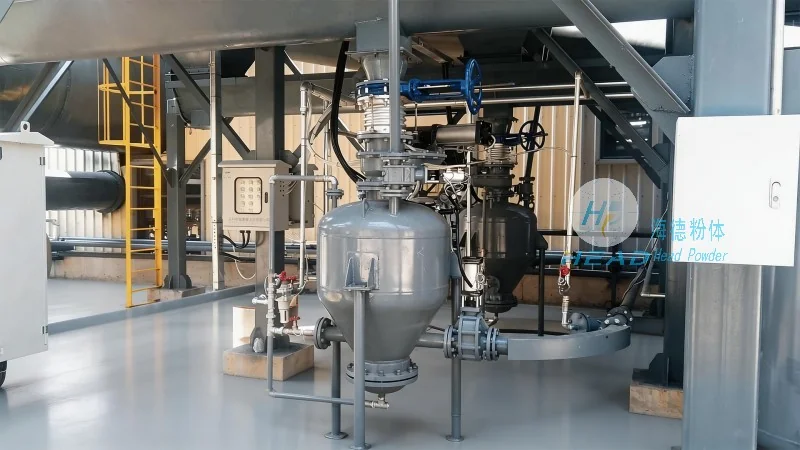
Working Principle of Powder Pneumatic Conveying
Powder pneumatic conveying in dust collection stations operates on the principle of using compressed air to transport particulate materials. The system typically integrates a dust collector, a conveying pipeline, and a receiving hopper. When the dust collector captures airborne particles from industrial processes, the collected powder accumulates in a hopper. The feeder mechanism then releases a controlled amount of powder into the conveying line. Compressed air is introduced at the inlet of the pipeline, creating a pressure differential that draws the powder particles into the air stream. As the air and powder mixture travels through the pipeline, the particles remain suspended due to the air velocity, enabling smooth and continuous transport. The receiving end deposits the transported powder into a storage or processing unit. The efficiency of this process depends on maintaining appropriate air velocity and pressure to prevent particle settling or system blockages.
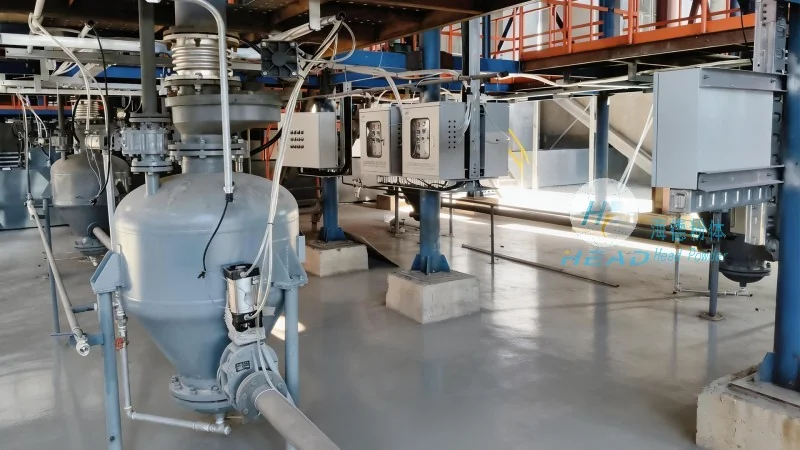
Operation Process of the System
The operation process of a powder pneumatic conveying system in a dust collection station involves sequential, coordinated steps. Initially, the dust collector continuously captures particulate matter, filling the hopper to a predetermined level. Once the hopper reaches the threshold, the feeder activates, releasing powder into the conveying line. Simultaneously, compressed air is supplied to the inlet, initiating the conveying action. The air stream then transports the powder through the pipeline, ensuring uniform distribution and minimal material loss. At the receiving end, the powder is deposited into a designated container or processing equipment. The system incorporates sensors and control valves to monitor parameters such as pressure, flow rate, and particle size, allowing real-time adjustments to maintain optimal performance. Regular maintenance, including cleaning of the conveying line and checking air pressure, is essential to prevent blockages and ensure long-term reliability. The entire process is automated to reduce human intervention and enhance operational efficiency.
Key Components and Their Roles
Several critical components contribute to the effective operation of a powder pneumatic conveying system in dust collection stations. The dust collector serves as the primary source of material, capturing particles and directing them into the system. The feeder mechanism, often a rotary valve or screw feeder, controls the flow rate of powder into the conveying line, ensuring consistent operation. The conveying pipeline, typically made of stainless steel or other corrosion-resistant materials, is designed to withstand pressure and particle impact. The air compressor provides the necessary compressed air, with adjustable pressure and flow rate to match system requirements. The receiver or storage hopper collects the transported powder, and the control system manages all operational parameters. Each component plays a vital role in maintaining system efficiency and preventing operational issues.
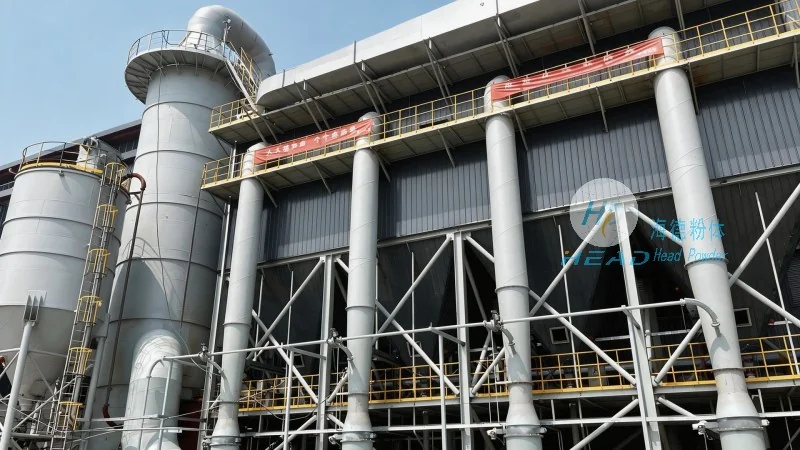
Advantages and Considerations
Powder pneumatic conveying systems in dust collection stations offer several advantages, including high transport efficiency, minimal material loss, and the ability to handle a wide range of particle sizes. The system is also relatively compact, requiring less floor space compared to traditional mechanical conveying methods. However, considerations include the need for proper air filtration to prevent dust accumulation and the importance of regular maintenance to avoid blockages. Additionally, system performance is dependent on the powder's properties, such as moisture content and particle size distribution. Shandong HeadPowder Engineering Co., Ltd. specializes in customizing these systems to meet specific industrial needs, ensuring optimal performance and reliability. The company's commitment to quality and innovation has established it as a trusted provider in the field of powder handling solutions.