

Operation Process and Working Principle of Pneumatic Conveying Equipment for Graphite Materials
Graphite, a widely utilized material in industries such as refractories, batteries, and lubricants, often requires efficient handling and transportation. Pneumatic conveying equipment provides a reliable solution for moving graphite materials, particularly in the form of lumps or crushed particles. This article delves into the operation process and working principle of such equipment, detailing its key components and operational dynamics to enhance understanding of its functionality.
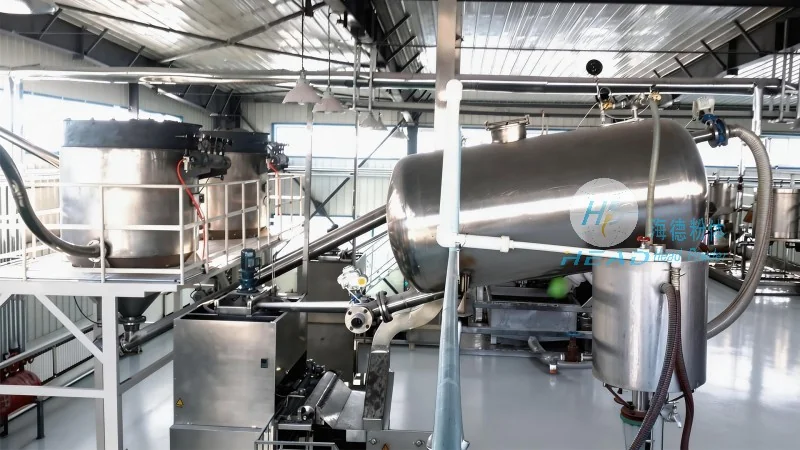
Key Components of Pneumatic Conveying Systems
The pneumatic conveying system for graphite materials comprises several critical components that collaborate to ensure smooth material transport. These include the material hopper, feeder, air compressor, conveying pipeline, and discharge unit. Each component is essential for the system's overall performance and efficiency.
The material hopper is designed to store graphite lumps or crushed particles. It is equipped with a feeding mechanism, such as a rotary valve or screw feeder, which regulates the material flow into the system. The feeder ensures a consistent and controlled supply of graphite to the conveying pipeline, preventing blockages and maintaining system stability.
The air compressor serves as the core of the pneumatic conveying system. It generates the necessary air pressure to move the graphite particles through the pipeline. The choice of compressor type—positive displacement or centrifugal—depends on factors like material characteristics, conveying distance, and system capacity. The compressor delivers compressed air at a pressure sufficient to overcome pipeline resistance and lift the graphite particles.
The conveying pipeline, typically a flexible or rigid tube, transports the graphite particles along the desired path. Its design, including diameter, length, and bends, impacts system performance. Properly sized and routed pipelines minimize pressure drop and ensure efficient material transport. Features like expansion joints or vibration dampers are incorporated to accommodate thermal changes and mechanical stresses.
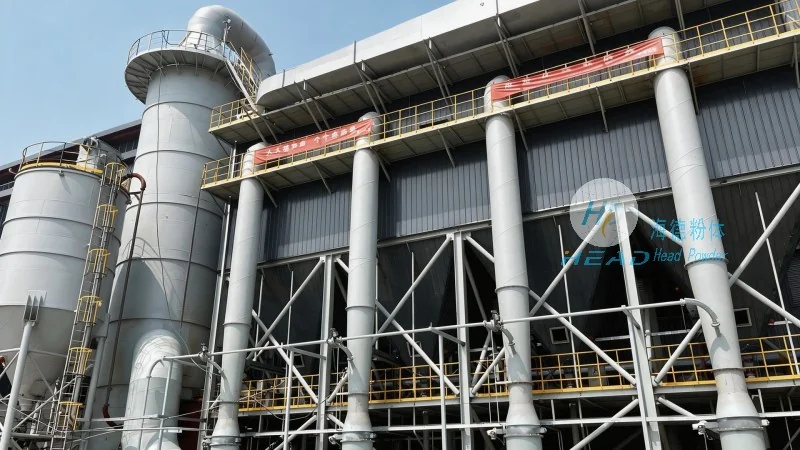
The discharge unit is responsible for releasing the graphite material at the destination point. It can be a rotary valve, gate valve, or collection hopper, depending on application requirements. The discharge unit ensures accurate material delivery without spillage, preserving product integrity.
Operation Process of Pneumatic Conveying Equipment
The operation process of the pneumatic conveying equipment for graphite materials involves sequential steps. Initially, graphite material is loaded into the hopper. The feeder then controls the material flow into the conveying pipeline. Simultaneously, the air compressor starts and supplies compressed air into the pipeline.
As compressed air enters the pipeline, it creates a flow that lifts the graphite particles from the hopper and carries them along the pipeline. The air and material mixture travels through the pipeline, overcoming bends or obstacles. At the discharge point, the air and material separate—with air released to the atmosphere and graphite collected in the discharge unit.
The system operates continuously, with the feeder and compressor maintaining a steady flow of material and air. The control system monitors parameters like pressure, flow rate, and material level, ensuring optimal performance. Adjustments to flow rate or air pressure can be made to adapt to changes in material characteristics or system demands.
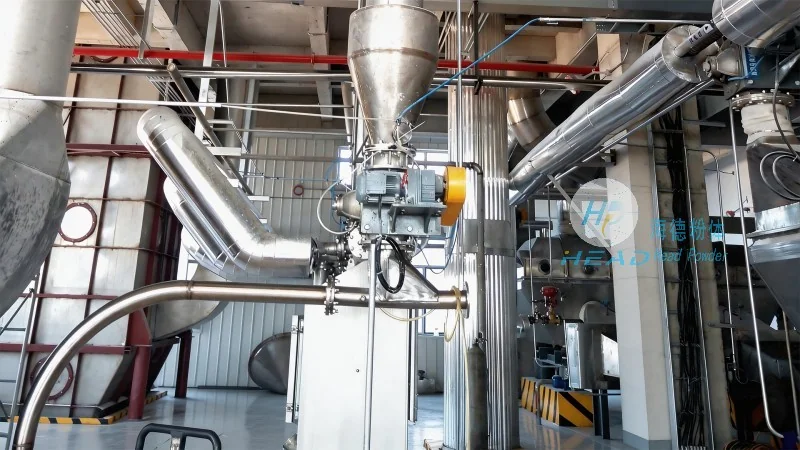
Working Principle of Pneumatic Conveying
The working principle of pneumatic conveying equipment for graphite materials is based on fluidization and drag. The compressed air creates a flow that suspends graphite particles in the air stream, enabling transport through the pipeline. This process, known as pneumatic transport, uses air as the conveying medium.
In the system, air pressure exceeds atmospheric pressure, creating a pressure differential that drives material movement. The air flow velocity is critical: it must be sufficient to lift particles and maintain suspension. Insufficient velocity causes settling and blockages, while excessive velocity leads to equipment wear.
The drag force exerted by air on graphite particles propels them forward. The particles are carried along the pipeline by the air stream, with pressure drop along the pipeline providing the necessary force. System efficiency depends on maintaining an optimal air-to-material ratio, ensuring energy efficiency without compromising transport.
Advantages of Pneumatic Conveying for Graphite Materials
Pneumatic conveying offers several benefits for handling graphite materials. A primary advantage is the closed system, which prevents contamination and dust exposure—critical for graphite, as inhalation or ingestion poses health risks. The closed system also reduces environmental impact by minimizing dust emissions.
Another advantage is flexibility: the system can handle a wide range of material sizes and shapes, from fine powders to large lumps. It can be reconfigured to alter the conveying path or destination, making it suitable for diverse applications. Additionally, the equipment is compact, fitting into confined spaces and saving floor area.
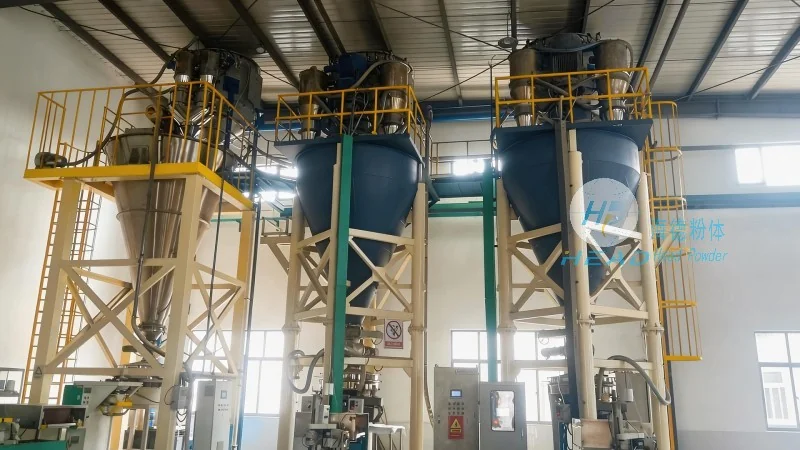
The system provides high efficiency and low maintenance. Properly designed and operated, it achieves high material throughput with minimal energy consumption. Components are engineered to withstand graphite's abrasive nature, reducing wear and extending lifespan. Regular maintenance—pipeline cleaning and worn part replacement—ensures consistent performance.
Applications of Pneumatic Conveying Equipment
Pneumatic conveying equipment for graphite materials is widely used across industrial sectors. In the refractory industry, it transports raw graphite to production lines, ensuring a steady supply for refractory product manufacturing. In the battery industry, the equipment moves graphite powder for battery cell production, where precise handling impacts product quality.
In lubricant and coating industries, graphite is used as an additive, and pneumatic conveying delivers it accurately to mixing/coating processes. It is also employed in research labs for small-scale graphite sample handling, where precision and cleanliness are paramount.
Its versatility suits both large-scale industrial operations and small-scale laboratory use. The ability to handle different material forms and sizes allows adaptation to various production needs, making it a reliable choice for graphite material handling.