HeadPowder, a leading manufacturer based in Shandong, China, specializes in the design and production of advanced pneumatic conveying systems tailored for various industrial applications, including the efficient handling of river sand. This article provides a comprehensive overview of the equipment used in river sand pneumatic conveying systems, along with an explanation of their structural principles and operational mechanisms.
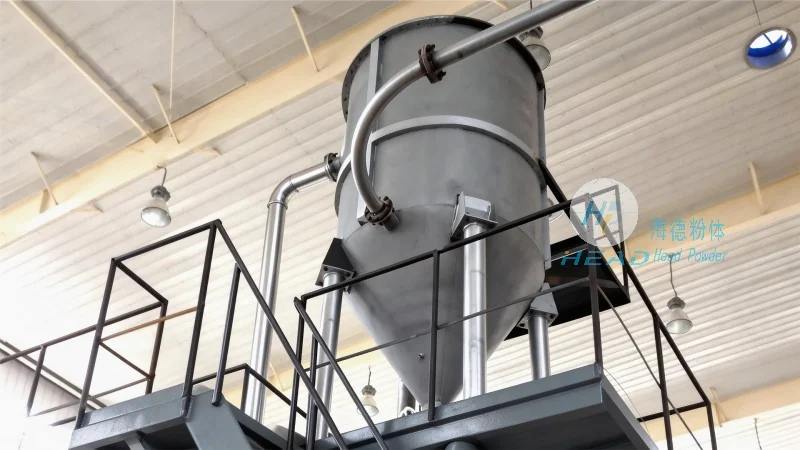
The river sand pneumatic conveying system is a critical piece of industrial equipment designed to transport river sand from one location to another using air as the conveying medium. The system typically consists of several key components, each playing a vital role in the overall operation. These components include the material feed hopper, the air compressor or blower, the conveying pipeline, the separation and collection unit, and the control system. Each component is carefully engineered to ensure efficient and reliable sand transport, minimizing downtime and maximizing productivity.
The structural principles of the river sand pneumatic conveying system are based on the fundamental physics of fluid dynamics and particle transport. The system operates by creating a high-pressure air stream within the conveying pipeline, which then pulls the sand particles into the air stream. The air velocity is maintained at a level sufficient to keep the sand particles suspended, preventing them from settling or clogging the pipeline. The design of the system takes into account factors such as the particle size, density, and moisture content of the river sand, as well as the required conveying distance and throughput. By optimizing these parameters, the system can achieve high efficiency and low energy consumption.
1. Material Feed Hopper: The feed hopper is the initial component where river sand is loaded into the system. It is designed with a sloped bottom and a discharge valve to control the flow rate of the sand into the conveying pipeline. The hopper is typically made of durable materials, such as stainless steel or reinforced plastic, to withstand the abrasive nature of the sand and prevent wear and tear.
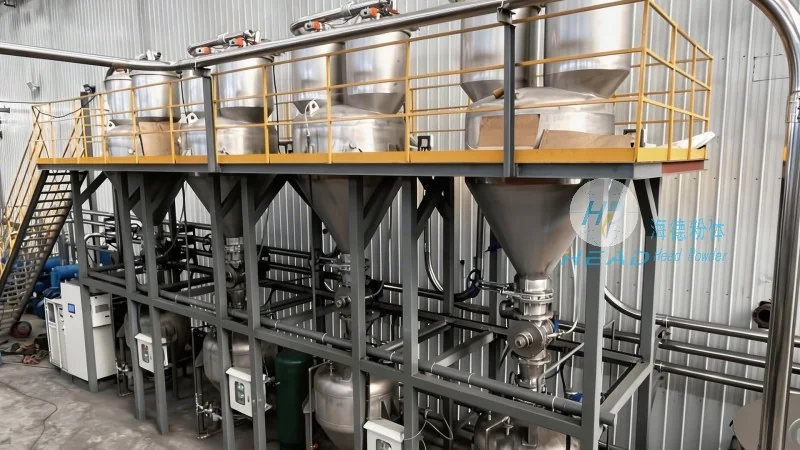
2. Air Compressor or Blower: The air compressor or blower is responsible for generating the high-pressure air stream that propels the sand particles through the pipeline. The choice of equipment depends on the required conveying pressure and volume. Centrifugal blowers are commonly used for low to medium pressure applications, while positive displacement blowers are preferred for high-pressure and high-volume operations. The compressor is equipped with a filter and moisture separator to ensure the air is clean and free from contaminants that could affect the sand quality or clog the system.
3. Conveying Pipeline: The pipeline is the main channel through which the sand and air mixture travels. It is typically made of stainless steel or high-density polyethylene (HDPE) to resist corrosion and abrasion. The pipeline is designed with appropriate bends and elbows to maintain the air velocity and prevent the sand particles from settling. The diameter of the pipeline is determined based on the required flow rate and the particle size of the sand, ensuring that the air velocity remains above the minimum required to keep the particles suspended.
4. Separation and Collection Unit: The separation unit is located at the end of the conveying pipeline and is responsible for separating the sand from the air stream. This is typically achieved through a cyclone separator or a bag filter. The cyclone separator uses centrifugal force to separate the sand particles from the air, while the bag filter traps the sand particles in a filter bag. The separated sand is then collected in a storage hopper or silo, ready for further processing or use.
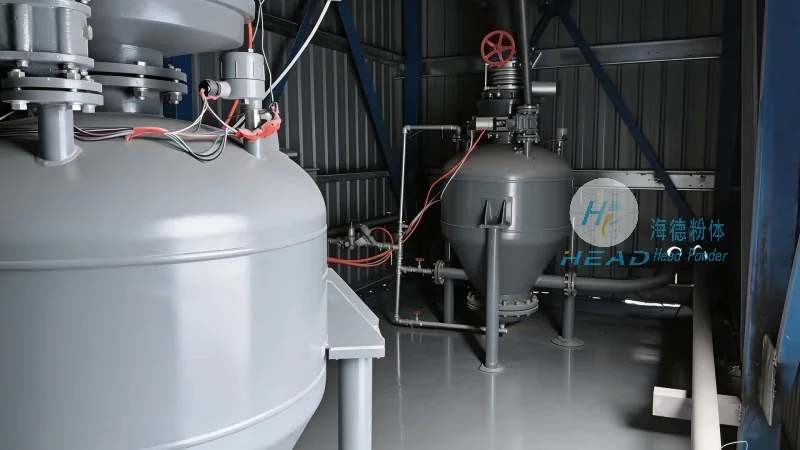
5. Control System: The control system is responsible for monitoring and controlling the operation of the entire pneumatic conveying system. It includes sensors to measure the pressure, flow rate, and temperature of the air and sand, as well as a control panel to adjust the settings of the compressor and other components. The control system ensures that the system operates within safe and efficient parameters, preventing overloading or underloading of the pipeline and minimizing energy consumption.
The operational mechanism of the river sand pneumatic conveying system involves several steps. First, the river sand is loaded into the feed hopper. Then, the air compressor or blower starts and generates a high-pressure air stream. The sand is then discharged from the hopper into the pipeline, where it is pulled into the air stream by the air velocity. The sand and air mixture travels through the pipeline to the separation unit, where the sand is separated from the air. The separated sand is collected in the storage hopper, and the air is discharged to the atmosphere or recycled back to the system. The control system continuously monitors the operation and adjusts the settings as needed to maintain optimal performance.
The efficiency of the river sand pneumatic conveying system is influenced by several factors, including the design of the components, the operating conditions, and the quality of the river sand. A well-designed system with appropriate components and optimized operating conditions can achieve high efficiency, with low energy consumption and minimal downtime. The system is also designed to be easy to maintain and repair, reducing the overall cost of ownership.

 Shandong Headpowder Engineering Co., Ltd.
 156-6277-7102(Manager Zhang)
  0531-83386006
  Jinan City, Shandong Province, China
telephone
WeChatconsult
top