

Operation Process and Working Principle of Gray Calcium Pneumatic Conveying System
Gray calcium is a widely used industrial material, and its efficient handling and transportation are crucial for production efficiency. The pneumatic conveying system, as an advanced material transport technology, offers a solution to this challenge. This article will delve into the operation process and working principle of the gray calcium pneumatic conveying system, providing a comprehensive understanding of its functionality and application.
Introduction to Gray Calcium Pneumatic Conveying System
Gray calcium, also known as calcium carbonate, is a common mineral used in various industries such as construction, chemical, and food processing. Traditional methods of transporting gray calcium, like belt conveyors or manual handling, often face challenges like dust pollution, material loss, and operational inefficiency. The pneumatic conveying system provides a dust-free, efficient, and safe alternative for handling gray calcium. The system is designed to transport bulk materials through a pipeline using air pressure, eliminating the need for mechanical contact with the material. Developed by Shandong HeadPowder Engineering Co., Ltd., this advanced system offers a reliable solution for industrial material handling.
Working Principle of the Pneumatic Conveying System
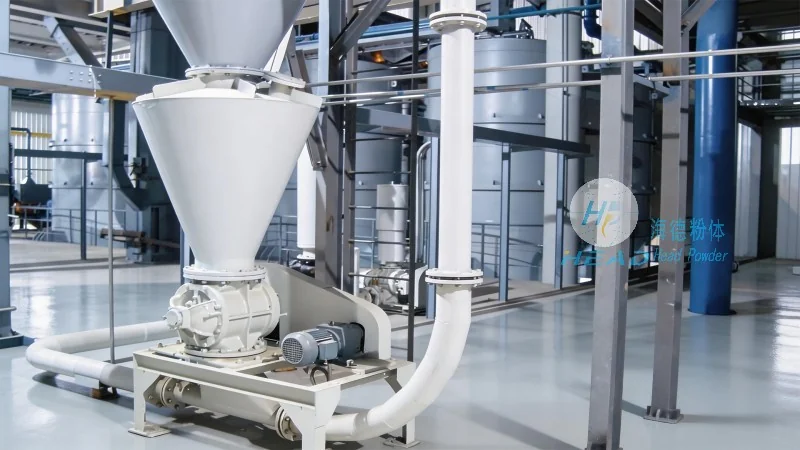
The core of the gray calcium pneumatic conveying system lies in its working principle, which involves the use of air as the conveying medium. The system typically consists of a hopper, a feeder, a pipeline, a control valve, and a receiver. The process starts with the gray calcium being fed into the hopper from the storage silo. The feeder then regulates the material flow rate into the pipeline. As the material enters the pipeline, compressed air is introduced, creating a flow that carries the material through the system. The air and material mixture travels through the pipeline to the receiver, where the material is separated from the air and collected. The separated air is then discharged or recycled back into the system.
Key Components and Their Functions
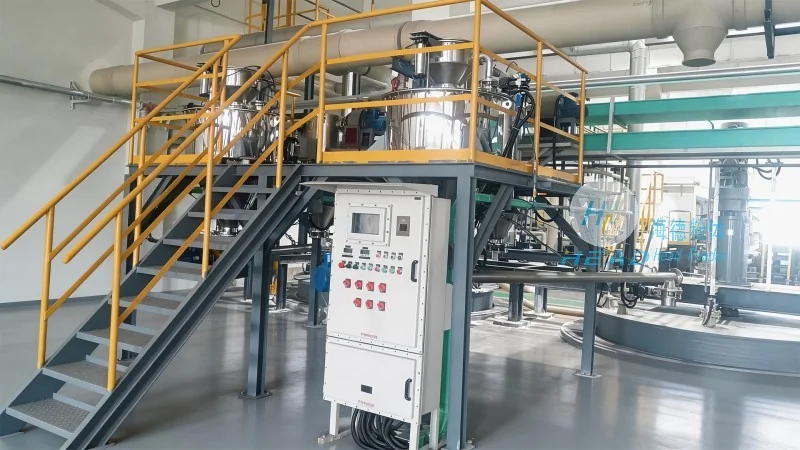
Each component of the gray calcium pneumatic conveying system plays a vital role in ensuring smooth operation. The hopper serves as the storage and feeding unit, holding the gray calcium and providing a consistent feed to the system. The feeder, often a rotary valve or a screw feeder, controls the material flow rate, preventing overloading and ensuring stable operation. The pipeline is the main conduit for material and air transport, with appropriate diameter and material selection to handle the pressure and flow requirements. The control valve, usually a butterfly valve or a gate valve, regulates the air flow and pressure, allowing for precise control of the conveying process. The receiver is the final collection point, where the gray calcium is deposited and can be further processed or packaged.
Operation Process of the System
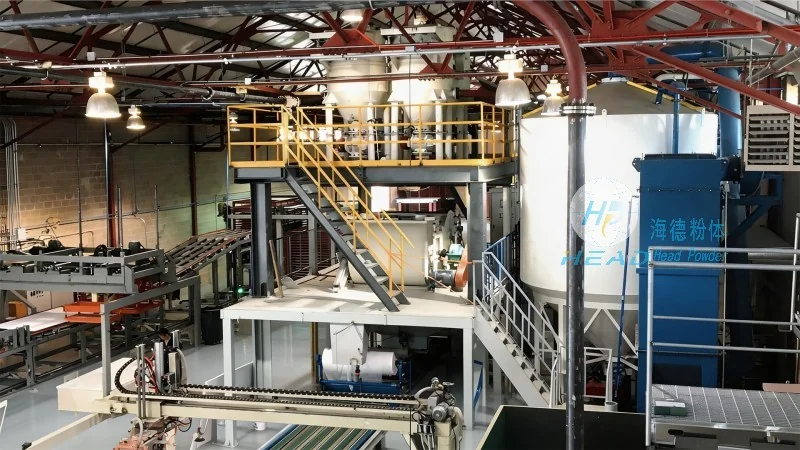
The operation process of the gray calcium pneumatic conveying system is a continuous cycle that ensures efficient material transport. The process begins with the material being loaded into the hopper from the storage silo. The feeder then starts to feed the material into the pipeline at a controlled rate. Simultaneously, the compressed air is turned on, creating a pressure difference that drives the material through the pipeline. The material and air mixture travels through the pipeline, with the air pressure maintaining the flow. At the receiver end, the material is separated from the air by a cyclone separator or a filter, and the material is collected in the receiver. The air, now clean, is either discharged to the atmosphere or recycled back into the system to reduce energy consumption. The system operates continuously, with the feeder and air supply maintaining the flow until the material is fully transported to the receiver.

Advantages of the Gray Calcium Pneumatic Conveying System
The use of a pneumatic conveying system for gray calcium offers several advantages over traditional methods. Firstly, it provides a dust-free environment, as the material is enclosed within the pipeline, preventing dust pollution and improving workplace safety. Secondly, it offers high efficiency in material transport, with the ability to handle large volumes of material over long distances. Thirdly, the system is flexible and can be easily adjusted to accommodate changes in material flow rate or pipeline length. Additionally, the system reduces material loss and contamination, as the material is not in direct contact with external elements. Finally, the system is low maintenance, with fewer moving parts compared to mechanical conveyors, leading to lower operational costs.
Application and Customization
The gray calcium pneumatic conveying system is widely used in various industries due to its versatility and efficiency. It can be customized to meet specific application requirements, such as different material flow rates, pipeline lengths, and pressure levels. The system can be integrated with other equipment, such as storage silos, mixers, or packaging machines, to form a complete material handling system. The customization options include different hopper designs, feeder types, and receiver configurations, ensuring that the system meets the specific needs of the user. The system is also suitable for handling other bulk materials, making it a versatile solution for material transport in various industrial applications.