

Operation Process and Working Principle of a Dry Soybean Pneumatic Conveying Machine
For industrial applications involving the transport of dry soybeans, pneumatic conveying systems offer efficient and reliable solutions. A dry soybean pneumatic conveying machine, such as those provided by Shandong HeadPowder Engineering Co., Ltd., utilizes air as the primary medium to move bulk materials through a sealed pipeline system. This technology is particularly advantageous for handling soybeans due to its ability to maintain product integrity, minimize dust generation, and ensure consistent flow rates.
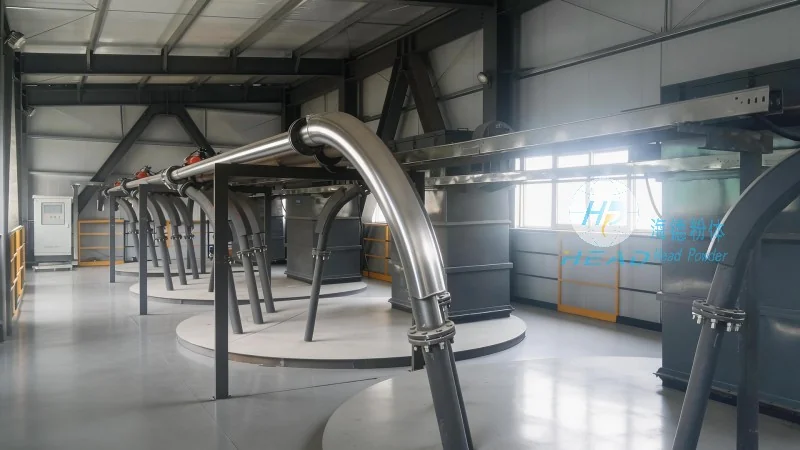
Key Components of a Dry Soybean Pneumatic Conveying Machine
The operation of a dry soybean pneumatic conveying machine relies on several critical components that work in tandem to achieve effective material transport. These components typically include a hopper for material storage, a rotary valve or feeder to control the flow of soybeans into the system, a blower or air compressor to generate the necessary air pressure, a pipeline network to guide the material and air mixture, and a receiver or discharge hopper where the soybeans are collected. Each component plays a vital role in ensuring the smooth and efficient functioning of the entire system.
The Working Principle of Pneumatic Conveying for Soybeans
The core principle behind pneumatic conveying is the use of air to create a flow of material particles. In the case of dry soybeans, the machine draws air from the blower and introduces it into the hopper. As the soybeans fall into the pipeline, the air flow lifts and propels them through the system. The velocity of the air is carefully controlled to ensure that the soybeans are carried without excessive impact or abrasion, which helps preserve their quality. The system may employ different conveying modes, such as dilute-phase or dense-phase, depending on the specific requirements of the application. Dilute-phase conveying uses higher air velocities to transport the material in a more dispersed state, while dense-phase conveying uses lower velocities to move the material in a more compact form, often with a higher material-to-air ratio.
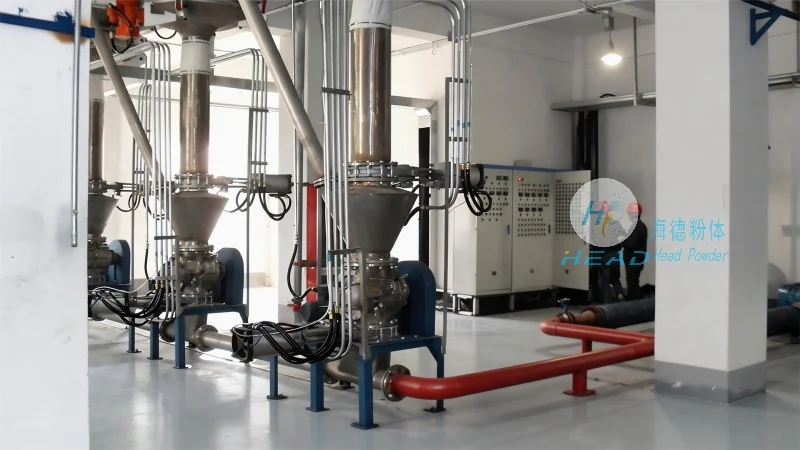
Step-by-Step Operation Process of a Dry Soybean Pneumatic Conveying Machine
The operation process of a dry soybean pneumatic conveying machine involves several sequential steps that ensure the efficient movement of soybeans from the storage hopper to the discharge point. First, the soybeans are fed into the inlet hopper from a storage bin or silo. The rotary valve or feeder then regulates the flow of soybeans into the pipeline, controlling the amount of material introduced at any given time. Simultaneously, the blower or air compressor generates the required air pressure, which is introduced into the pipeline through an air inlet. As the soybeans enter the pipeline, the air flow lifts them and carries them forward. The material and air mixture travels through the pipeline network, which may include bends, elbows, or vertical sections, all designed to maintain the flow without causing blockages or excessive pressure drops. Upon reaching the discharge point, the mixture enters the receiver hopper, where the air is separated from the soybeans. The air is typically filtered and returned to the system or vented, while the soybeans are collected in the receiver hopper for further processing or packaging. This process is continuous as long as the system is operational, with the flow rate adjusted based on the production requirements.
Advantages of Using a Dry Soybean Pneumatic Conveying Machine
Implementing a dry soybean pneumatic conveying machine offers several benefits for industrial operations. One of the primary advantages is the ability to maintain the quality of the soybeans during transport. The sealed pipeline system minimizes exposure to contaminants and moisture, which helps preserve the nutritional value and shelf life of the product. Additionally, pneumatic conveying reduces the risk of product degradation due to friction or impact, which is common in traditional mechanical conveyors. The system also offers flexibility in terms of layout, as the pipeline can be installed in various configurations to suit the space constraints of the facility. Furthermore, the operation of pneumatic conveying systems is generally low-maintenance, with fewer moving parts compared to mechanical systems, leading to reduced downtime and operational costs. The ability to handle large volumes of soybeans efficiently also contributes to increased productivity and operational efficiency.
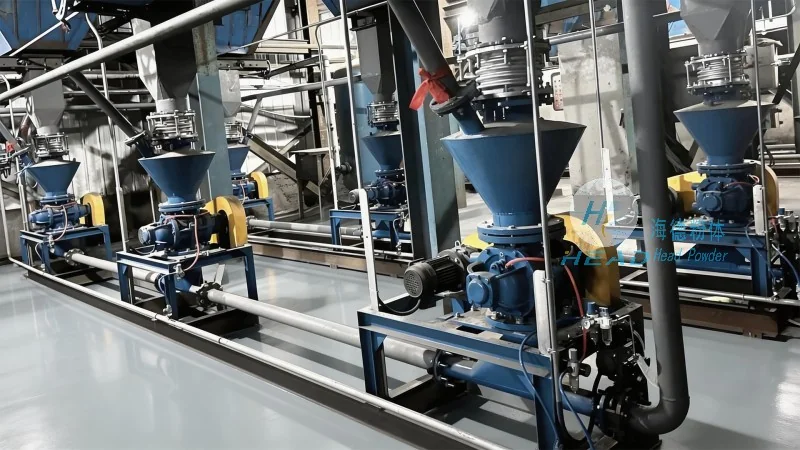
Applications and Industries Utilizing Dry Soybean Pneumatic Conveying Machines
Dry soybean pneumatic conveying machines are widely used in various industries that process soybeans, including food processing, animal feed manufacturing, and oil extraction. In food processing facilities, these machines are employed to transport soybeans from storage areas to processing lines, such as for soy milk production or tofu manufacturing. The ability to maintain product quality is crucial in these applications, as any contamination or degradation can affect the final product's taste and nutritional content. In animal feed manufacturing, the system ensures that soybeans are delivered to the mixing and extrusion processes without compromising their nutritional value. Similarly, in oil extraction plants, pneumatic conveying is used to transport soybeans to the solvent extraction units, where they are processed to extract soybean oil. The consistent flow and quality control provided by these machines are essential for meeting the stringent standards of these industries.
Conclusion and Company Information
Shandong HeadPowder Engineering Co., Ltd., a leading manufacturer of pneumatic conveying equipment, specializes in providing high-quality dry soybean pneumatic conveying machines tailored to the needs of various industrial applications. With a focus on efficiency, reliability, and product integrity, their systems are designed to meet the demands of modern soybean processing operations. The company's expertise in engineering and manufacturing ensures that each machine is built to withstand the rigors of continuous operation while delivering optimal performance. HeadPowder's commitment to quality and customer satisfaction has made them a trusted partner for businesses seeking reliable solutions for soybean transport. Based in Shandong, China, the company leverages its local expertise and resources to deliver innovative and effective pneumatic conveying systems that enhance the productivity and profitability of their clients' operations.