

Operation Process and Working Principle of Paddy Husk Pneumatic Conveying Equipment
HeadPowder Engineering Co., Ltd., a leading manufacturer based in Shandong, China, specializes in the design and production of advanced pneumatic conveying systems tailored for agricultural byproducts like paddy husk. The company’s paddy husk pneumatic conveying equipment is engineered to efficiently transport paddy husk from storage areas to processing facilities, ensuring optimal material handling with minimal loss and contamination. These systems are crucial for agricultural processing plants, as they enable the continuous and controlled transfer of paddy husk, which is often used as a fuel source or raw material in biofuel production. The equipment operates by utilizing air flow to move the material through a network of pipes, eliminating the need for mechanical components like belts or chains.
Operational Process of the Pneumatic Conveying System
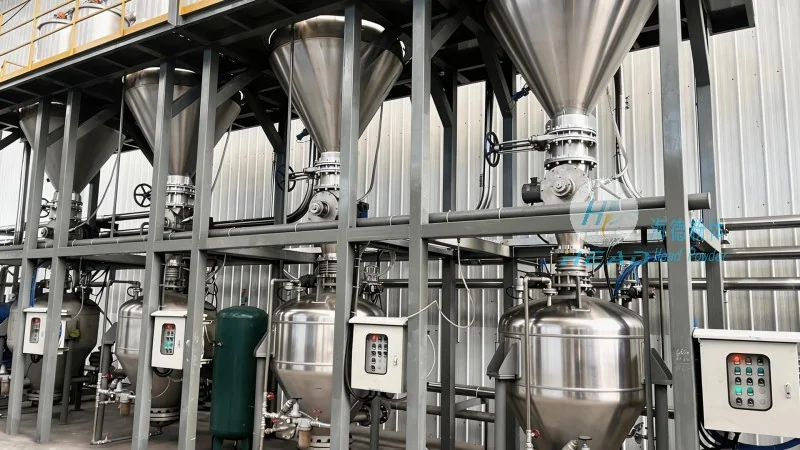
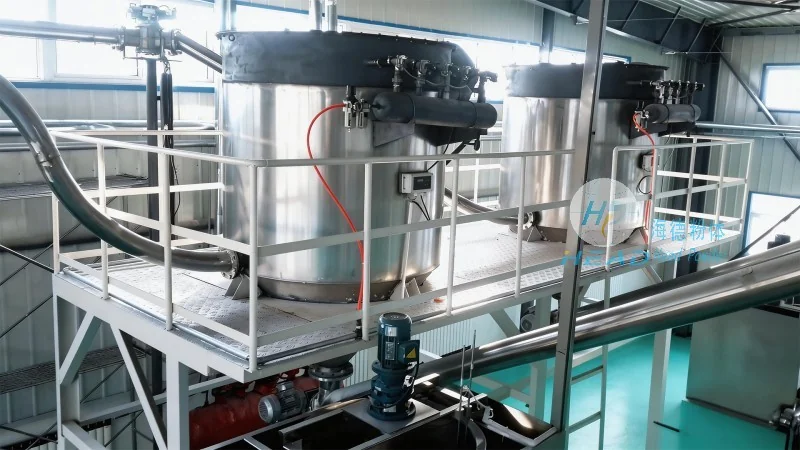
The operation of a paddy husk pneumatic conveying system involves a series of coordinated steps to ensure efficient material transport. The process begins with the loading of paddy husk into the inlet hopper or storage silo. A rotary valve or feeder then regulates the flow of material into the conveying line, controlling the rate at which paddy husk enters the system. As the material enters the pipeline, it is mixed with a high-velocity air stream, which propels the particles forward. The system typically employs a positive pressure method, where compressed air is blown into the pipeline, creating a pressure differential that drives the material. This method is suitable for longer distances and higher material volumes. The air flow is maintained at a consistent velocity to ensure that the paddy husk particles are fully suspended and transported without settling or clogging. Throughout the process, the system includes cyclone separators and filters to separate the husk from the air, ensuring that the material is delivered to the destination without contamination and that the air is cleaned before release. The entire operation is controlled by a programmable logic controller (PLC), which monitors pressure, flow rates, and other parameters to maintain optimal performance. Safety features, such as pressure relief valves and automatic shut-off mechanisms, are integrated to prevent damage and ensure operator safety in case of blockages or overloads.
Working Principle of Pneumatic Conveying
The core principle of pneumatic conveying for paddy husk is the interaction between the material particles and the air stream. In a positive pressure system, compressed air is introduced into the conveying line at a high velocity, creating a turbulent flow that entrains the paddy husk particles. The air flow overcomes the gravitational force acting on the particles, allowing them to be transported through the pipeline. The velocity of the air is critical; it must be sufficient to lift and move the particles but not so high as to cause excessive wear on the equipment or damage to the material. The system’s design, including pipe diameter, length, and bends, is optimized to maintain a consistent air velocity and pressure, minimizing energy consumption and maximizing efficiency. For paddy husk, which has a low bulk density and is prone to clumping, the air-to-material ratio is carefully calculated to ensure that the material is fully suspended and transported without settling. The use of air as the conveying medium also allows for the simultaneous transport of multiple materials or the addition of additives, such as moisture or chemicals, during the process. In negative pressure systems, the air is drawn out of the line using a vacuum pump, creating a suction force that pulls the paddy husk particles. This method is often used for shorter distances or when the material needs to be transported from a lower elevation to a higher one. The vacuum pump operates at a lower speed than the positive pressure compressor, reducing energy consumption but requiring careful management of air leaks to maintain the vacuum level. Both positive and negative pressure systems rely on the principle of fluidization, where the air flow causes the paddy husk particles to behave like a fluid, allowing them to be moved through the pipeline with minimal resistance.