

Operation Process and Working Principle of Automatic Quantitative Ingredient Feeding Material Convey
HeadPowder, a leading manufacturer in the field of material handling and processing equipment, specializes in the design, development, and production of advanced automatic quantitative ingredient feeding material conveying lines. These systems are engineered to deliver precise and consistent material flow in various industrial applications, ensuring optimal performance and efficiency in production processes.
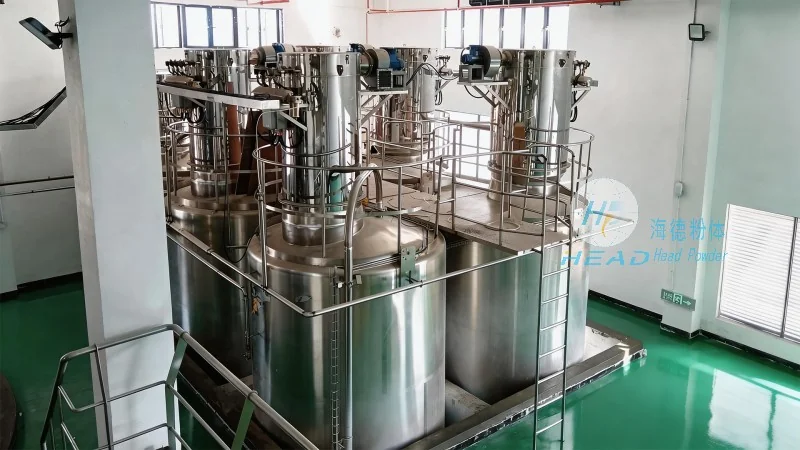
Overview of the Automatic Quantitative Ingredient Feeding Material Conveying Line
The automatic quantitative ingredient feeding material conveying line is a sophisticated system designed to handle the precise measurement and transportation of bulk materials. It integrates multiple components, including feeding mechanisms, quantitative devices, conveying equipment, and control systems, to achieve accurate and reliable material handling. This line is widely used in industries such as pharmaceuticals, food processing, chemical manufacturing, and mining, where consistent material quality and process control are critical.
Key Components and Their Functions
The operation of the automatic quantitative ingredient feeding material conveying line relies on several key components, each playing a crucial role in the overall process. The primary components include:
1. Feeding Hopper: This component stores the bulk material and feeds it into the system. It is designed with a sloped bottom to facilitate smooth material flow and prevent clogging. The hopper is typically made of durable materials like stainless steel to ensure hygiene and resistance to corrosion.
2. Quantitative Device: The quantitative device is the core of the system, responsible for measuring and controlling the amount of material dispensed. Common types include volumetric feeders, gravimetric feeders, and loss-in-weight feeders. These devices use sensors and control algorithms to achieve high accuracy in material measurement, often with a tolerance of ±0.5% or better.
3. Conveying Equipment: The conveying equipment transports the measured material from the quantitative device to the processing or packaging equipment. Options include belt conveyors, screw conveyors, and pneumatic conveyors, depending on the material characteristics and application requirements. The choice of conveyor type ensures efficient and low-friction material movement.
4. Control System: The control system manages the entire operation of the conveying line. It includes PLC (Programmable Logic Controller) units, sensors, and user interfaces. The system monitors the flow rate, material level, and operational status, allowing for real-time adjustments and fault detection. Advanced control systems can also integrate with higher-level production management software for seamless data exchange.
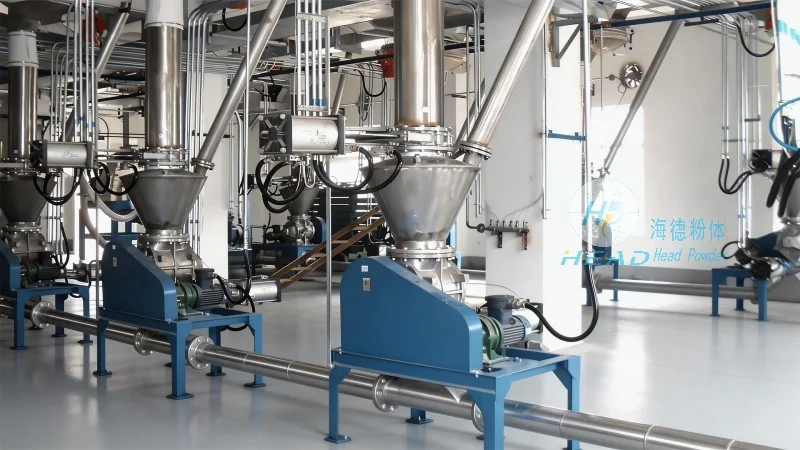
Operation Process of the Automatic Quantitative Ingredient Feeding Material Conveying Line
The operation of the automatic quantitative ingredient feeding material conveying line follows a systematic sequence to ensure precise material handling. The process typically begins with the material being loaded into the feeding hopper. The hopper then feeds the material into the quantitative device, which measures and dispenses the required amount. The conveyed material is then transported to the next stage of the production process, such as mixing, blending, or packaging.
During the operation, the control system continuously monitors the material flow and adjusts the feeding rate as needed to maintain the desired output. For example, if the material level in the hopper drops, the system may increase the feeding speed to maintain a consistent flow. Similarly, if the quantitative device detects an over or under-dispense, it will adjust the feed rate to correct the error. This closed-loop control ensures that the material is delivered with high accuracy and consistency.
Working Principle of the Automatic Quantitative Ingredient Feeding Material Conveying Line
The working principle of the automatic quantitative ingredient feeding material conveying line is based on the integration of mechanical, electrical, and control technologies. The system operates by first receiving the material from the hopper, then measuring it using the quantitative device, and finally conveying it to the target location. The quantitative device uses various measurement methods, such as volume measurement, weight measurement, or loss-in-weight measurement, to determine the exact amount of material to be dispensed.
For volumetric feeders, the principle involves measuring the volume of material passing through a fixed or adjustable orifice. The speed of the conveyor is adjusted to achieve the desired flow rate. Gravimetric feeders, on the other hand, use load cells to measure the weight of the material in real-time, providing a more accurate measurement, especially for materials with varying bulk densities. Loss-in-weight feeders operate by weighing the material in a hopper and then feeding it at a rate that maintains a constant weight, ensuring precise control.
The conveying equipment then transports the measured material to the processing equipment. Belt conveyors use a moving belt to transport material, while screw conveyors use a rotating screw to push material forward. Pneumatic conveyors use air pressure to move material through a pipeline. The choice of conveying method depends on the material's properties, such as particle size, moisture content, and abrasiveness.
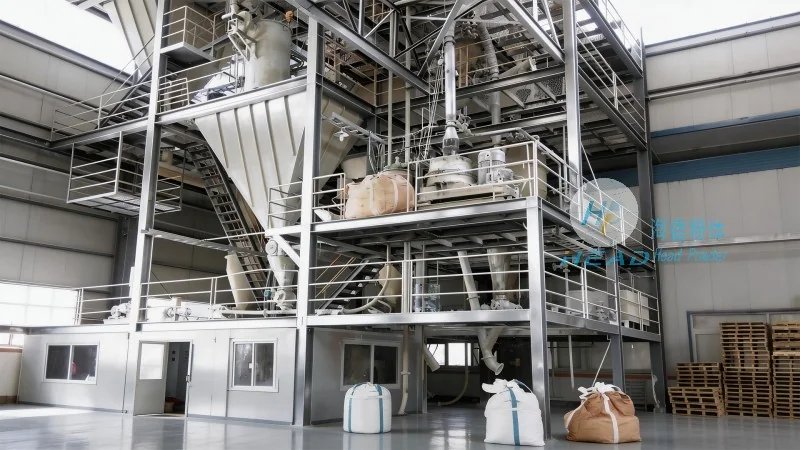
Advantages of the Automatic Quantitative Ingredient Feeding Material Conveying Line
The automatic quantitative ingredient feeding material conveying line offers several advantages over traditional manual or semi-automatic systems. These benefits include:
1. High Precision and Consistency: The quantitative devices used in the system ensure that the material is measured with high accuracy, reducing variations in the final product. This leads to improved product quality and reduced waste.
2. Increased Efficiency and Productivity: The automated operation of the conveying line reduces the need for manual intervention, allowing for continuous and uninterrupted production. This increases the overall throughput and productivity of the production line.
3. Enhanced Safety and Hygiene: The system is designed with safety features, such as emergency stop buttons and protective guards, to prevent accidents. Additionally, the use of stainless steel components ensures hygiene, making it suitable for industries like food and pharmaceuticals.
4. Easy Integration and Scalability: The control system allows for easy integration with other production equipment and software. The system can also be scaled up or down to meet changing production demands, providing flexibility in production planning.
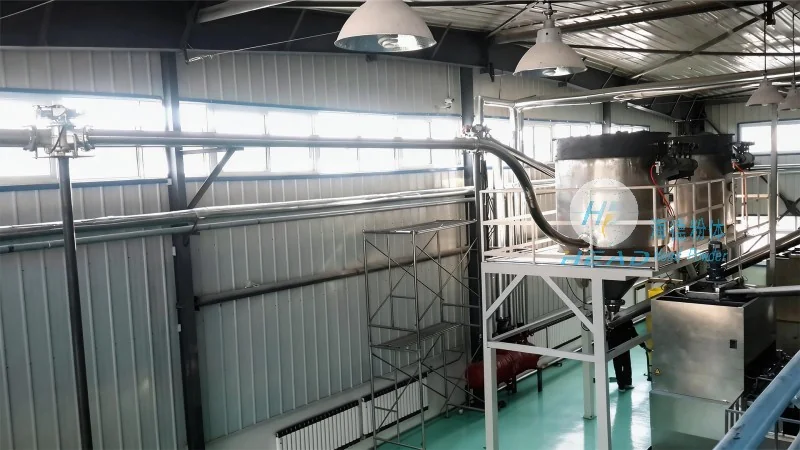
Applications of the Automatic Quantitative Ingredient Feeding Material Conveying Line
The automatic quantitative ingredient feeding material conveying line is versatile and can be applied in various industrial sectors. Some common applications include:
1. Pharmaceutical Industry: In pharmaceutical manufacturing, the system is used to feed active pharmaceutical ingredients (APIs) and excipients with high precision, ensuring the quality and consistency of drug products.
2. Food Processing Industry: The line is used to handle ingredients like flour, sugar, and spices in food processing plants, maintaining the quality and safety of food products.
3. Chemical Manufacturing Industry: In chemical plants, the system is used to feed raw materials and reagents with accurate measurements, ensuring the efficiency and safety of chemical reactions.
4. Mining and Minerals Industry: The line is used to transport and process bulk minerals, such as coal and ores, with high efficiency and low environmental impact.
Conclusion
The automatic quantitative ingredient feeding material conveying line is a critical component in modern industrial production, providing precise and efficient material handling. With its advanced technology and robust design, this system enhances production efficiency, product quality, and operational safety. HeadPowder, as a leading manufacturer, continues to innovate and improve these systems to meet the evolving needs of various industries. By leveraging the expertise and experience of Shandong HeadPowder Engineering Co., Ltd., businesses can achieve optimal performance and reliability in their material handling processes.