

Principle and Classification Application of Stone Powder Pneumatic Conveying
Stone powder, a crucial material in various industrial sectors such as construction, mining, and chemical processing, often requires efficient and reliable transportation methods. Pneumatic conveying, a technology that uses air or gas to transport bulk materials like stone powder, has emerged as a preferred solution due to its advantages in terms of hygiene, safety, and operational flexibility. This article provides an overview of the working principles of stone powder pneumatic conveying systems and explores the different classifications and practical applications of this technology.
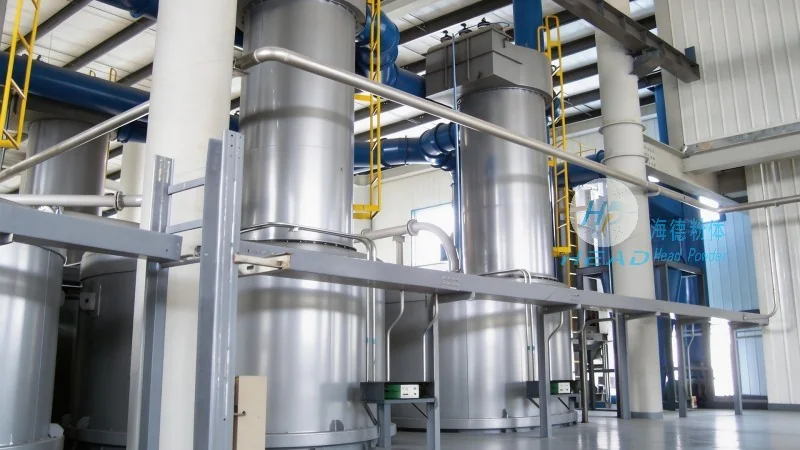
The Fundamental Working Principle of Pneumatic Conveying
At its core, pneumatic conveying involves the movement of solid particles through a pipeline using a fluid medium, typically air or gas. The process can be broadly categorized into two main types: pressure and suction systems. In pressure systems, a positive pressure is generated at the material inlet, pushing the powder through the pipeline. Conversely, suction systems create a negative pressure at the inlet, drawing the material into the system. For stone powder, which is often abrasive and has specific particle size characteristics, the choice of system depends on factors like the distance to be covered, the volume of material, and the required flow rate. The working principle also involves the use of components such as a feeder, a conveying line, a separator, and a receiver. The feeder ensures a consistent flow of stone powder into the system, while the conveying line transports the material. The separator then separates the powder from the air stream, and the receiver collects the processed stone powder. This integrated system ensures efficient and controlled transportation of stone powder from the source to the destination.
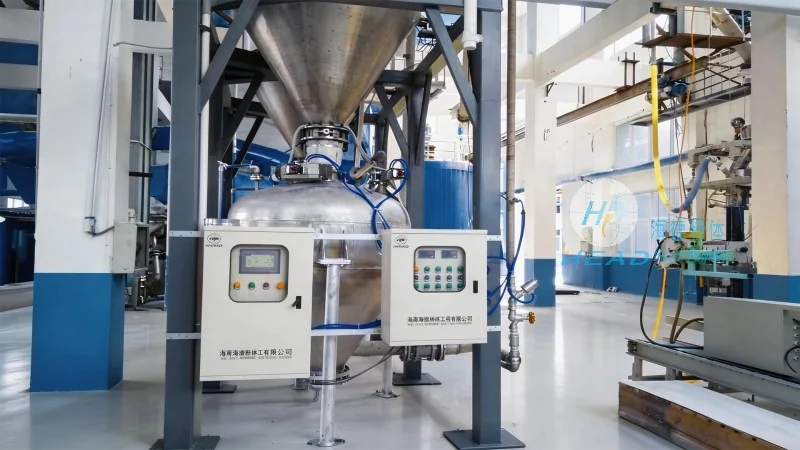
Classification of Pneumatic Conveying Systems for Stone Powder
Pneumatic conveying systems for stone powder can be classified based on several criteria, including the pressure level, the conveying method, and the application requirements. The primary classifications include:
- Pressure Conveying: This system operates under positive pressure, typically using a blower or a positive displacement pump to generate the necessary pressure. It is suitable for long-distance and high-volume transportation of stone powder. The pressure system is often preferred when the material needs to be transported over significant distances or when the system is integrated with other processes that require a positive pressure environment.
- Suction Conveying: As the name suggests, this system operates under negative pressure, using a vacuum pump to create a suction effect. It is ideal for short-distance and low-volume applications, especially when the material needs to be collected from multiple points or when the system is integrated with existing vacuum equipment. Suction systems are also advantageous for handling materials that are sensitive to pressure changes or for applications where the material needs to be transported from a lower elevation to a higher one.
- Combined Conveying: This system combines elements of both pressure and suction conveying. It may use a pressure section for the initial part of the pipeline and a suction section for the latter part, or vice versa. This approach allows for more flexible and efficient transportation of stone powder over complex routes, such as those involving vertical lifts and horizontal turns. Combined systems are particularly useful when the material needs to be transported over varying distances or when the system needs to handle different material types or particle sizes.
Additionally, pneumatic conveying systems can be further classified based on the type of conveying medium. For stone powder, which is often fine and abrasive, air is the most common medium. However, in some cases, where the material is highly sensitive to moisture or where the system needs to handle larger particles, other gases like nitrogen or carbon dioxide may be used. The choice of medium depends on the specific properties of the stone powder and the requirements of the application.
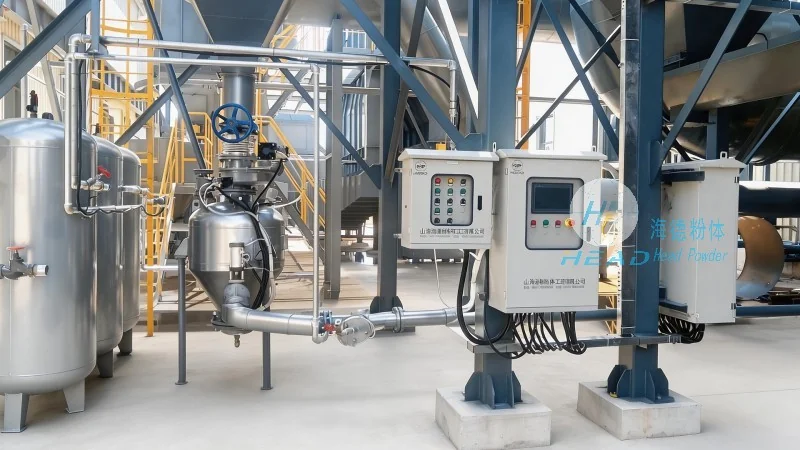
Application Scenarios and Practical Uses of Stone Powder Pneumatic Conveying
The versatility of pneumatic conveying systems makes them suitable for a wide range of applications involving stone powder. Some of the key applications include: