

Principle and Classification Application of Cement Particle Pneumatic Conveying
HeadPowder Engineering Co., Ltd. specializes in the design, manufacturing, and implementation of advanced pneumatic conveying systems for cement particles. This article provides an in-depth exploration of the fundamental principles behind cement particle pneumatic conveying, along with a detailed classification of its various applications in industrial settings.

Working Principle of Cement Particle Pneumatic Conveying
Cement particle pneumatic conveying operates on the principle of transporting solid particles through a pipeline using a gas stream, typically air or a combination of air and other gases. The process involves several key components and mechanisms that ensure efficient and reliable material transport. The primary working principle can be broken down into the following stages:
First, the cement particles are introduced into the conveying system, often via a hopper or feeder. The system then generates a high-velocity gas stream, which entrains the particles and propels them through the pipeline. This entrainment is achieved by creating a pressure differential between the inlet and outlet of the system. The gas velocity must be sufficient to overcome the gravitational force acting on the particles and to maintain a stable flow of material. The conveying process can be either positive pressure, where the entire system is pressurized, or negative pressure (suction), where the system is under vacuum. Positive pressure systems are commonly used for long-distance and high-capacity applications, while suction systems are suitable for short distances and when the material needs to be collected from multiple points.
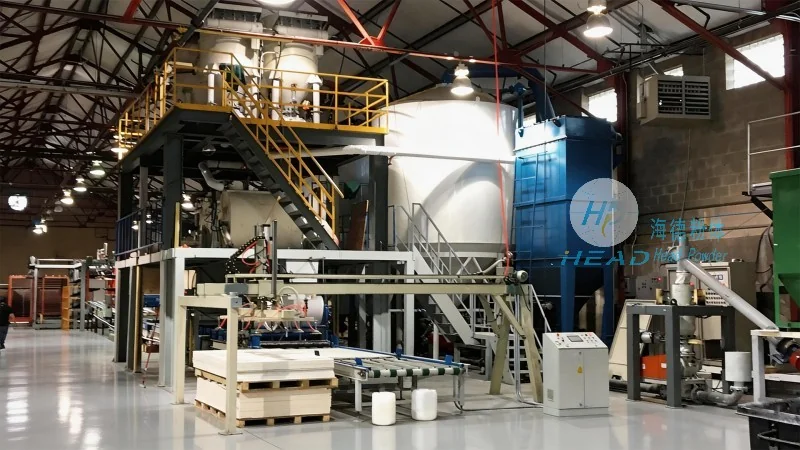
Key components in a cement particle pneumatic conveying system include the feeder, which controls the flow rate of the cement particles; the air compressor or vacuum pump, which generates the necessary gas flow; the pipeline, which transports the material; and the receiver, where the cement is deposited. The design of these components is critical to the overall efficiency and performance of the system. For example, the feeder must be able to handle the specific characteristics of cement particles, such as their size, density, and moisture content, to prevent blockages or uneven flow. The air compressor must provide a consistent and sufficient airflow to maintain the desired conveying velocity. The pipeline must be properly sized and configured to minimize pressure drop and ensure smooth material transport. The receiver must be designed to handle the discharge of cement without causing spillage or dust emission.
Classification and Application of Cement Particle Pneumatic Conveying
Cement particle pneumatic conveying systems are classified based on several factors, including the type of gas used, the conveying pressure, the particle size and characteristics, and the application requirements. The main classifications include:
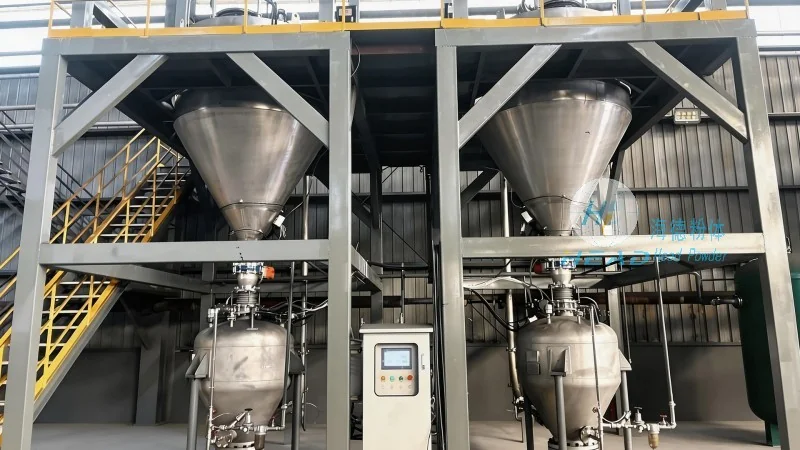
1. Positive Pressure Conveying: This type of system operates under a positive pressure, where the entire pipeline is pressurized above atmospheric pressure. Positive pressure systems are suitable for long-distance conveying, high-capacity applications, and when the material needs to be transported to multiple destinations. They are commonly used in cement plants, where cement is transported from storage silos to production lines or to different parts of the plant. The advantages of positive pressure systems include high conveying capacity, long-distance capability, and the ability to handle a wide range of particle sizes and moisture content. However, they require more energy and may generate more noise compared to suction systems.
2. Negative Pressure (Suction) Conveying: This type of system operates under a negative pressure, where the pipeline is under vacuum. Suction systems are suitable for short-distance conveying, when the material needs to be collected from multiple points, or when the material is sensitive to pressure changes. They are commonly used in applications where the cement is being collected from a hopper or a storage bin and transported to a processing unit. The advantages of suction systems include lower energy consumption, reduced noise, and the ability to handle fine particles without causing blockages. However, they have limitations in terms of conveying distance and capacity compared to positive pressure systems.
3. Combined Pressure and Suction Conveying: This type of system combines both positive and negative pressure elements to achieve a more flexible and efficient conveying process. It is suitable for applications where the material needs to be transported over long distances while also being collected from multiple points. The system can operate in a positive pressure mode for the main conveying section and in a suction mode for the collection points. This hybrid approach allows for better control of the material flow and reduces the overall energy consumption compared to a pure positive pressure system.
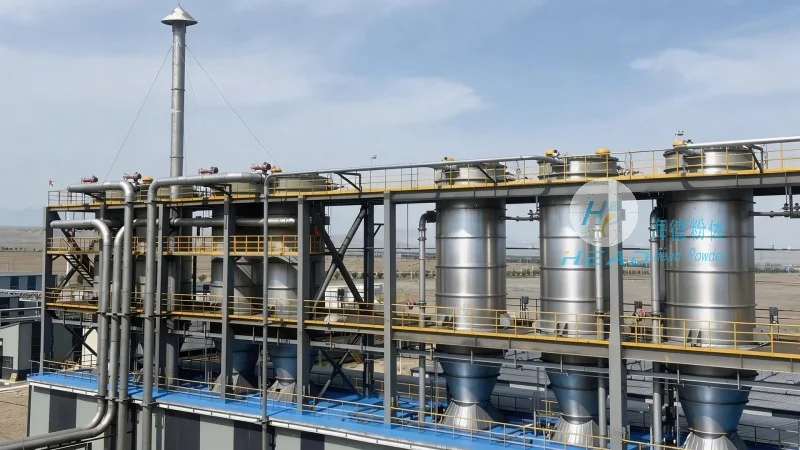
4. High-Temperature Conveying: This type of system is designed to handle cement particles at high temperatures, typically above 200°C. High-temperature conveying is used in applications where the cement is being transported from a kiln or a preheater to a storage silo. The system must be equipped with special components, such as heat-resistant materials and insulation, to withstand the high temperatures and prevent heat loss. The advantages of high-temperature conveying include the ability to handle hot cement without causing degradation or caking, and the reduction of energy consumption by reusing the heat from the cement.
About HeadPowder Engineering Co., Ltd.
HeadPowder Engineering Co., Ltd. is a leading provider of pneumatic conveying solutions for the cement industry. The company is headquartered in Shandong, China, and has a strong reputation for its innovative and reliable systems. HeadPowder specializes in the design and manufacturing of cement particle pneumatic conveying systems, tailored to meet the specific needs of its clients. The company's team of engineers and technicians has extensive experience in the cement industry and is committed to providing high-quality products and services. HeadPowder's systems are designed to be efficient, durable, and easy to maintain, ensuring long-term performance and low operational costs. The company also provides technical support and after-sales service to its clients, ensuring that their systems operate at optimal levels. HeadPowder Engineering Co., Ltd. is dedicated to advancing the technology of cement particle pneumatic conveying and helping its clients improve their production efficiency and reduce their environmental impact.