

Advantages and Disadvantages Comparison of Negative Pressure and Positive Pressure Conveying for Dry
HeadPowder, a leading engineering firm based in Shandong, China, specializes in the design and implementation of efficient material handling solutions. Among these, gas-solid transport systems are crucial for the safe and effective conveyance of dry stone powders. Two primary methods dominate this field: negative pressure conveying and positive pressure conveying. Understanding the advantages and disadvantages of each is essential for selecting the optimal system for specific industrial applications.
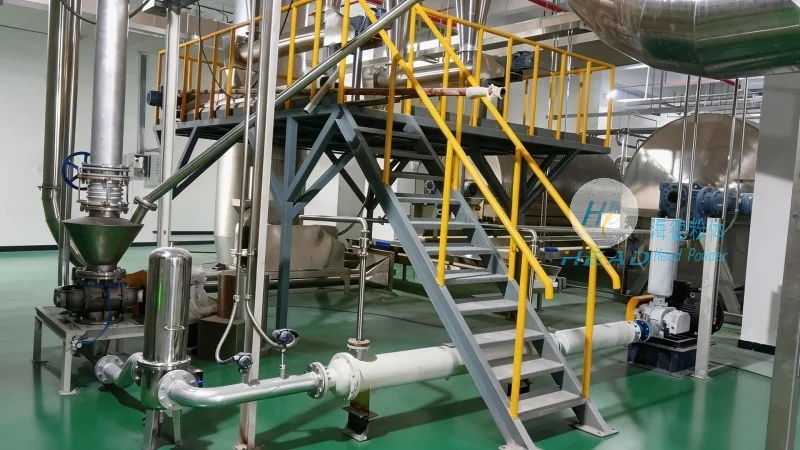
Advantages and Disadvantages of Negative Pressure Conveying
Negative pressure conveying, also known as suction conveying, operates by creating a low-pressure zone at the material inlet. This method draws the dry stone powder into the transport line using a vacuum pump. One of the key advantages is its ability to handle powders with high moisture content or those that are prone to dust explosion, as the system can be designed with explosion-proof components. Additionally, negative pressure systems are generally more energy-efficient for short to medium conveying distances, as they require less power to maintain the vacuum compared to positive pressure systems. However, there are notable drawbacks. The main limitation is the maximum conveying distance, which is typically limited to 50-100 meters due to the pressure drop and energy consumption. Furthermore, negative pressure systems are more susceptible to clogging and blockages, especially with cohesive or fine powders, as the low pressure can cause material to stick to the pipe walls. Maintenance costs can also be higher due to the need for regular cleaning and inspection of the suction equipment.

Advantages and Disadvantages of Positive Pressure Conveying
Positive pressure conveying, or pressure conveying, uses a blower or compressor to generate high-pressure air that pushes the dry stone powder through the transport line. This method offers several advantages, particularly for longer conveying distances. It can handle distances up to several hundred meters, making it suitable for large-scale industrial operations. Positive pressure systems are also more reliable for handling abrasive or corrosive powders, as the high-pressure air can effectively dislodge material from the pipe walls, reducing clogging risks. The system is generally more robust and less prone to failure compared to negative pressure systems. However, the energy consumption is higher, especially for long distances, as the blower must maintain a consistent pressure. Another disadvantage is the potential for dust emissions at the discharge point, which may require additional dust control measures. The initial investment for positive pressure equipment is also higher due to the need for powerful blowers and more durable piping.
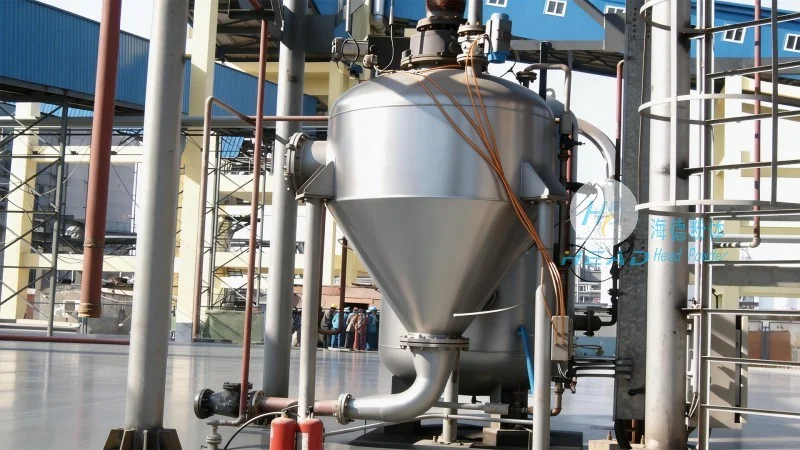
Comparison and Selection Criteria
When deciding between negative and positive pressure conveying for dry stone powder, several factors must be considered. The primary factor is the conveying distance. For short distances (under 50 meters), negative pressure is often more cost-effective and energy-efficient. For longer distances (over 100 meters), positive pressure is typically the better choice due to its superior range and reliability. The nature of the powder is another critical consideration. If the powder is fine, cohesive, or has high moisture content, negative pressure may be preferred to minimize material degradation. Conversely, if the powder is abrasive or requires high discharge pressure, positive pressure is more suitable. The available space and layout of the facility also play a role; negative pressure systems are more flexible in terms of layout as they can draw material from multiple sources, while positive pressure systems are better suited for linear, straight-line conveyance. Finally, the budget and maintenance capabilities of the company must be evaluated. Negative pressure systems may have lower initial costs but higher long-term maintenance, while positive pressure systems have higher upfront costs but lower ongoing maintenance.