

What is a Barite Pneumatic Conveying System? And What Are Its Design Principles?
Barite, a heavy mineral with high density and chemical inertness, is widely used in various industrial applications such as oil drilling, medical imaging, and as a weighting agent in the petroleum industry. The efficient and reliable transportation of barite powder from storage to processing units is crucial for maintaining production efficiency and product quality. This is where a barite pneumatic conveying system comes into play, offering a solution that combines flexibility, cleanliness, and the ability to handle fine powders with precision.
HeadPowder: Your Expert in Pneumatic Conveying Solutions
At Shandong HeadPowder Engineering Co., Ltd., we specialize in designing and manufacturing advanced pneumatic conveying systems tailored to the unique needs of barite handling. Our company, commonly known as HeadPowder, has established itself as a leading provider in the field, leveraging years of experience and technical expertise to deliver systems that meet the highest industry standards. With our headquarters located in Shandong, China, we combine local manufacturing capabilities with global market understanding to ensure our clients receive top-tier solutions that are both efficient and cost-effective.
Core Components of a Barite Pneumatic Conveying System
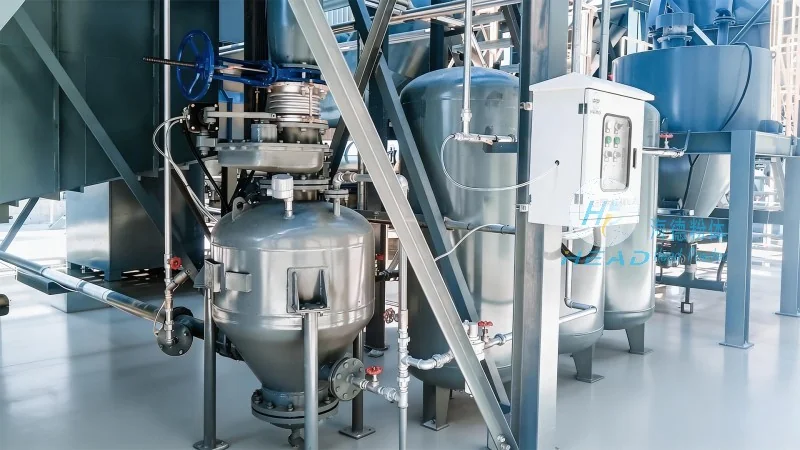
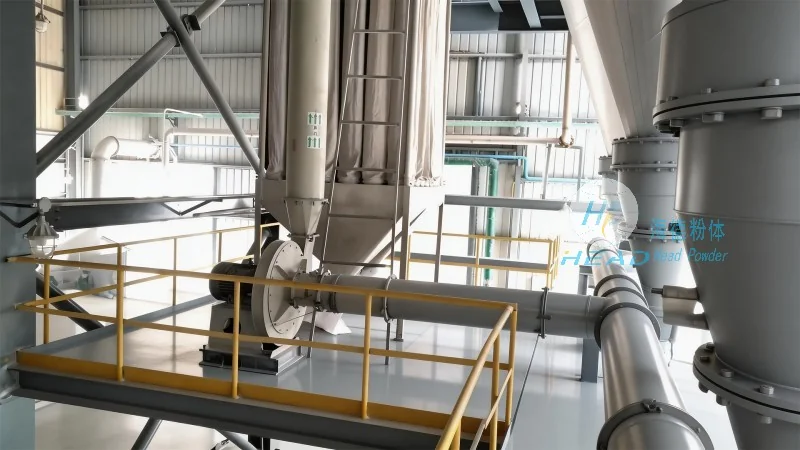
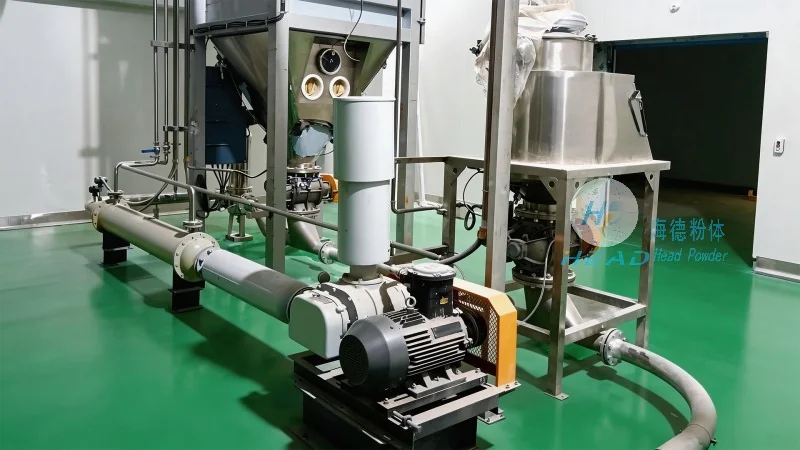
A barite pneumatic conveying system typically consists of several key components that work in harmony to transport the material. The primary components include a hopper or silo for material storage, a feeder to control the flow rate, a conveying line (often equipped with bends and straight sections), and a receiver or discharge unit. The system may also incorporate a blower or compressor to generate the necessary air pressure for material movement. Each component is carefully selected and designed to ensure optimal performance, minimizing material degradation and system downtime.
The Design Principles Behind Barite Pneumatic Conveying
The design of a barite pneumatic conveying system is based on several fundamental principles that ensure efficient and safe operation. The first principle is the selection of the appropriate conveying method, which can be categorized as dilute phase or dense phase, depending on the material characteristics and required transport distance. Dilute phase systems use low air-to-material ratios and are suitable for short to medium distances, while dense phase systems employ higher air-to-material ratios and are ideal for longer distances or when handling more abrasive materials. Another critical principle is the calculation of air velocity and pressure, which must be sufficient to overcome the material's resistance to flow and maintain a stable flow within the conveying line. Proper sizing of the conveying line, including diameter and length, is also essential to prevent blockages and ensure consistent material transport. Additionally, the system design must consider factors such as material moisture content, particle size distribution, and potential for dust generation, as these factors can significantly impact system performance and maintenance requirements.
Advantages of Using a Barite Pneumatic Conveying System
Implementing a barite pneumatic conveying system offers numerous advantages over traditional mechanical conveying methods. One of the most significant benefits is the elimination of material contact with metal surfaces, which reduces the risk of contamination and product degradation. This is particularly important for barite, which is often used in applications where purity is critical, such as in oil drilling fluids. The system also provides a clean and dust-free environment, minimizing the risk of occupational hazards and improving workplace safety. Furthermore, pneumatic conveying systems are highly flexible, allowing for easy integration with existing production lines and the ability to transport materials to multiple destinations from a single source. This flexibility can enhance operational efficiency and reduce the need for additional equipment or infrastructure. Another advantage is the ability to handle fine powders and prevent material segregation, which is crucial for maintaining consistent product quality. The system's compact design also saves space in the production facility, making it an ideal solution for facilities with limited floor space.
Customization and Application Flexibility
HeadPowder understands that each barite handling operation has unique requirements, and our systems are designed to offer flexibility and customization. We work closely with clients to understand their specific needs, including the type of barite being handled, the required transport distance, and the desired output capacity. Based on this information, we design a system that is optimized for performance and efficiency. Our engineers can recommend the most suitable conveying method, whether it's a positive pressure system, negative pressure system, or a combination of both, depending on the application. We also consider factors such as the material's flowability, density, and potential for caking or agglomeration, to ensure the system can handle the material effectively. Additionally, our systems can be equipped with various accessories, such as filters, cyclones, and dust collectors, to meet specific environmental and regulatory requirements. This level of customization ensures that our clients receive a system that is not only efficient but also tailored to their exact operational needs.
Installation and Maintenance Considerations
Proper installation and regular maintenance are essential for the long-term performance and reliability of a barite pneumatic conveying system. During installation, it is crucial to ensure that all components are properly aligned and secured to prevent vibrations and leaks. The conveying line should be checked for any signs of wear or damage, and all connections should be tightened to maintain airtightness. The hopper and feeder should be properly sized and positioned to ensure a consistent material flow, avoiding issues such as bridging or rat-holing. Regular maintenance is also vital to keep the system operating at peak efficiency. This includes cleaning the conveying line and filters to prevent clogging, checking the blower or compressor for proper operation, and inspecting the feeder and hopper for any signs of wear or damage. By following a regular maintenance schedule, clients can extend the lifespan of their system and minimize the risk of unexpected downtime. HeadPowder provides comprehensive maintenance services and support to our clients, ensuring that their systems are always in optimal condition.