

Principles and Application Scenarios of Dust-Free Metering Pneumatic Conveying
Dust-free metering pneumatic conveying is a sophisticated technology used in industrial processes to transport bulk materials through a closed system using air as the conveying medium. This method offers significant advantages over traditional methods, particularly in maintaining material purity and preventing contamination. The core principle involves the precise control of material flow and air pressure to ensure efficient and clean material transfer. By understanding the underlying principles and application scenarios, industries can optimize their material handling operations, enhance product quality, and improve overall process efficiency. Shandong HeadPowder Engineering Co., Ltd., a leading provider of material handling solutions, specializes in designing and manufacturing such systems to meet the diverse needs of various industries.
Principles of Dust-Free Metering Pneumatic Conveying
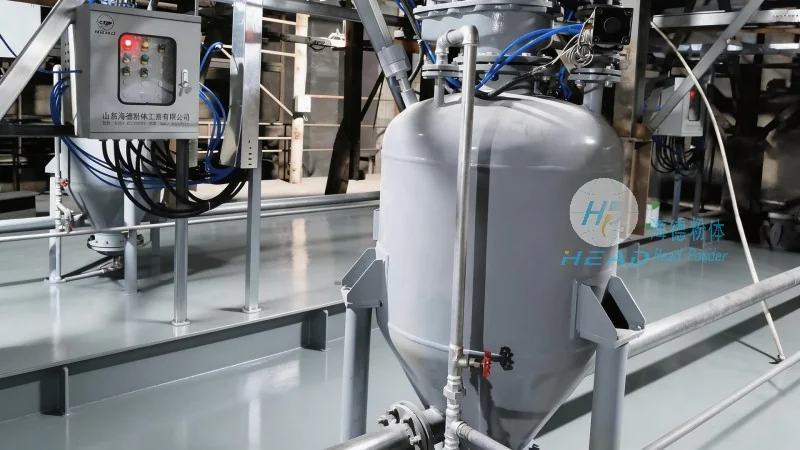
The fundamental principle of dust-free metering pneumatic conveying is the use of a closed pipeline system where air is introduced to create a pressure differential that propels the material. The system typically consists of a hopper, a metering device, a conveying line, and a receiver. The metering device, often a rotary valve or a screw feeder, regulates the material flow rate, ensuring precise control over the amount of material being conveyed. Air is then introduced to create a positive or negative pressure, depending on the system design, to move the material through the pipeline. The key to dust-free operation lies in maintaining a consistent air flow and pressure, which prevents material from escaping the system and contaminating the environment. This principle ensures that the material remains enclosed throughout the conveying process, minimizing dust generation and ensuring a clean transfer. The system operates by creating a pressure gradient along the conveying line, with higher pressure at the inlet and lower pressure at the outlet, or vice versa, depending on the type of conveying (e.g., pressure or vacuum). This gradient provides the necessary force to move the material through the pipeline. The metering device plays a critical role in controlling the flow rate, as it determines the amount of material that enters the system at any given time. By adjusting the speed or rotation of the metering device, operators can precisely control the material flow, which is essential for applications requiring exact dosing. The conveying line is designed to withstand the pressure and temperature conditions of the material being transported, ensuring durability and long-term performance. Proper sealing of the system is also crucial to maintain the pressure differential and prevent air leaks, which could compromise the conveying efficiency.

Key Components and Their Functions
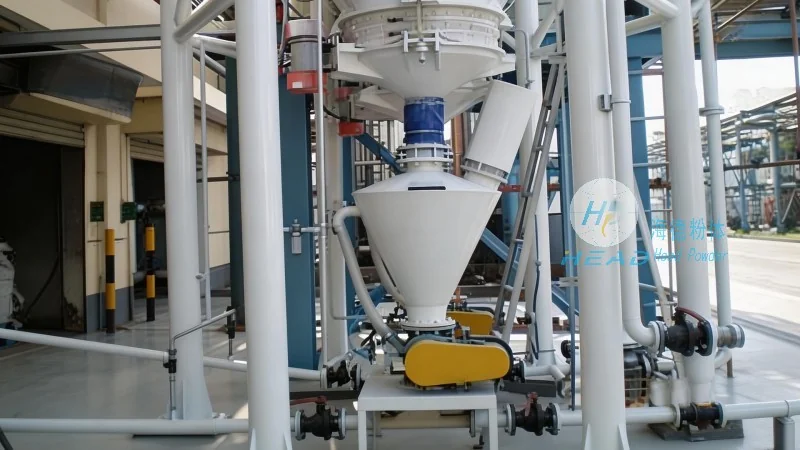
Several critical components work together to ensure the effective operation of a dust-free metering pneumatic conveying system. The hopper serves as the storage container for the bulk material, providing a consistent feed to the metering device. The metering device, such as a rotary valve or a volumetric feeder, regulates the material flow rate, ensuring precise control over the amount of material being conveyed. The conveying line, usually made of stainless steel or other corrosion-resistant materials, transports the material and air mixture. The receiver collects the material at the end of the conveying line, completing the transfer process. Additionally, filters and cyclones are often integrated into the system to separate the material from the air, ensuring that the air is clean before it is released back into the environment. Each component plays a vital role in maintaining the integrity of the material and the efficiency of the conveying process. The hopper is typically designed with a sloped bottom to facilitate material discharge and prevent material buildup. The metering device is selected based on the material characteristics, such as particle size, flowability, and density, to ensure optimal performance. The conveying line is often equipped with bends and elbows that are designed to minimize pressure loss and prevent material deposition. The receiver is usually a sealed container that collects the material and may include a discharge valve for further processing. Filters and cyclones are essential for maintaining air quality and preventing dust accumulation in the system, which can affect performance and safety.
Application Scenarios and Industry Use Cases
Dust-free metering pneumatic conveying is widely used across various industries due to its ability to handle a diverse range of materials while maintaining cleanliness and precision. In the pharmaceutical industry, for example, this technology is essential for transporting active pharmaceutical ingredients (APIs) and other sensitive materials, where contamination can have severe consequences. The system's ability to maintain a sterile environment and prevent cross-contamination makes it ideal for such applications. In the food and beverage industry, it is used to handle powders like flour, sugar, and spices, ensuring that the products remain free from dust and microbial contamination. The chemical industry also benefits from this technology, as it can handle hazardous materials like powders and granules safely and efficiently. Furthermore, in the manufacturing sector, it is used for transporting raw materials to production lines, improving the overall workflow and reducing downtime. The versatility of dust-free metering pneumatic conveying makes it suitable for a wide range of applications, from small-scale operations to large industrial facilities. For instance, in the cosmetics industry, it is used to transport powders like talc and pigments, ensuring that the final products are free from impurities. In the mining industry, it is used to transport ore and other minerals from processing plants to storage facilities, enhancing operational efficiency. The technology's adaptability to different material types and process requirements makes it a valuable asset for industries seeking to streamline their material handling processes.