

Principle and Working Scene Characteristics of Tungsten Carbide Powder Pneumatic Conveying Lines
Tungsten carbide (WC) is a critical material in modern industrial applications, widely used in cutting tools, wear-resistant components, and other high-performance products. The efficient and reliable transportation of tungsten carbide powder is essential for maintaining production efficiency and product quality. Pneumatic conveying lines, as a key solution for powder handling, offer unique advantages in handling such materials. This article explores the principles behind tungsten carbide powder pneumatic conveying systems and the specific working scene characteristics that make them suitable for industrial applications.
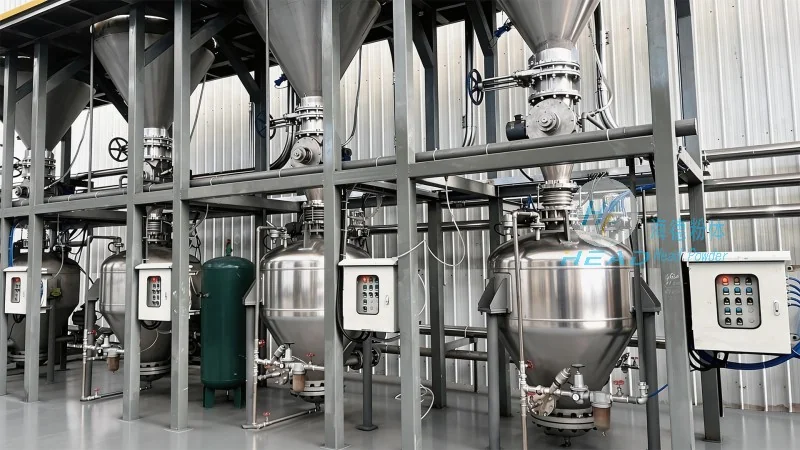
Principle of Pneumatic Conveying for Tungsten Carbide Powder
The core principle of pneumatic conveying involves transporting powder particles through a pipeline using air or gas as the conveying medium. There are two main types of pneumatic conveying systems: suction (or vacuum) conveying and pressure conveying. Suction conveying uses a vacuum at the receiver to draw powder from the source, while pressure conveying uses compressed air to push the powder through the pipeline. For tungsten carbide powder, which is often abrasive and has specific particle size distributions, the choice of system depends on factors such as the distance between the source and destination, the required flow rate, and the need for dust control.
In the case of tungsten carbide powder, the material's high density and abrasive nature require specialized equipment to ensure smooth operation. The conveying line typically includes components such as a hopper for material storage, a feeder to control the flow rate, a conveying pipe, and a receiver to collect the material at the destination. The air flow rate is carefully controlled to maintain a stable suspension of the powder particles, preventing blockages and ensuring consistent delivery. Advanced systems may also incorporate features like cyclone separators to separate the powder from the air stream, enhancing efficiency and reducing wear on components.
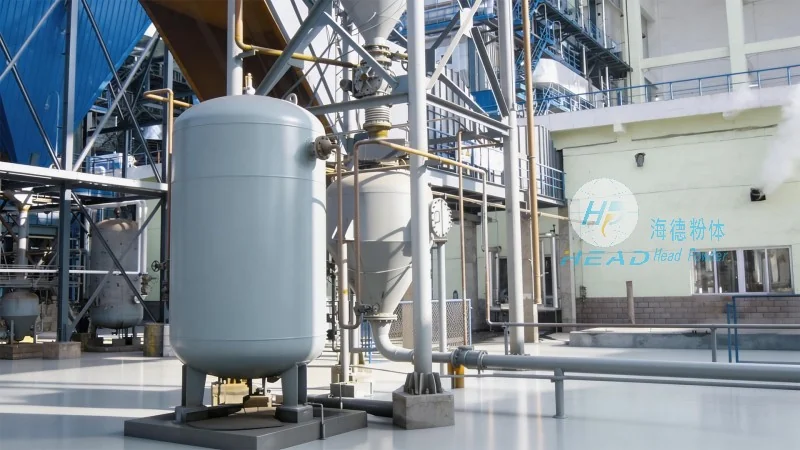
Working Scene Characteristics of Tungsten Carbide Powder Pneumatic Conveying Lines
The working scene characteristics of tungsten carbide powder pneumatic conveying lines are tailored to the specific demands of industrial processes. One key characteristic is the ability to handle abrasive materials without excessive wear on the conveying equipment. Tungsten carbide's hardness means that standard materials like steel may not be suitable for long-term use, so specialized components, such as lined pipes or wear-resistant liners, are often employed to extend the lifespan of the system.
Another important characteristic is the system's flexibility in handling varying particle sizes and flow rates. In industrial settings, tungsten carbide powder may be produced in different particle sizes for various applications, and the conveying system must be able to accommodate these variations without compromising performance. This flexibility is achieved through adjustable feeders and variable air flow controls, allowing operators to optimize the system for different production needs.
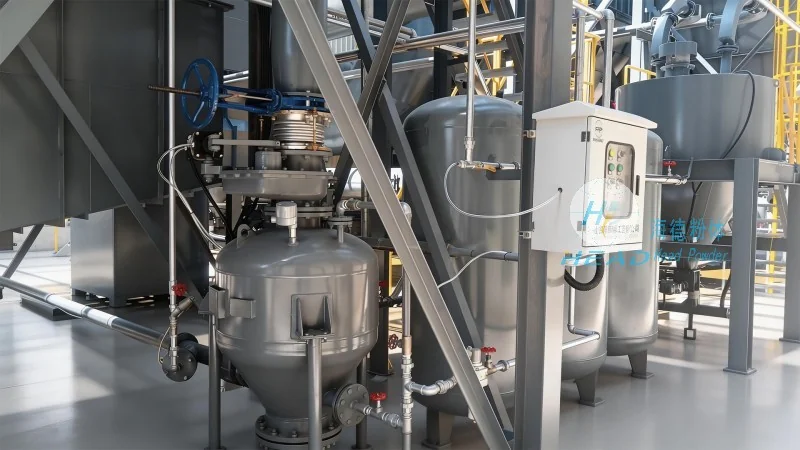
Environmental considerations also play a significant role in the working scene. Tungsten carbide powder is often produced in large quantities, and effective dust control is essential to maintain a safe working environment and comply with industrial regulations. Pneumatic conveying systems are designed with dust collection and filtration systems to minimize airborne particles, ensuring that the process is both efficient and safe. Additionally, the systems are often integrated with dust suppression measures, such as water sprays or electrostatic precipitators, to further reduce emissions.
Operational efficiency is a critical factor in the working scene. The ability to maintain consistent flow rates and minimize downtime is crucial for production continuity. Advanced control systems, including sensors and automation, are used to monitor the system's performance and adjust parameters in real-time. This ensures that the conveying line operates at optimal efficiency, reducing energy consumption and maximizing productivity. For example, in a tungsten carbide manufacturing plant, the system may be integrated with the production line to automatically adjust the flow rate based on the current production schedule, ensuring that material is delivered to the next stage of processing without delays.