

Operation Process and Working Principle of Monocrystalline Silicon Powder Conveying System
HeadPowder, a leading enterprise in the field of powder handling technology, specializes in the design, manufacturing, and implementation of advanced conveying systems for monocrystalline silicon powder. Based in Shandong, China, the company leverages its expertise to provide efficient and reliable solutions tailored to the unique demands of the semiconductor and solar energy industries. This article delves into the operational process and underlying principles of a typical monocrystalline silicon powder conveying system, highlighting the key components, flow mechanisms, and technological advancements that ensure optimal performance.
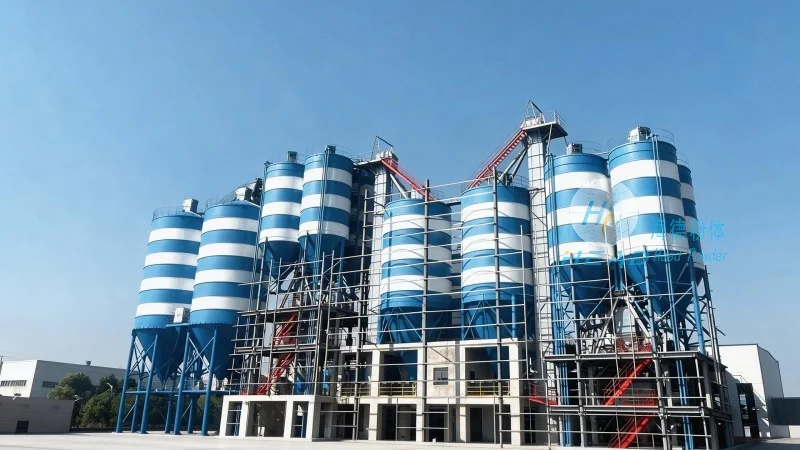
Key Components of the Conveying System
The monocrystalline silicon powder conveying system typically comprises several critical components that work in concert to achieve seamless material transport. These include a hopper for material storage, a feeder to control the flow rate, a conveyor (such as a screw or pneumatic system), and a control unit to regulate the entire process. The hopper is designed to accommodate the bulk storage of silicon powder, ensuring a consistent supply to the feeder. The feeder, often a rotary valve or a vibratory feeder, precisely regulates the discharge rate, preventing overloading or underflow that could disrupt the conveying process. The conveyor itself is engineered to handle the abrasive nature of silicon powder, with materials like stainless steel or specialized coatings to minimize wear and maintain product integrity. The control unit integrates sensors and automation software to monitor parameters such as flow rate, pressure, and temperature, enabling real-time adjustments to maintain system efficiency.
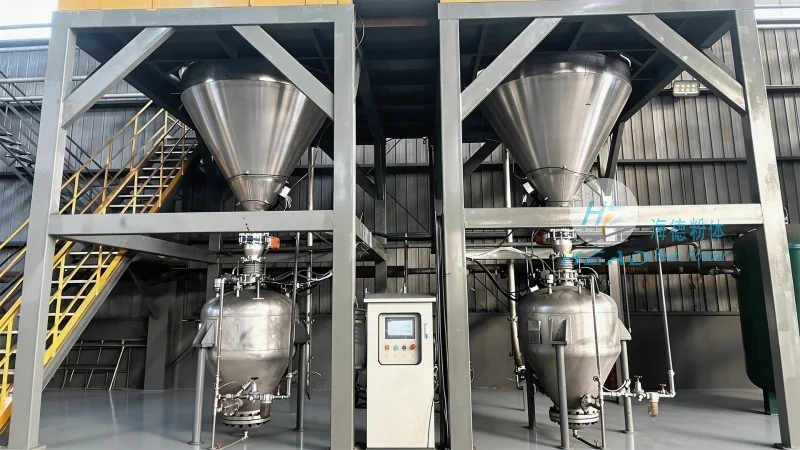
Operation Process of the Conveying System
The operation of the monocrystalline silicon powder conveying system follows a systematic sequence, starting with material loading into the hopper. Once the hopper is filled, the feeder activates, controlling the flow of silicon powder into the conveyor. The conveyor then transports the powder to the desired destination, such as a processing unit or storage silo. Throughout this process, the control unit continuously monitors the system's performance, adjusting the feeder speed or conveyor pressure as needed to maintain a stable flow. The system is equipped with safety features, including pressure relief valves and emergency stop mechanisms, to prevent accidents and ensure operator safety. Regular maintenance, such as cleaning the conveyor and inspecting the feeder, is performed to maintain optimal performance and extend the system's lifespan.
Working Principle of the Conveying System
The core working principle of the monocrystalline silicon powder conveying system revolves around the transfer of material from the source to the destination through a combination of mechanical and pneumatic forces. In a typical mechanical system, the feeder uses a rotating mechanism to push the powder into the conveyor, which then transports it via a screw or belt. The pneumatic system, on the other hand, utilizes compressed air to create a flow of air and powder, moving the material through pipes. Both systems rely on the principle of fluidization, where the powder is suspended in a gas stream, reducing friction and enabling efficient transport. The system's design considers factors such as the powder's density, moisture content, and flowability to optimize the conveying process. By integrating sensors and automation, the system can adapt to varying conditions, ensuring consistent performance even with changes in material properties or operating parameters.
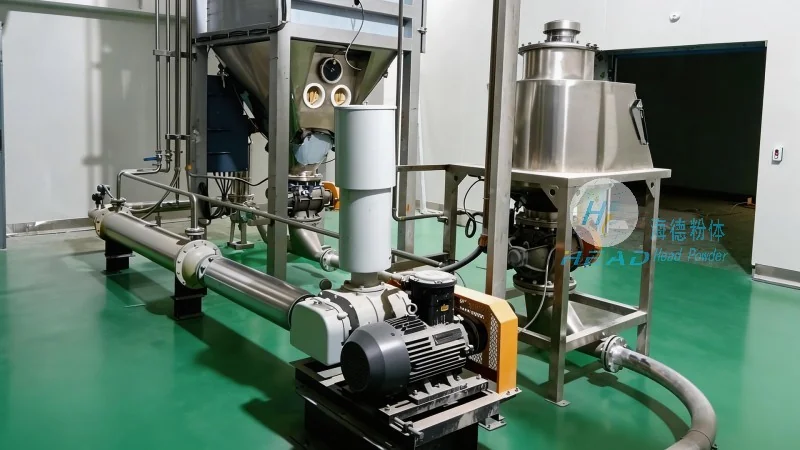
Advantages and Applications
HeadPowder's monocrystalline silicon powder conveying systems offer several advantages, including high efficiency, low maintenance, and minimal product degradation. The systems are designed to handle the abrasive and high-value nature of silicon powder, ensuring that the material remains intact during transport. These systems are widely used in the production of solar cells and semiconductor wafers, where precise control over the powder flow is critical. The company's expertise in customizing systems to meet specific customer requirements ensures that clients receive solutions tailored to their unique operational needs. By leveraging advanced technology and rigorous quality control, HeadPowder delivers reliable and efficient conveying solutions that enhance productivity and reduce downtime in industrial applications.