

Operation Process and Working Principle of Expanded Clay Aggregate Powder Conveying System Equipment
Shandong HeadPowder Engineering Co., Ltd., a leading manufacturer based in Shandong, China, specializes in the design, development, and production of advanced powder conveying systems. The company's focus on innovation and precision engineering has led to the creation of efficient and reliable equipment for handling expanded clay aggregate powder, a material widely used in construction, landscaping, and industrial applications. This article provides a detailed overview of the operation process and working principle of the expanded clay aggregate powder conveying system, highlighting the key components, operational steps, and technical aspects that ensure optimal performance.

Overview of the Expanded Clay Aggregate Powder Conveying System
The expanded clay aggregate powder conveying system is a sophisticated piece of industrial equipment engineered to transport bulk powder materials, such as expanded clay aggregate, from one location to another with high efficiency and minimal loss. This system is particularly valuable in applications where precise control over powder flow, dust containment, and material handling is critical. The system typically consists of several interconnected components, including a hopper for material storage, a feeder to regulate the flow rate, a conveyor mechanism (such as a screw or pneumatic conveyor), and a control system to monitor and adjust the operation. Each component is designed to work in harmony to ensure smooth and continuous material transport, reducing downtime and operational costs.
Key Components and Their Functions
Understanding the individual components of the expanded clay aggregate powder conveying system is essential to grasp its overall functionality. The primary components include:
- Hopper: A large, airtight container used to store the expanded clay aggregate powder. The hopper is equipped with a discharge valve or gate that controls the material flow into the feeder. Its design minimizes material buildup and prevents dust exposure, ensuring a clean and safe working environment.
- Feeder: The feeder is responsible for regulating the flow rate of the powder from the hopper to the conveyor. Common types include screw feeders, vibratory feeders, or rotary valves. The feeder ensures a consistent and controlled feed, preventing overloading or underfeeding of the conveyor, which could lead to system inefficiencies or damage.
- Conveyor Mechanism: This is the core component that transports the powder from the feeder to the discharge point. For expanded clay aggregate, which is a dry, free-flowing powder, pneumatic conveyors are often preferred due to their ability to handle fine powders without the need for mechanical parts that could cause blockages. The pneumatic system uses air pressure to move the material through a pipeline, while mechanical conveyors (like screw or belt conveyors) may be used for larger particles or when a closed system is not required.
- Control System: The control system monitors various parameters, such as flow rate, pressure, and temperature, to ensure the system operates within optimal conditions. It may include sensors, controllers, and indicators that alert operators to any deviations or issues, allowing for quick adjustments and maintenance. The control system also enables automation, reducing the need for manual intervention and improving operational consistency.
Operation Process of the Powder Conveying System
The operation of the expanded clay aggregate powder conveying system follows a systematic sequence of steps, each designed to ensure efficient and safe material transport. The process begins with the loading of the hopper with the expanded clay aggregate powder. Once the hopper is filled, the discharge valve is opened, allowing the material to flow into the feeder. The feeder then regulates the flow rate, sending a consistent stream of powder to the conveyor mechanism.
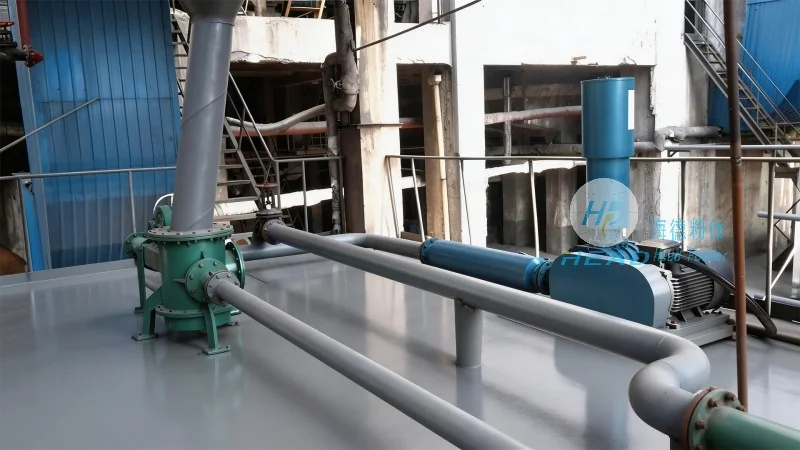
In a pneumatic conveying system, the conveyor uses compressed air to create a pressure differential that propels the powder through the pipeline. The air and powder mixture travels from the feeder to the discharge point, where the powder is separated from the air and collected in a receiving hopper or directly into the processing equipment. The control system continuously monitors the pressure and flow rate, adjusting the air supply as needed to maintain optimal performance.
For mechanical conveyors, the process is similar but relies on mechanical force to move the powder. A screw conveyor, for example, uses a rotating screw to push the material forward through the conveyor tube. The speed of the screw can be adjusted to control the flow rate, and the system may include a discharge valve at the end to regulate the output. The control system monitors the motor load and speed to ensure the conveyor operates efficiently and without overloading.
Working Principle of the System
The working principle of the expanded clay aggregate powder conveying system is based on the principles of fluid dynamics and mechanical engineering. In pneumatic systems, the powder is suspended in a stream of air, creating a two-phase flow. The air pressure creates a force that overcomes the gravitational and frictional forces acting on the powder particles, allowing them to be transported through the pipeline. The velocity of the air and the size of the powder particles determine the efficiency of the conveying process. Proper design of the pipeline, including the use of bends, elbows, and expansion joints, is crucial to minimize pressure losses and maintain the flow.
In mechanical systems, the principle is based on the displacement of the powder by the moving conveyor mechanism. The screw or belt exerts a force on the powder, pushing it forward. The design of the conveyor, such as the pitch of the screw or the speed of the belt, is critical to ensure that the powder is moved without causing excessive wear or blockages. The system's efficiency depends on the uniformity of the powder feed and the smooth operation of the conveyor components.
Technical Advantages and Applications
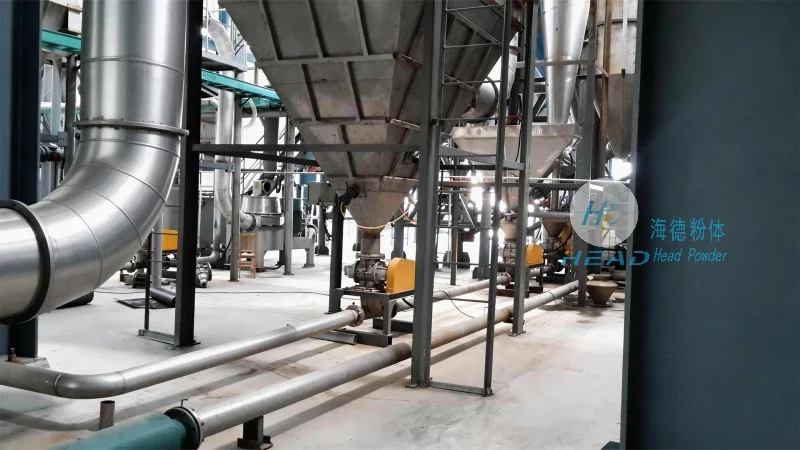
The expanded clay aggregate powder conveying system offers several technical advantages that make it suitable for a wide range of applications. These include high conveying efficiency, minimal material loss, and reduced dust generation compared to traditional methods like bucket elevators or manual handling. The system is also designed for easy maintenance and cleaning, with components that can be easily accessed and serviced. Additionally, the system can be integrated with other processing equipment, such as mixers or dryers, to form a complete production line.
Applications of this system include the construction industry, where expanded clay aggregate is used as a lightweight aggregate in concrete and mortar. It is also used in landscaping projects, where the material is used for soil amendment and erosion control. In industrial settings, the system may be used to transport the powder to processing facilities for further treatment or packaging. The versatility of the system makes it a valuable asset for any operation that requires the efficient handling of bulk powder materials.
Conclusion
Shandong HeadPowder Engineering Co., Ltd. has developed an advanced expanded clay aggregate powder conveying system that combines innovative design with reliable performance. The system's operation process, which involves the coordinated action of the hopper, feeder, conveyor, and control system, ensures efficient and safe material transport. The working principle, based on fluid dynamics and mechanical engineering, allows for the effective handling of expanded clay aggregate powder, a material with unique properties that require specialized equipment. By understanding the components, operation, and technical advantages of this system, users can optimize their material handling processes and improve overall operational efficiency. The system's design and functionality make it an essential tool for industries that rely on the consistent and reliable transport of bulk powder materials.