

Operation Process and Working Principle of Pneumatic Conveying Line for Crystal Granular Materials
For industries dealing with crystal granular materials, efficient material handling is crucial to maintaining production efficiency and product quality. Pneumatic conveying lines represent a sophisticated solution that enables the transport of such materials through a pressurized or vacuum system. This article delves into the operation process and working principle of a pneumatic conveying line specifically designed for crystal granular materials, highlighting the technical aspects and practical applications.
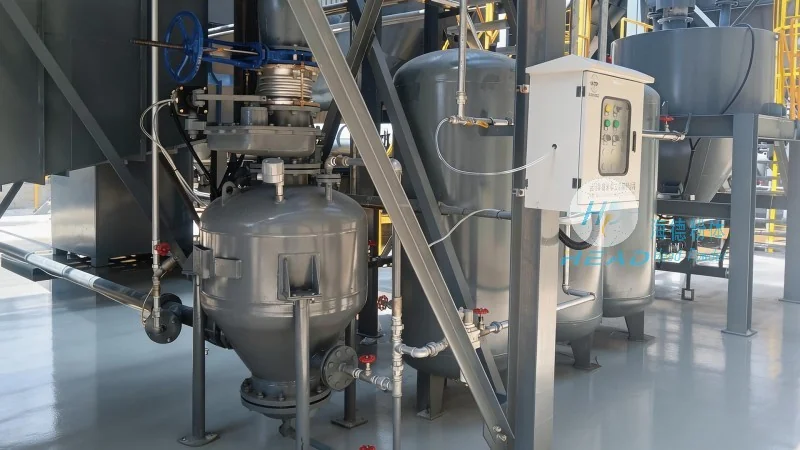
Overview of Pneumatic Conveying Systems for Crystal Granular Materials
Pneumatic conveying systems are engineered to transport bulk materials, including fine powders and granules, using air or gas as the conveying medium. In the context of crystal granular materials—such as pharmaceutical powders, chemical crystals, or food-grade granules—the design of the system must consider factors like particle size, density, moisture content, and flow characteristics. A well-designed pneumatic conveying line for crystal granular materials ensures minimal product degradation, consistent flow rates, and low maintenance requirements.
Key Components of the Pneumatic Conveying Line
The pneumatic conveying line for crystal granular materials typically consists of several key components that work in tandem to achieve efficient material transport. These components include:
1. Feeder: The feeder is responsible for introducing the crystal granular material into the conveying system at a controlled rate. For delicate materials like pharmaceutical crystals, a rotary valve or a star feeder is often used to minimize product impact and ensure a steady flow.
2. Conveying Pipe: The pipe network forms the main pathway for the material and air mixture. The material is suspended in the air stream and transported through the pipe. The pipe material is usually selected for its resistance to corrosion and wear, often made of stainless steel or other inert materials to prevent contamination of the crystal granular product.
3. Exhaust Filter: At the end of the conveying line, an exhaust filter captures the material particles from the air stream, preventing dust and particles from being released into the environment. The filter is designed to handle fine particles and ensure clean air discharge.
4. Blower or Vacuum Pump: This component provides the necessary air pressure or vacuum to move the material through the system. The choice between positive pressure (blower) and negative pressure (vacuum pump) depends on the specific application and material characteristics.
Operation Process of the Pneumatic Conveying Line
The operation process of a pneumatic conveying line for crystal granular materials involves several sequential steps that ensure smooth and continuous material transport:
1. Material Loading: The crystal granular material is fed into the system via the feeder at a predetermined rate. The feeder controls the flow rate to match the system's capacity and prevent overloading.
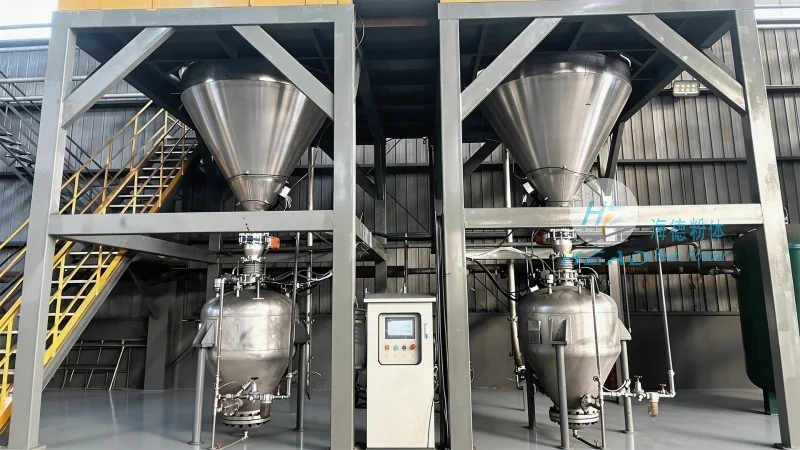
2. Air Intake and Mixing: The blower or vacuum pump generates the required air flow. The material is then introduced into the air stream at the feeder, creating a mixture of air and material particles.
3. Transport Through the Pipe: The air-material mixture travels through the conveying pipe. The air velocity is maintained at a level sufficient to keep the particles suspended and prevent settling. The pipe design, including bends and fittings, is optimized to minimize pressure loss and maintain consistent flow.
4. Material Discharge: At the receiving end of the line, the material is separated from the air stream and collected in a hopper or storage tank. The air passes through the exhaust filter, where the material particles are captured.
5. Air Exhaust: The filtered air is then discharged from the system, completing the cycle. The system may include a dust collection system to ensure compliance with environmental regulations.
Working Principle of the Pneumatic Conveying Line
The working principle of the pneumatic conveying line for crystal granular materials is based on the fundamental concept of fluidization and suspension. The air stream provides the necessary kinetic energy to lift and transport the material particles. The key principles include:
1. Particle Suspension: The air velocity in the pipe is maintained above the minimum fluidization velocity of the crystal granular material. This ensures that the particles remain suspended in the air stream rather than settling and causing blockages.
2. Pressure Drop Management: The system is designed to manage pressure drop along the pipe length. Proper pipe sizing and minimal bends reduce pressure loss, ensuring efficient material transport over long distances.
3. Material Separation: At the discharge point, the air and material are separated. The exhaust filter captures the fine particles, preventing them from escaping into the environment. The collected material is then ready for further processing or storage.
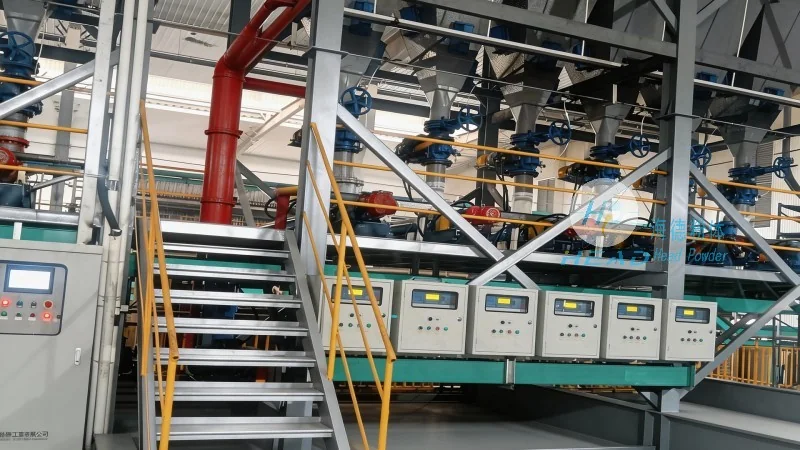
Advantages of Using Pneumatic Conveying for Crystal Granular Materials
Implementing a pneumatic conveying line for crystal granular materials offers several advantages over traditional mechanical conveying methods:
1. Reduced Product Contamination: The enclosed system minimizes exposure to external contaminants, ensuring the purity of the crystal granular material, which is critical in industries like pharmaceuticals and food processing.
2. Low Maintenance Requirements: Pneumatic conveying systems have fewer moving parts compared to mechanical conveyors, leading to lower maintenance costs and longer equipment lifespan.
3. Flexibility in Layout: The system can be easily adapted to different plant layouts, allowing for horizontal, vertical, or mixed-direction transport of materials.
4. Energy Efficiency: Modern pneumatic conveying systems are designed to optimize air usage, reducing energy consumption and operational costs.
About Shandong HeadPowder Engineering Co., Ltd.
Shandong HeadPowder Engineering Co., Ltd., commonly known as HeadPowder, is a leading provider of advanced material handling solutions, including pneumatic conveying systems tailored for crystal granular materials. With a strong focus on innovation and customer satisfaction, HeadPowder leverages years of industry experience to design, manufacture, and install high-quality pneumatic conveying lines that meet the specific needs of various industries.
HeadPowder's expertise lies in understanding the unique challenges associated with handling crystal granular materials, such as maintaining product integrity, ensuring efficient transport, and adhering to strict quality standards. The company's team of engineers and technicians work closely with clients to develop customized solutions that enhance production efficiency and reduce operational costs.
HeadPowder is committed to delivering reliable and durable pneumatic conveying systems that are built to withstand the demands of industrial environments. With a manufacturing facility located in Shandong, China, the company adheres to international quality standards and provides comprehensive after-sales support to ensure long-term customer satisfaction.