

Aluminum Nitride Pneumatic Conveying System Equipment: Understanding Its Function and Design Princip
HeadPowder, a leading engineering company based in Shandong, China, specializes in the design and manufacturing of advanced material handling systems. Among their portfolio is the aluminum nitride pneumatic conveying system equipment, a critical solution for efficiently transporting aluminum nitride—a high-performance ceramic material—through industrial processes. This article explores what this equipment is, its core design principles, and how it addresses the unique challenges of handling aluminum nitride in various applications.
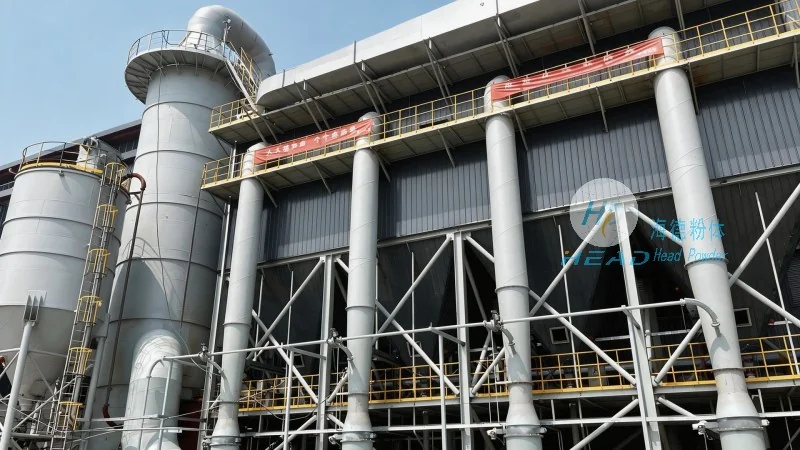
What is an Aluminum Nitride Pneumatic Conveying System Equipment?
An aluminum nitride pneumatic conveying system is a specialized piece of industrial equipment designed to transport aluminum nitride powder or granules through a pipeline using a pressurized gas stream. Unlike traditional mechanical conveying methods, such as screw conveyors or belt conveyors, pneumatic systems rely on air or other gases to move the material. This approach is particularly advantageous for handling fine powders like aluminum nitride, which can be prone to caking, agglomeration, or dust generation when handled mechanically. The system typically consists of a feeding unit, a conveying pipeline, a separation or collection unit, and a gas supply system. It is widely used in industries like electronics, ceramics, and chemical manufacturing, where aluminum nitride is used as a thermal conductor, dielectric, or filler in high-performance applications.
Key Characteristics of Aluminum Nitride and Their Impact on Conveying
Aluminum nitride (AlN) is a wide-bandgap semiconductor with exceptional thermal conductivity (up to 320 W/m·K) and high dielectric strength. These properties make it a valuable material in the production of power electronics, LED lighting, and high-temperature sensors. However, its fine particle size (often in the micrometer range) and high surface area can lead to challenges during handling. For instance, aluminum nitride powder can be hygroscopic (absorbing moisture from the air), which may affect its performance if not handled properly. Pneumatic conveying systems are preferred over mechanical methods because they minimize particle attrition, prevent contamination, and maintain the material's integrity throughout the transport process. The system's design must account for these characteristics to ensure efficient and safe operation.
Basic Design Principles of Pneumatic Conveying Systems
The fundamental principle of pneumatic conveying is to create a pressure differential between the inlet and outlet of the conveying line. A gas (usually air, but sometimes inert gases like nitrogen for sensitive materials) is introduced into the system at a high velocity, which lifts and transports the solid particles. There are two main types of pneumatic conveying systems: dilute-phase and dense-phase. Dilute-phase systems operate at low to moderate pressure and high gas velocity, suitable for short to medium distances. Dense-phase systems use higher pressure and lower gas velocity to move material in a more controlled manner, ideal for longer distances or when handling delicate particles. The design of an aluminum nitride pneumatic conveying system involves several key components:
1. Feeding Unit: Ensuring Uniform Material Introduction
The feeding unit is responsible for introducing aluminum nitride into the conveying line without causing blockages or uneven flow. For fine powders like aluminum nitride, a rotary valve or a venturi feeder is commonly used. The rotary valve provides a controlled, continuous feed, while the venturi feeder uses the pressure drop in the pipeline to draw material from a hopper. The design must ensure that the material is introduced at a consistent rate, preventing overloading or underloading of the system. This component is critical for maintaining system efficiency and preventing material degradation.
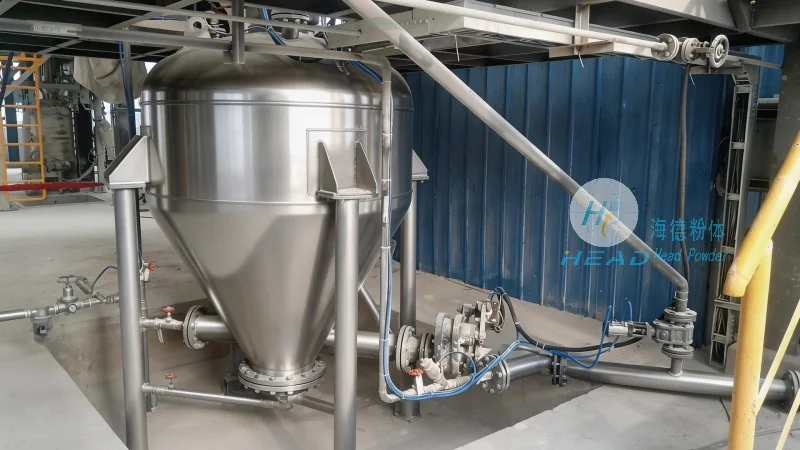
2. Conveying Pipeline: Material Transport and Pressure Management
The pipeline is the core of the pneumatic conveying system, responsible for transporting aluminum nitride from the feeding unit to the collection unit. The pipeline is typically made of stainless steel or other corrosion-resistant materials to withstand the abrasive nature of aluminum nitride particles. The diameter and length of the pipeline are carefully selected based on the material's flow characteristics and the required conveying distance. The system must maintain a sufficient pressure to keep the material suspended in the gas stream, avoiding deposition or clogging. Pressure sensors and regulators are often integrated into the pipeline to monitor and control the pressure, ensuring stable operation.
3. Separation and Collection Unit: Recovering Material and Gas
At the end of the conveying line, the aluminum nitride particles need to be separated from the gas stream and collected. This is typically achieved using a cyclone separator or a bag filter. The cyclone separator uses centrifugal force to separate the particles from the gas, while the bag filter uses fabric bags to trap the particles. The design of the separation unit must be efficient enough to recover a high percentage of the material while minimizing gas loss. The collected aluminum nitride is then transferred to a storage hopper or directly to the next processing step. The gas, now clean, is either vented to the atmosphere or recycled back into the system to improve energy efficiency.
4. Gas Supply System: Providing the Propulsion Force
The gas supply system provides the necessary pressure and flow rate to drive the material through the pipeline. This system typically includes a blower or a compressor, a filter to remove contaminants from the gas, and a pressure regulator. The choice of gas (air or inert gas) depends on the application and the sensitivity of the material. For example, if the aluminum nitride is used in a process where moisture is a concern, an inert gas like nitrogen may be used to prevent oxidation. The gas supply system must be capable of maintaining a consistent pressure and flow rate, even under varying load conditions, to ensure reliable operation.
Design Considerations for Aluminum Nitride Pneumatic Conveying Systems
Designing an aluminum nitride pneumatic conveying system requires careful consideration of several factors to ensure optimal performance and longevity. These include:
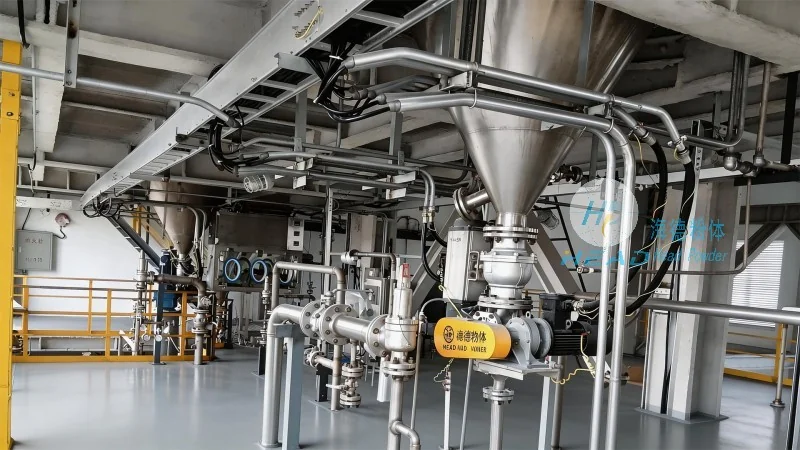
1. Particle Size and Flowability
The size and shape of aluminum nitride particles directly affect their flowability and how they behave in the conveying system. Fine particles (less than 10 micrometers) are more prone to agglomeration and can cause blockages if not properly handled. The system design must account for these characteristics by using appropriate feeding and separation equipment. For example, a venturi feeder may be used to handle fine powders, while a rotary valve may be used for larger granules.
2. Conveying Distance and Pressure Requirements
The distance over which aluminum nitride needs to be conveyed determines the type of pneumatic system to use. Short distances (up to 50 meters) can be handled with dilute-phase systems, while longer distances (up to several hundred meters) may require dense-phase systems or multiple stages of conveying. The pressure required to transport the material increases with distance and the particle size. Engineers must calculate the required pressure based on the material's properties, pipeline length, and system losses to ensure efficient operation.
3. System Efficiency and Energy Consumption
Efficiency is a key consideration in the design of any industrial system. Pneumatic conveying systems can be energy-intensive, especially if the gas is not recycled. HeadPowder's designs focus on minimizing energy consumption by optimizing the gas flow rate, using efficient blower or compressor systems, and recycling the gas. This not only reduces operating costs but also improves the overall sustainability of the system.
4. Material Compatibility and Corrosion Resistance
Aluminum nitride is a relatively inert material, but it can still cause wear and corrosion on system components, especially if it contains impurities or is handled at high temperatures. The conveying system must be made of materials that are compatible with aluminum nitride and resistant to corrosion. Stainless steel is commonly used for pipelines and valves, while specialized coatings may be applied to components that come into direct contact with the material.