

Operation Process and Working Principle of Potash Fertilizer Pneumatic Conveying Lines
HeadPowder, as a professional manufacturer in the field of material handling equipment, specializes in the design, production, and installation of pneumatic conveying systems tailored for the fertilizer industry. With a focus on potash fertilizer, our company, Shandong HeadPowder Engineering Co., Ltd., based in Shandong, China, has developed advanced solutions that enhance the efficiency and reliability of bulk material transport in fertilizer production and processing facilities.
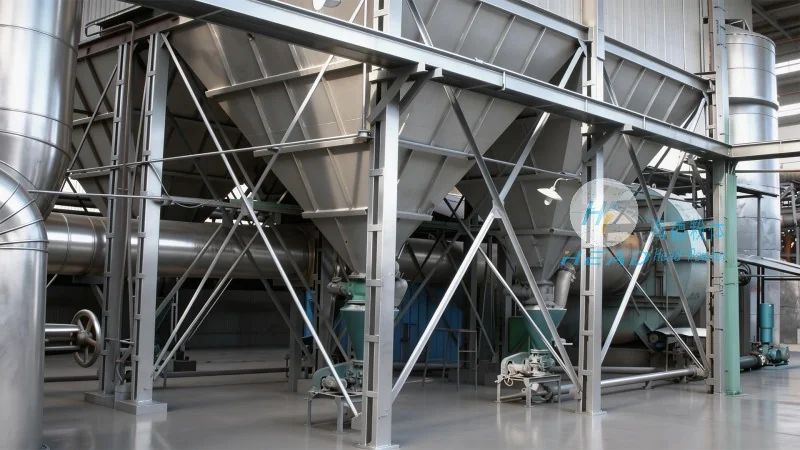
One of our core products is the potash fertilizer pneumatic conveying line, which is engineered to handle the unique characteristics of potash, such as its granular or crystalline form, and the need for precise control during transport. This system is designed to ensure minimal product degradation, maintain consistent moisture levels, and prevent contamination, all critical factors in the fertilizer industry where product quality directly impacts agricultural outcomes.
Key Components of the Potash Fertilizer Pneumatic Conveying Line
The potash fertilizer pneumatic conveying line consists of several essential components that work in tandem to achieve efficient material transport. These include the material hopper, which serves as the storage and feeding unit, equipped with a rotary valve or feeder to control the flow of potash into the system. The hopper is designed to handle bulk quantities of potash and ensures a steady supply to the conveying line.
Next, the conveying line itself, which can be either positive or negative pressure, depending on the specific application requirements. Positive pressure systems use blowers or compressors to force air and material through the pipeline, while negative pressure systems create a vacuum to draw material from the source. For potash fertilizer, positive pressure is often preferred due to the need to maintain product integrity and prevent dust generation.
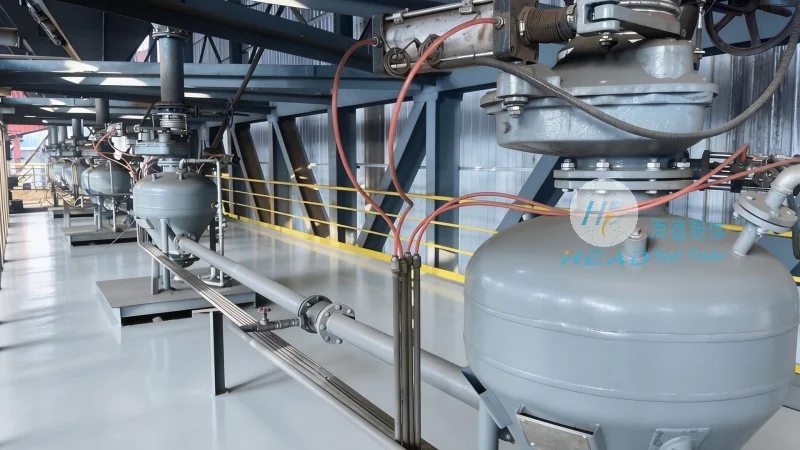
The pipeline network connects the hopper to the discharge point, with appropriate fittings, elbows, and straight sections to ensure smooth material flow. The system may also include a filter or cyclone to separate the air from the material at the discharge end, preventing dust from escaping into the environment and ensuring the material is properly collected.
At the discharge end, a silo or storage tank is typically used to hold the conveyed potash, with a discharge valve or conveyor to transfer the material to the next stage of processing or packaging. The entire system is controlled by a programmable logic controller (PLC) or a dedicated control panel, allowing for automated operation and real-time monitoring of key parameters such as pressure, flow rate, and material level.
Operation Process of the Potash Fertilizer Pneumatic Conveying Line
The operation of the potash fertilizer pneumatic conveying line begins with the loading of potash into the material hopper. The hopper is filled to a certain level, and the rotary valve or feeder is activated to start the material flow into the conveying line. The control system monitors the material level in the hopper and adjusts the feeder speed to maintain a consistent flow rate.
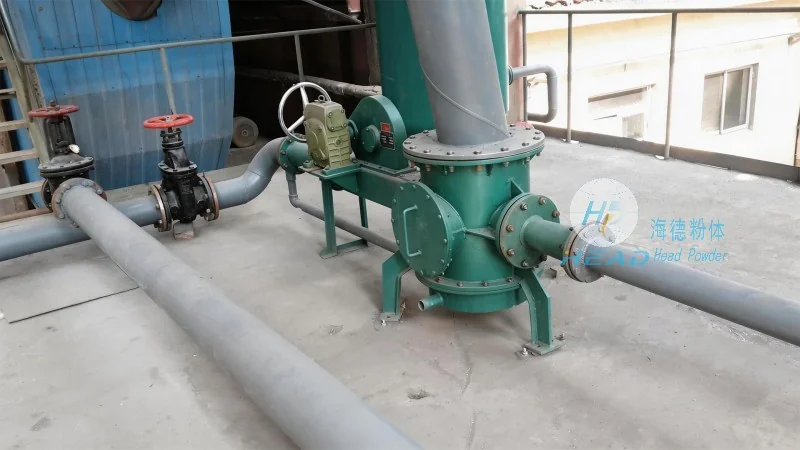
Once the material is in the hopper, the blower or compressor is started, creating the necessary pressure or vacuum to initiate the conveying process. The air and material mixture travels through the pipeline at a controlled velocity, ensuring that the potash particles are suspended and transported efficiently. The system is designed to maintain a stable flow rate, preventing blockages or uneven material distribution.
At the discharge end, the material is separated from the air using a filter or cyclone. The potash falls into the discharge silo, while the air is either vented or recirculated, depending on the system design. The control system continuously monitors the pressure and flow rate in the pipeline, adjusting the blower speed or feeder rate as needed to maintain optimal operation.
The entire process is automated, with the control panel allowing operators to start, stop, or adjust the system parameters as required. Real-time data from sensors in the hopper, pipeline, and discharge end provides insights into the system's performance, enabling proactive maintenance and ensuring consistent product quality.
Working Principle of the Potash Fertilizer Pneumatic Conveying Line
The working principle of the potash fertilizer pneumatic conveying line is based on the principles of fluid dynamics and particle suspension. In a positive pressure system, a blower or compressor generates a high-pressure air stream that is mixed with the potash material. The air velocity is maintained above the terminal velocity of the potash particles, ensuring that they remain suspended in the air stream and are transported through the pipeline.
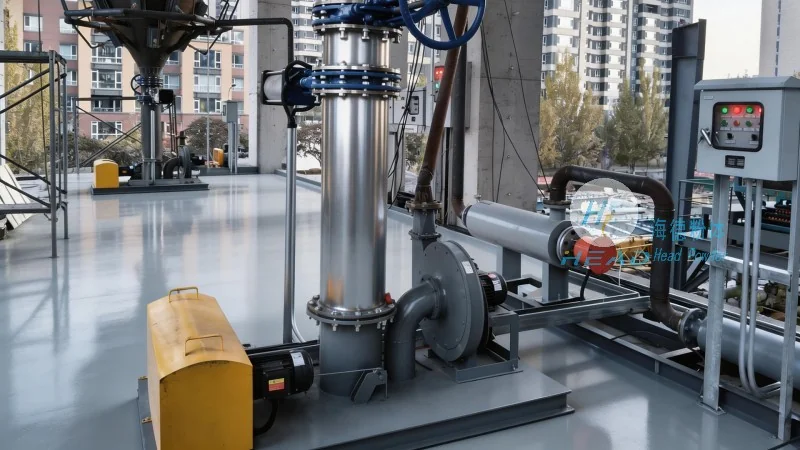
The material is introduced into the pipeline at the hopper, where the rotary valve or feeder controls the flow rate. The air and material mixture then travels through the pipeline, with the pressure maintained at a level sufficient to overcome friction losses and elevation changes. The pipeline is designed with appropriate diameters and fittings to minimize pressure drop and ensure efficient transport.
At the discharge end, a filter or cyclone separates the air from the material. The cyclone uses centrifugal force to separate the heavier potash particles from the lighter air, allowing the material to fall into the discharge silo. The air, now relatively clean, is either vented to the atmosphere or recirculated back to the blower, depending on the system's design and environmental regulations.
The control system plays a crucial role in maintaining the stability of the conveying process. By monitoring pressure, flow rate, and material level, the system can adjust the blower speed or feeder rate to compensate for changes in material properties or system conditions. This ensures that the potash is conveyed at a consistent rate, minimizing the risk of blockages or product degradation.