

Operation Process and Working Principle of Glass Raw Material Pneumatic Conveying System Equipment
HeadPowder, a leading enterprise in the field of material handling technology, specializes in the design, manufacturing, and supply of advanced pneumatic conveying systems tailored for the glass industry. With a strong presence in Shandong, China, the company has established itself as a trusted partner for glass manufacturers seeking efficient and reliable solutions for transporting raw materials. This article provides a detailed overview of the operation process and working principle of glass raw material pneumatic conveying system equipment, highlighting the key components, operational workflow, and the technological advantages that make such systems indispensable in modern glass production facilities.
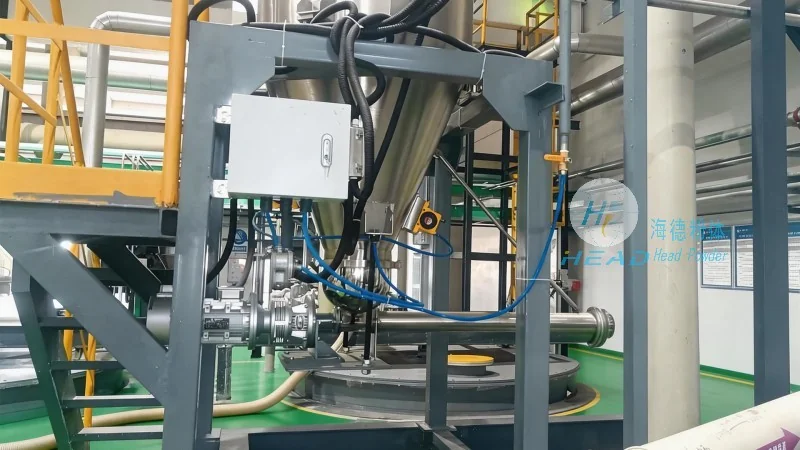
Introduction to Pneumatic Conveying Systems for Glass Raw Materials
Pneumatic conveying systems are a critical component in the glass manufacturing process, enabling the efficient and safe transportation of raw materials such as sand, soda ash, limestone, and other additives from storage silos or bulk containers to the production lines. Unlike traditional mechanical conveyors, pneumatic systems utilize air or gas as the conveying medium, offering advantages like minimal product contamination, reduced dust generation, and the ability to handle a wide range of particle sizes and moisture contents. HeadPowder's glass raw material pneumatic conveying system equipment is engineered to meet the stringent requirements of the glass industry, ensuring consistent performance and reliability in demanding production environments.
Key Components of the Glass Raw Material Pneumatic Conveying System
The glass raw material pneumatic conveying system consists of several essential components that work in tandem to achieve seamless material transport. These components include:
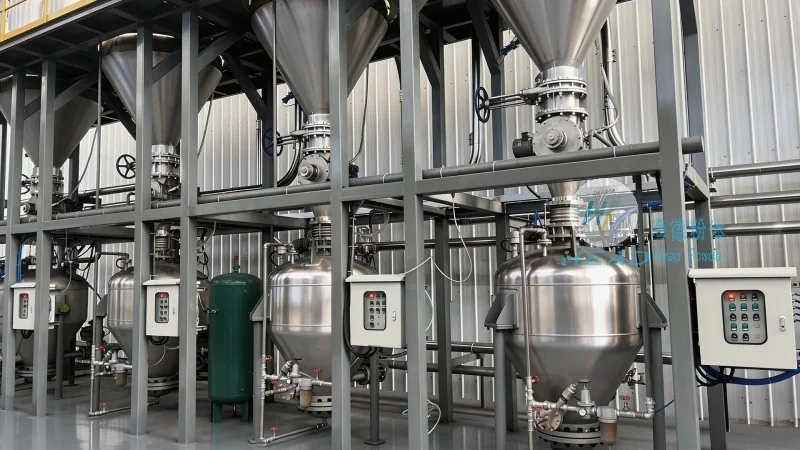
- Feeding Hopper: A hopper designed to store and feed the raw material into the system. It is equipped with a rotary valve or a screw feeder to control the flow rate of the material, ensuring a steady supply to the conveying line.
- Pneumatic Conveying Line: The main transport channel, typically made of stainless steel or other corrosion-resistant materials, that carries the material through the system using compressed air or gas. The line may include bends, elbows, and straight sections to guide the material to the desired destination.
- Compressor and Air Treatment Unit: A high-pressure compressor that generates the necessary air pressure to move the material. The air treatment unit includes filters, dryers, and regulators to ensure the air quality is suitable for conveying the raw materials without causing contamination or degradation.
- Receiver or Discharge Hopper: The final container where the material is deposited after being conveyed. It is designed to handle the incoming flow and may include a discharge valve or a screw conveyor to transfer the material to the next stage of the production process.
- Control System: An automated control system that monitors and regulates the operation of the entire system. It includes sensors for flow rate, pressure, and level, as well as a control panel to adjust the settings and ensure optimal performance.
Operation Process of the Glass Raw Material Pneumatic Conveying System
The operation of the glass raw material pneumatic conveying system follows a systematic process that ensures efficient and continuous material transport. The steps involved are as follows:
- Material Loading: The raw material is loaded into the feeding hopper from bulk storage containers or trucks. The hopper is designed to accommodate large volumes of material and maintain a consistent level.
- Feeding and Air Intake: The rotary valve or screw feeder in the hopper opens, allowing the material to flow into the pneumatic conveying line. Simultaneously, the compressor starts and generates compressed air, which is fed into the line through the air treatment unit.
- Material Conveying: The compressed air, now mixed with the material, creates a slurry-like mixture that moves through the conveying line. The air pressure and velocity are carefully controlled to ensure the material is transported without clogging or degradation. The system may include multiple stages of conveying, with intermediate receivers to split or redirect the flow as needed.
- Material Discharge: Upon reaching the receiver or discharge hopper, the material is deposited. The compressed air continues to flow through the line, carrying any residual material particles to the end of the line, where it is filtered and recycled back into the system.
- System Shutdown: When the material transport is complete, the control system shuts down the compressor and closes the feeding valve. The system is then ready for the next cycle of operation.
Working Principle of the Glass Raw Material Pneumatic Conveying System
The working principle of the glass raw material pneumatic conveying system is based on the fundamental physics of fluid dynamics and particle transport. The system operates by creating a pressure differential between the feeding hopper and the receiver, using compressed air as the driving force. The key principles involved are:

- Pressure-Driven Conveying: The compressor generates high-pressure air, which is introduced into the conveying line. This pressure difference between the inlet (feeding hopper) and the outlet (receiver) creates a flow of air and material through the system. The air pressure is typically maintained at a level of 4-8 bar, depending on the material characteristics and system design.
- Particle Suspension: The compressed air, moving at a high velocity (typically 20-30 m/s), suspends the raw material particles in the air stream. The particle size, density, and moisture content affect the required air velocity and pressure to achieve stable suspension.
- Flow Control and Regulation: The control system continuously monitors the pressure, flow rate, and level in the system. Sensors provide real-time data, allowing the system to adjust the air pressure and material feed rate to maintain optimal performance. This ensures that the material is conveyed at a consistent rate, preventing overloading or underloading of the system.
- Energy Efficiency: The pneumatic conveying system is designed to be energy-efficient by minimizing air leakage and optimizing the air-to-material ratio. The use of high-efficiency compressors and proper system sizing reduces energy consumption while maintaining the required conveying capacity.
Advantages of Using Glass Raw Material Pneumatic Conveying System Equipment
HeadPowder's glass raw material pneumatic conveying system equipment offers several advantages that make it a preferred choice for glass manufacturers:
- Minimal Product Contamination: The enclosed system prevents contact with external contaminants, ensuring the raw materials remain clean and free from impurities.
- Reduced Dust and Noise: The system is designed to minimize dust generation and noise levels, contributing to a safer and more comfortable working environment.
- Flexibility and Scalability: The system can be easily scaled to accommodate varying production volumes and can be customized to handle different types of raw materials and production processes.
- Space Efficiency: Pneumatic conveying systems require less floor space compared to traditional mechanical conveyors, making them suitable for facilities with limited space.
- Improved Safety: The enclosed design reduces the risk of accidents and exposure to hazardous materials, enhancing workplace safety.
Conclusion
HeadPowder's glass raw material pneumatic conveying system equipment is a sophisticated and reliable solution for the efficient transport of raw materials in the glass industry. By understanding the operation process and working principle of such systems, glass manufacturers can optimize their production lines, improve operational efficiency, and ensure consistent product quality. With its commitment to quality and innovation, HeadPowder continues to provide cutting-edge material handling solutions that meet the evolving needs of the glass manufacturing sector.