

What is a Mineral Powder Pneumatic Conveying Equipment? And What Are Its Design Principles?
Mineral powder pneumatic conveying equipment is a specialized system engineered to transport dry powders, such as mineral powders, through a pipeline using air as the conveying medium. This technology is widely adopted across various industries, including mining, chemical processing, and food production, due to its efficiency and adaptability in handling fine powders. The equipment operates by creating a pressure differential that moves the powder particles through the pipeline, ensuring a reliable and continuous flow of material from the source to the destination.
Design Principles of Pneumatic Conveying Systems
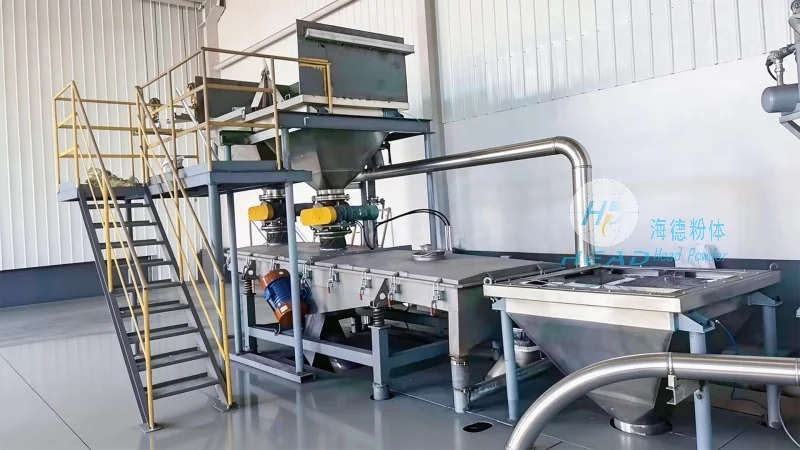
The core design principles of mineral powder pneumatic conveying equipment revolve around the precise balance of air flow, pressure, and particle characteristics. Key components include the hopper, which stores the material; the air compressor or blower, which generates the necessary air pressure; and the pipeline network that transports the powder. The system can be categorized into two main types: pressure and vacuum systems. Pressure systems utilize positive pressure to push the material forward, while vacuum systems employ negative pressure to pull the material. The selection between these systems depends on factors like the distance of transport, the quantity of material, and the specific properties of the powder, such as its density and particle size.
Key Components and Their Functions
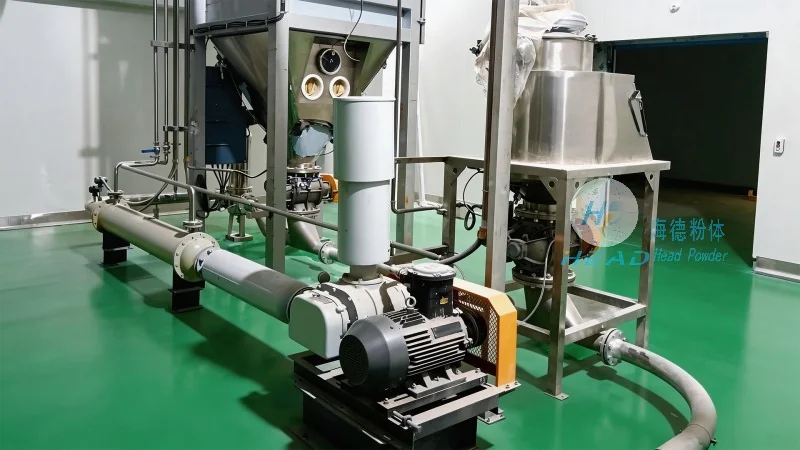
Each component of the mineral powder pneumatic conveying system plays a critical role in ensuring optimal performance. The hopper is designed to hold the mineral powder and provide a smooth flow into the conveying line. It often incorporates a feeder, such as a rotary valve or a screw feeder, to control the discharge rate and prevent material bridging. The air compressor or blower is responsible for generating the air pressure required to move the powder. The pressure can be adjusted based on the material's density and particle size to maintain consistent flow. The pipeline network connects the hopper to the discharge point and may include bends, elbows, and filters to maintain the flow and prevent blockages. Filters are essential to remove any fine particles or dust from the air before it is released back into the environment, ensuring compliance with environmental regulations.
Advantages of Using Pneumatic Conveying for Mineral Powders
Mineral powder pneumatic conveying offers several advantages over traditional methods like belt conveyors or bucket elevators. One of the primary benefits is the ability to transport fine powders without mechanical contact, which reduces the risk of contamination and product degradation. The system is also flexible, allowing for changes in the conveying route without major modifications. Additionally, it can handle a wide range of particle sizes and moisture content, making it suitable for various mineral powders. The equipment is also relatively compact and can be installed in confined spaces, which is beneficial in industrial settings where space is limited. Furthermore, it minimizes material loss and dust exposure, enhancing workplace safety and environmental protection.
Application Examples in Industrial Settings
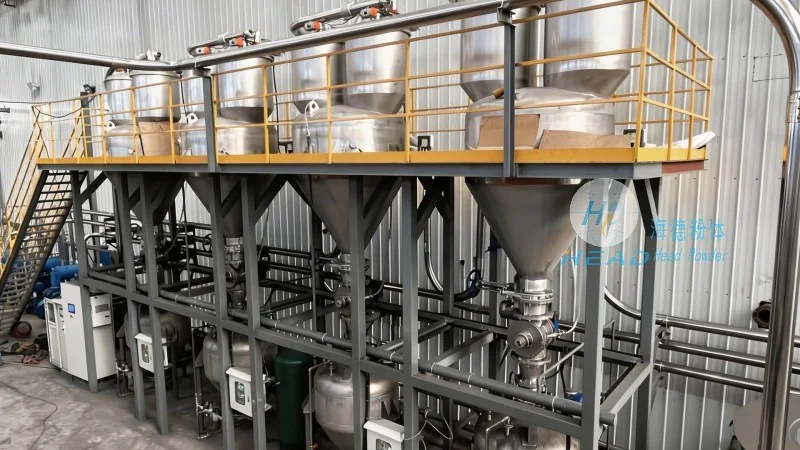
The application of mineral powder pneumatic conveying equipment varies across different industries. In the mining industry, it is used to transport crushed ore from the processing plant to storage facilities or for further processing, such as grinding and concentration. In the chemical industry, it is employed to convey raw materials like limestone or clay to reactors and processing units, ensuring a steady supply of feedstock. The food industry also utilizes this technology to transport powdered ingredients, such as flour or sugar, to production lines, maintaining hygiene and preventing cross-contamination. Each application requires careful consideration of the powder's properties, such as its flowability and moisture content, to ensure the system operates efficiently and safely.
Conclusion and Company Information
Mineral powder pneumatic conveying equipment is a vital component in modern industrial processes, providing an efficient and reliable method for transporting fine powders. The design principles, which focus on air flow, pressure, and material characteristics, ensure that the system can handle various mineral powders with minimal issues. As a leading manufacturer in this field, Shandong HeadPowder Engineering Co., Ltd. specializes in designing and manufacturing high-quality pneumatic conveying systems tailored to the specific needs of different industries. With a commitment to quality and innovation, HeadPowder provides solutions that enhance productivity and safety in material handling operations. Based in Shandong, China, the company leverages its expertise to deliver robust and efficient equipment for clients worldwide, supporting their operational goals with reliable and durable pneumatic conveying solutions.