

Introduction to Rubber Granule Pneumatic Conveying and the Working Principle of Pneumatic Conveying
HeadPowder, a leading engineering company based in Shandong, China, specializes in the design, manufacturing, and installation of advanced pneumatic conveying systems. This article provides an overview of rubber granule pneumatic conveying, detailing the fundamental principles and operational mechanisms of such systems.
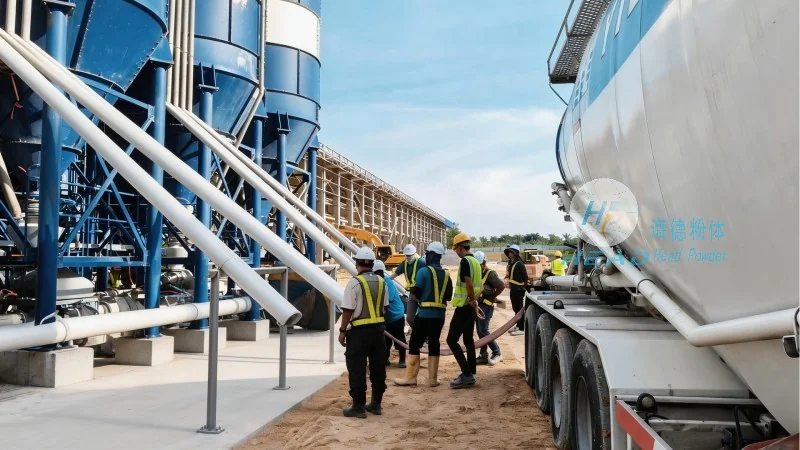
Understanding Pneumatic Conveying Systems
Pneumatic conveying is a method of transporting bulk materials, such as rubber granules, through a closed pipeline using air or gas as the conveying medium. The system operates by creating a pressure differential within the pipeline, either by injecting air under pressure (positive pressure system) or by creating a vacuum (negative pressure system). This differential enables the material to be moved from the source to the destination efficiently and safely.
Key Components of a Rubber Granule Pneumatic Conveying System
A typical rubber granule pneumatic conveying system comprises several critical components that work in concert to ensure smooth material transport. These include the material hopper or feeder, which stores and meters the rubber granules; the conveying line, which is typically made of durable materials like stainless steel or PVC to withstand the abrasive nature of rubber granules; the air compressor or vacuum pump, which provides the necessary pressure or vacuum; and the control system, which regulates the flow of material and air to maintain optimal operation.
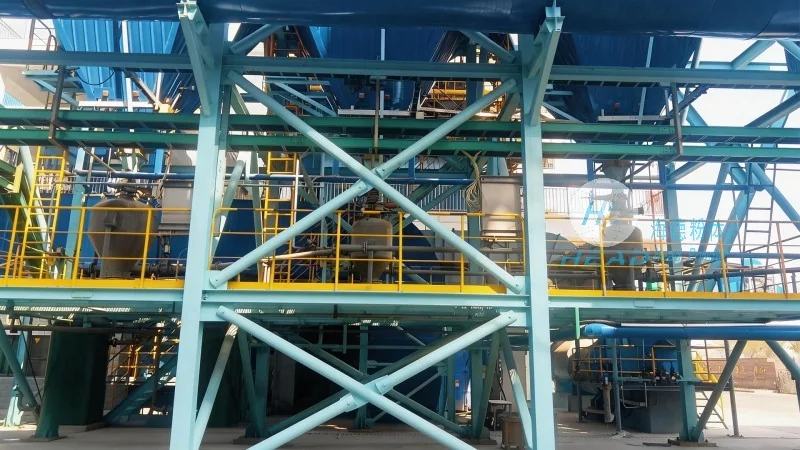
The Working Principle of Rubber Granule Pneumatic Conveying
In a positive pressure system, air is injected into the material hopper, causing the rubber granules to be entrained and carried along the pipeline. The air velocity within the pipeline must be sufficient to overcome the gravitational and frictional forces acting on the granules, ensuring they remain suspended and transported to the discharge point. Conversely, in a negative pressure system, a vacuum is created at the discharge end, drawing the rubber granules and air mixture through the pipeline from the source. Both systems rely on precise control of air flow and material feed rate to achieve consistent and reliable operation.
Advantages of Rubber Granule Pneumatic Conveying
HeadPowder's pneumatic conveying systems for rubber granules offer several advantages over traditional mechanical conveying methods. These include reduced material degradation due to minimal contact with equipment, improved safety by eliminating the need for manual handling of bulk materials, and enhanced flexibility in system layout due to the ability to route the pipeline around obstacles. Additionally, pneumatic conveying systems can handle a wide range of material sizes and shapes, making them suitable for various industrial applications.
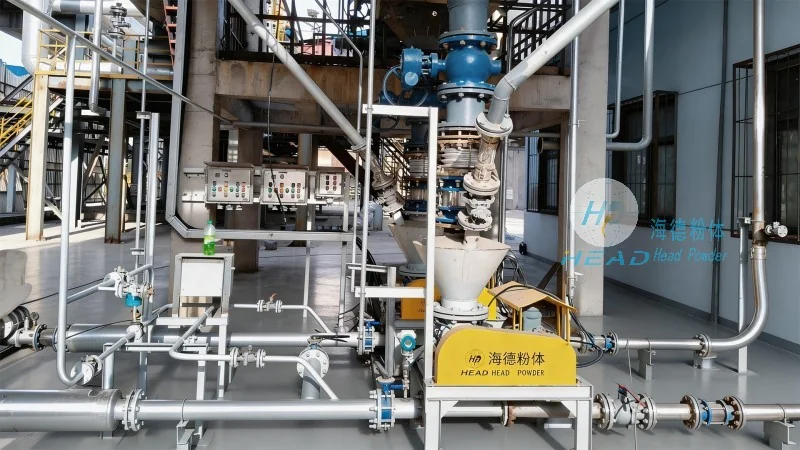
Applications in Industrial Settings
Rubber granule pneumatic conveying systems are widely used in industries such as tire manufacturing, rubber processing, and recycling. In tire manufacturing, these systems efficiently transport raw rubber granules from storage to processing lines, ensuring a continuous supply of material. In rubber recycling facilities, pneumatic conveying helps move reclaimed rubber granules from sorting and cleaning stages to compounding or reprocessing equipment. The systems also find applications in research and development laboratories, where precise control over material flow is essential for testing and experimentation.
Conclusion
HeadPowder Engineering Co., Ltd., with its headquarters in Shandong, China, continues to innovate in the field of pneumatic conveying technology, providing customized solutions tailored to the specific needs of rubber granule handling. By understanding the fundamental principles and operational mechanisms of these systems, industries can optimize their material transport processes, improve efficiency, and enhance overall productivity. The company's commitment to quality and reliability ensures that clients receive systems that are not only effective but also durable and easy to maintain.