

Operation Process and Working Principle of Alumina Hydroxide Powder Pneumatic Conveying Line
Alumina hydroxide powder pneumatic conveying line is a specialized system designed for the efficient transport of alumina hydroxide powder, a key raw material in various industrial applications. This system combines advanced pneumatic conveying technology with robust engineering to ensure reliable and continuous material handling. The technology is widely used in industries such as chemical manufacturing, pharmaceutical production, and food processing, where the transport of fine powders requires precision and minimal product degradation.
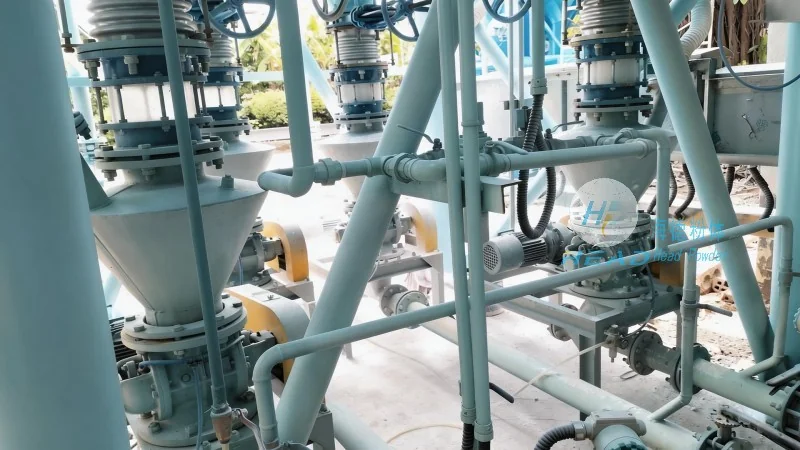
Company Overview: Headpowder
Headpowder, a leading provider in the field, is Shandong HeadPowder Engineering Co., Ltd., headquartered in Shandong, China. The company specializes in the design, manufacturing, and implementation of customized pneumatic conveying solutions tailored to meet the specific needs of clients in the chemical, pharmaceutical, and other related industries. With a strong focus on innovation and quality, Headpowder has established itself as a trusted partner for businesses seeking efficient and reliable material handling systems.
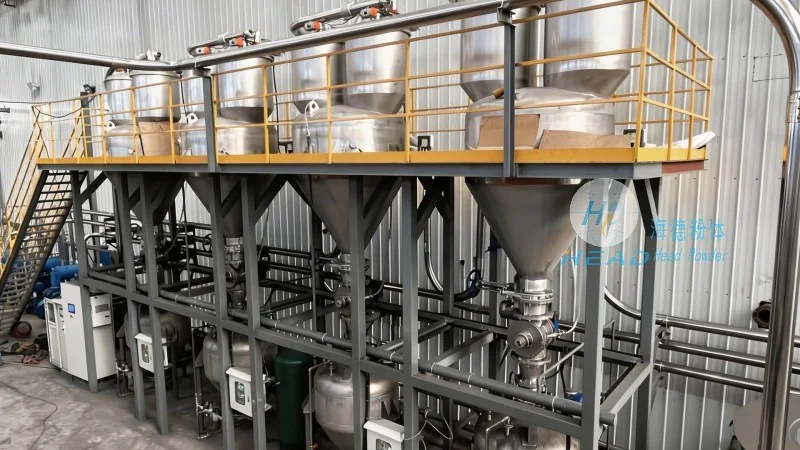
Operation Process of the Pneumatic Conveying Line
The operation of the alumina hydroxide powder pneumatic conveying line typically begins with the loading of the powder into a hopper or storage silo. From there, the material is drawn into the conveying system using a combination of air pressure and vacuum, depending on the specific configuration. The system includes components such as a feeder, a venturi or rotary valve, and a receiver where the powder is deposited. The process ensures minimal product degradation and consistent flow rates, which are critical for maintaining product quality and operational efficiency. The feeder controls the flow rate of the powder, ensuring a steady supply to the conveying line. The venturi or rotary valve then introduces the powder into the pipeline, where it is mixed with the air stream. The receiver at the end of the line collects the powder, and the air is often filtered and recycled to minimize environmental impact and energy consumption. The entire process is monitored and controlled by a sophisticated system that adjusts parameters like air pressure and flow rate based on real-time feedback from sensors.
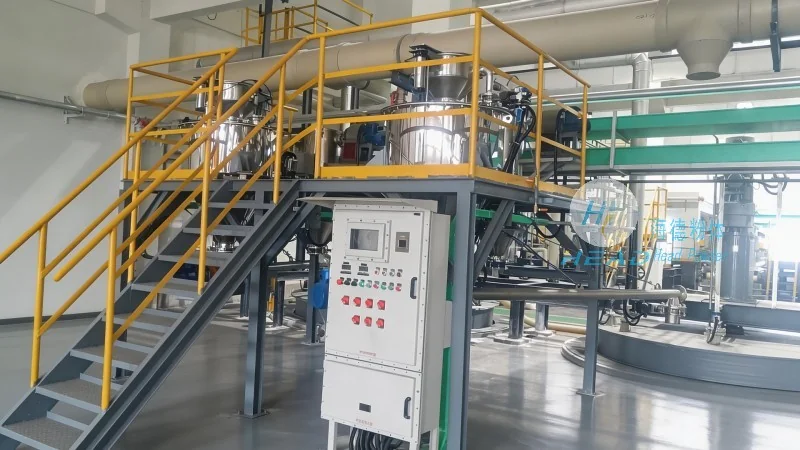
Working Principle of the Pneumatic Conveying System
The working principle of the pneumatic conveying line relies on the movement of air or gas to transport the powder particles. In a typical system, a fan or blower generates the necessary airflow, which is directed through a pipeline system. The powder is introduced into the pipeline at strategic points, often using a feeder that controls the flow rate. The air and powder mixture travels through the pipeline, with the air providing the force to move the particles. The system may use different conveying modes, such as dilute phase or dense phase, depending on the particle size, moisture content, and required transport distance. Dilute phase conveying uses higher air velocities to keep the powder suspended in the air stream, suitable for shorter distances and smaller particles. Dense phase conveying, on the other hand, uses lower air velocities and higher pressure to move the powder in a more compact form, ideal for longer distances and larger particles. The choice of mode depends on the specific characteristics of the alumina hydroxide powder and the operational requirements of the facility.
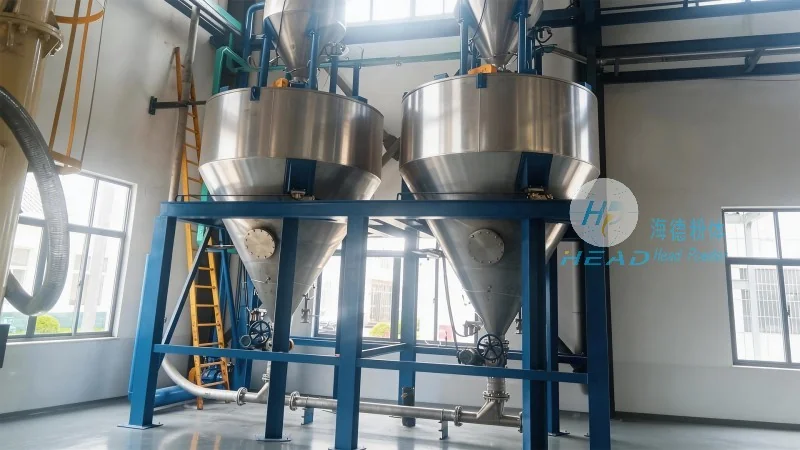
Technical Advantages and Applications
The alumina hydroxide powder pneumatic conveying line offers several advantages over traditional mechanical conveying methods. These include reduced product contamination, as the system is enclosed and prevents exposure to external elements. It also minimizes dust generation, which is beneficial for maintaining a clean and safe working environment. Additionally, the system can handle varying flow rates and material characteristics, making it adaptable to different production requirements. The use of advanced control systems allows for precise monitoring and adjustment of the conveying process, ensuring optimal performance and product quality. In the context of alumina hydroxide powder, which is often used in applications like refractory materials, cosmetics, and water treatment, the efficiency of the conveying line directly impacts the overall production process. By ensuring consistent and reliable transport, the system helps maintain product uniformity and reduces downtime, contributing to higher productivity and lower operational costs.