Ammonium bicarbonate, a widely used chemical in various industrial applications, requires efficient and reliable handling solutions for its transportation. The pneumatic conveying system, as an advanced method for material transport, has become a crucial component in the production and processing of ammonium bicarbonate. HeadPowder, a leading manufacturer of industrial conveying equipment, specializes in providing customized solutions for ammonium bicarbonate pneumatic conveying systems, ensuring optimal performance and compliance with industry standards.
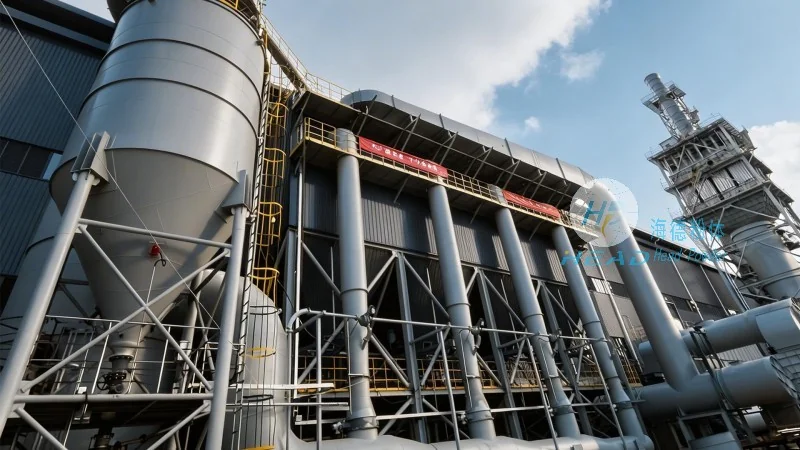
Ammonium bicarbonate, also known as bicarbonate of ammonia, is a white crystalline powder with the chemical formula (NH₄)HCO₃. It is commonly utilized in the food industry as a leavening agent, in pharmaceuticals as a buffering agent, and in agriculture as a nitrogen fertilizer. Due to its hygroscopic nature and the need for precise handling to maintain product quality, specialized equipment is essential for its transport. The pneumatic conveying system, which uses compressed air to move the material through a pipeline, offers a dry and dust-free method that is particularly suitable for ammonium bicarbonate. This system is engineered to meet the stringent requirements of industries where product purity and safety are paramount.
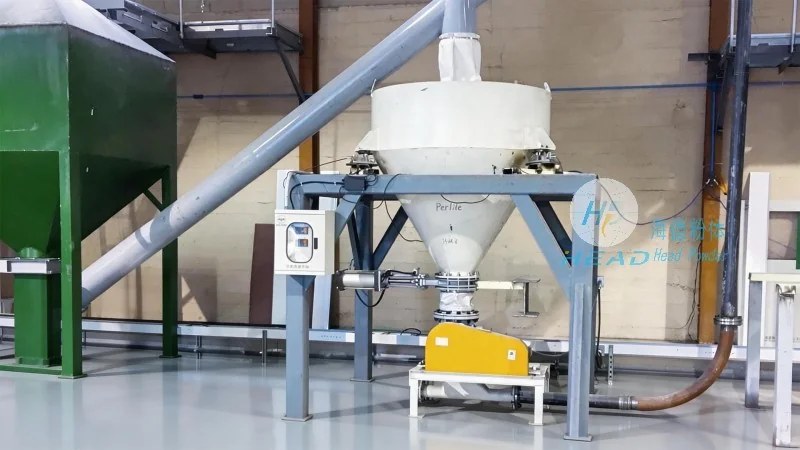
The core of the ammonium bicarbonate pneumatic conveying system lies in its ability to transport the material using air as the conveying medium. The system typically consists of a hopper, a rotary valve, a conveying pipeline, a dust collector, and a receiver. The process begins with the material being fed into the hopper from a storage silo. The rotary valve then controls the flow of ammonium bicarbonate into the conveying pipeline, where it is mixed with compressed air. As the air flows through the pipeline at a high velocity, it creates a low-pressure zone that draws the material particles along with it, forming a dense phase or dilute phase flow depending on the system design. The conveying pipeline is designed with appropriate bends and fittings to ensure smooth material transport without blockages or degradation. The system terminates at a receiver, where the material is deposited, and the air is filtered and returned to the system or released to the atmosphere. The system's design ensures minimal product degradation and maintains the integrity of the ammonium bicarbonate throughout the conveying process.
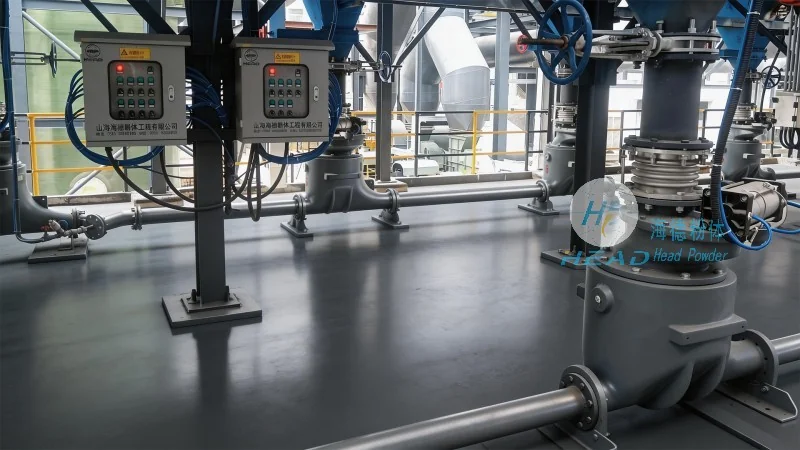
The ammonium bicarbonate pneumatic conveying system offers several advantages that make it a preferred choice for industrial applications. Firstly, it provides a dust-free and hygienic environment, which is critical for food and pharmaceutical industries where product contamination must be minimized. The dry conveying method prevents moisture absorption and caking of the material, ensuring consistent quality throughout the transport process. Secondly, the system is highly efficient in terms of energy consumption and operational costs. By using compressed air as the primary power source, it eliminates the need for mechanical components like conveyor belts or buckets, reducing maintenance requirements and downtime. Thirdly, the system is flexible and can be easily integrated with existing production lines, allowing for modular expansion and adaptation to changing production needs. Additionally, the system offers precise control over material flow rates and pressure, enabling accurate dosing and dosing control in downstream processes. The system's reliability and low maintenance make it a cost-effective solution for long-term operation.
The technical specifications of the ammonium bicarbonate pneumatic conveying system vary based on the specific requirements of the application. Common specifications include conveying capacities ranging from 0.5 to 50 tons per hour, pipeline diameters from 50 to 200 mm, and air pressure levels from 0.5 to 1.0 MPa. The system can handle material with a particle size range from 0.1 to 5 mm, ensuring compatibility with different production processes. The equipment is designed to operate under ambient temperature conditions, with some models offering temperature control features for sensitive applications. In terms of application scenarios, the system is widely used in the production of ammonium bicarbonate for food additives, where it is transported from the production line to packaging units. It is also utilized in the pharmaceutical industry for the transport of ammonium bicarbonate used as a raw material in drug formulations. Furthermore, the system is employed in agricultural settings for the distribution of ammonium bicarbonate as a nitrogen fertilizer, ensuring efficient and safe delivery to farms. The system's adaptability makes it suitable for both small-scale and large-scale production environments.
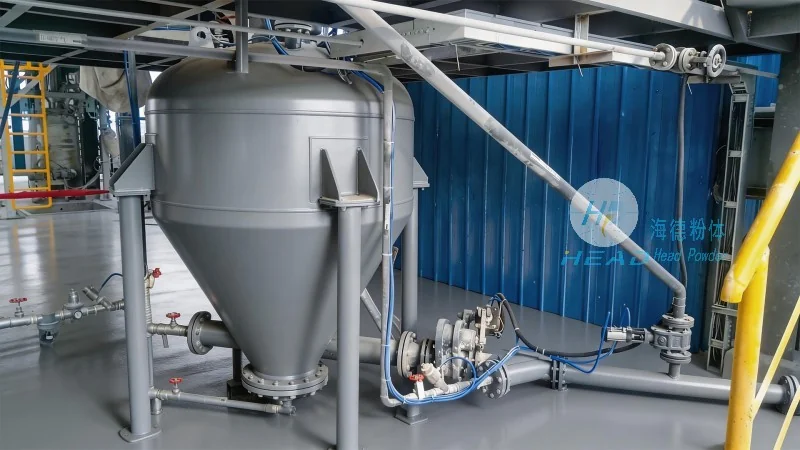
In conclusion, the ammonium bicarbonate pneumatic conveying system is a sophisticated and efficient solution for the transportation of this critical chemical. By leveraging the principles of pneumatic conveying, the system offers a dry, dust-free, and hygienic method that maintains the quality of the material while reducing operational costs and maintenance requirements. The key features and technical specifications of the system make it adaptable to various industrial applications, ensuring reliable and consistent performance. As the demand for ammonium bicarbonate continues to grow in industries such as food, pharmaceuticals, and agriculture, the importance of advanced conveying systems like this will only increase, providing manufacturers with a competitive edge in meeting production and quality standards. HeadPowder, with its expertise in industrial conveying technology, continues to innovate and provide high-quality solutions that meet the evolving needs of the industry.

 Shandong Headpowder Engineering Co., Ltd.
 156-6277-7102(Manager Zhang)
  0531-83386006
  Jinan City, Shandong Province, China
telephone
WeChatconsult
top