

Introduction to Glass Bead Pneumatic Conveying and the Working Principle of Pneumatic Conveying Syst
HeadPowder, a leading enterprise in the field of material handling technology, specializes in the design, manufacturing, and application of pneumatic conveying systems. This article provides an overview of glass bead pneumatic conveying systems, detailing the fundamental principles and operational mechanisms that enable efficient material transport. The company, headquartered in Shandong, China, has established itself as a key player in providing tailored solutions for various industrial applications.
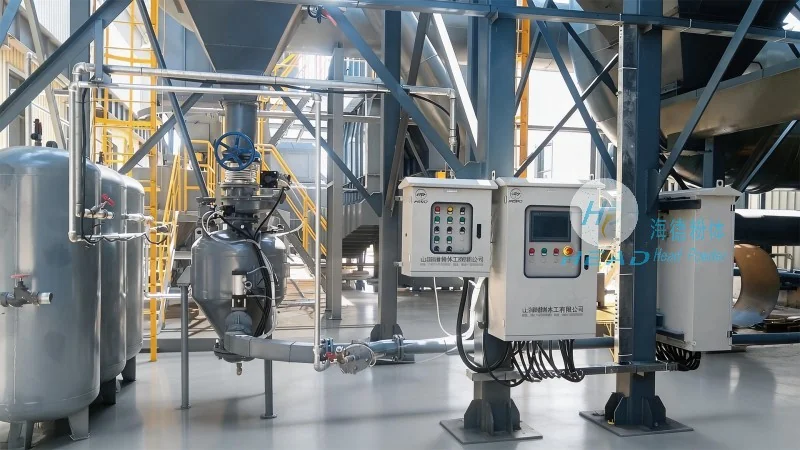
Understanding Pneumatic Conveying Systems
Pneumatic conveying systems utilize air or gas to transport bulk materials from one location to another. These systems are widely used across industries due to their flexibility, efficiency, and ability to handle a diverse range of materials, including powders, granules, and small particles. The core components of a typical pneumatic conveying system include a material feed hopper, a conveyor line (often equipped with a pipeline), a pressure or vacuum source, and a discharge device. The system operates by creating a flow of air within the pipeline, which propels the material particles forward through the system.
Key Components of a Glass Bead Pneumatic Conveying System
The glass bead pneumatic conveying system is specifically designed to handle glass beads, which are commonly used in industrial applications such as coating, polishing, and as fillers in composite materials. The system’s components are optimized to ensure minimal degradation of the glass beads during transport, maintaining their quality and integrity. Key components include:
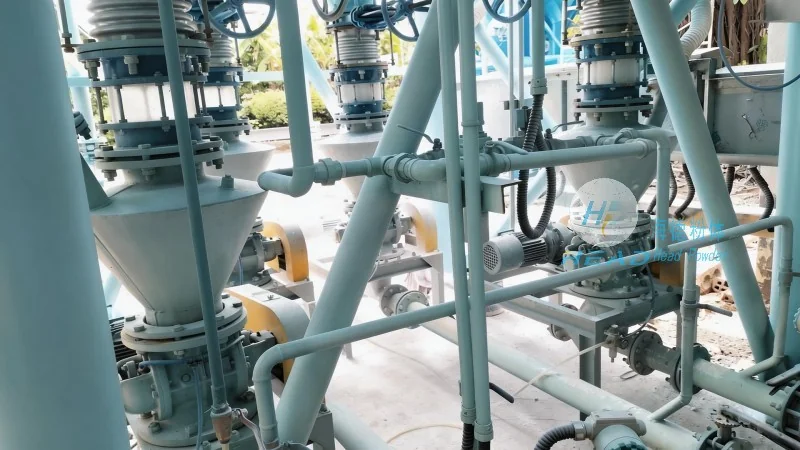
- Material Feed Hopper: A container that holds the glass beads and feeds them into the conveying line. The hopper is equipped with a valve to control the flow rate of the material.
- Pipeline and Conveying Line: The main channel through which the glass beads and air travel. The pipeline is typically made of materials resistant to abrasion and corrosion, such as stainless steel or high-density polyethylene, to prevent wear and damage from the glass beads.
- Pressure or Vacuum Source: This component generates the necessary air flow to move the glass beads. In pressure systems, compressed air is used to push the material forward, while in vacuum systems, a vacuum is created to pull the material. The choice between pressure and vacuum depends on the distance and height of the transport, as well as the material characteristics.
- Discharge Device: The end of the pipeline where the glass beads are released. This can be a valve, a hopper, or a collection bin, depending on the application requirements. The discharge device is designed to ensure smooth and controlled release of the material, preventing spillage or blockages.
Working Principle of Glass Bead Pneumatic Conveying
The working principle of a glass bead pneumatic conveying system involves the interaction between the glass beads and the air flow within the pipeline. When the system is activated, the pressure or vacuum source creates a flow of air. The glass beads are introduced into the pipeline, and the air flow entrains the particles, lifting them off the pipeline walls and propelling them forward. The velocity of the air is critical; it must be sufficient to overcome the gravitational force acting on the glass beads and to maintain the particles in suspension. If the air velocity is too low, the glass beads may settle and cause blockages, while too high a velocity can lead to excessive wear on the pipeline and energy inefficiency.
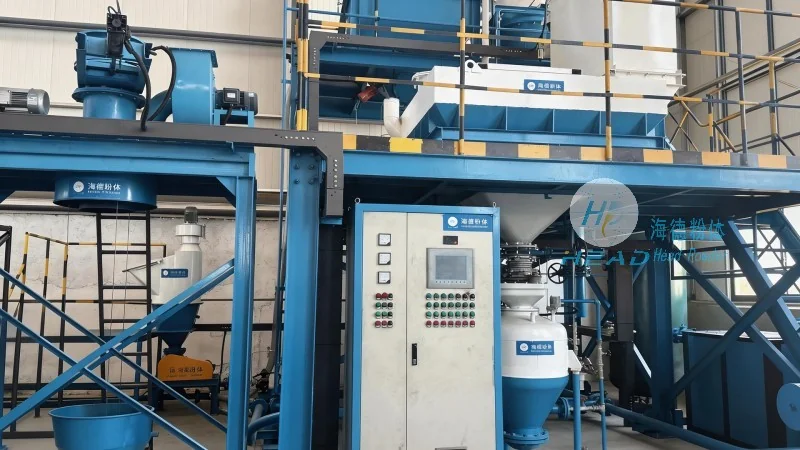
Advantages of Glass Bead Pneumatic Conveying
Implementing a glass bead pneumatic conveying system offers several advantages over traditional material handling methods. These include:
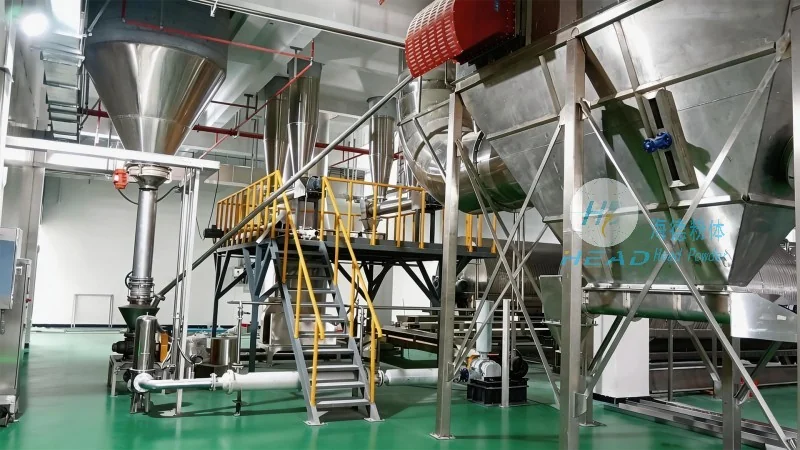
- Efficiency and Speed: Pneumatic conveying systems can transport glass beads quickly and over long distances, reducing processing time and increasing overall productivity.
- Reduced Labor and Maintenance: Automated systems minimize the need for manual handling, reducing labor costs and the risk of human error. Additionally, the design of the system minimizes wear and tear, leading to lower maintenance requirements.
- Contamination Control: The enclosed pipeline system prevents contamination from external sources, ensuring that the glass beads remain clean and free from impurities. This is particularly important in applications where purity is critical, such as in the production of high-quality coatings or composites.
- Flexibility and Scalability: Pneumatic conveying systems can be easily adapted to different production needs. They can be scaled up or down to accommodate varying material volumes and can be integrated with other processing equipment, providing a flexible solution for diverse industrial applications.
Applications of Glass Bead Pneumatic Conveying
Glass bead pneumatic conveying systems are widely used in various industries, including:
- Coating and Polishing: In the automotive and electronics industries, glass beads are used for surface coating and polishing. The pneumatic conveying system ensures that the glass beads are delivered to the processing equipment in a controlled manner, maintaining consistent quality and finish.
- Composite Materials: Glass beads are used as fillers in composite materials, such as plastics and resins. The system efficiently transports the beads to the mixing and molding processes, ensuring uniform distribution and enhancing the mechanical properties of the final product.
- Pharmaceutical and Food Industries: While glass beads are not typically used in these sectors, similar pneumatic conveying principles are applied to transport other materials. The system’s ability to handle fine powders and maintain cleanliness makes it suitable for industries where product purity is paramount.
Conclusion
HeadPowder’s expertise in glass bead pneumatic conveying systems demonstrates the company’s commitment to providing innovative and efficient material handling solutions. By understanding the working principles and advantages of these systems, industries can enhance their operational efficiency, reduce costs, and improve product quality. With its headquarters in Shandong, China, HeadPowder continues to lead in the development and application of advanced pneumatic conveying technologies, serving a wide range of industrial needs.