

What is a Monocrystalline Silicon Powder Conveying System Equipment? Understanding Its Design Princi
Monocrystalline silicon powder conveying systems are critical components in the semiconductor and solar energy industries, where the efficient and reliable transport of high-purity silicon powders is essential for manufacturing processes. These systems are engineered to handle the unique properties of monocrystalline silicon, including its fine particle size, high surface area, and sensitivity to contamination. The equipment is designed to maintain the integrity of the powder while ensuring minimal loss and optimal flow characteristics.
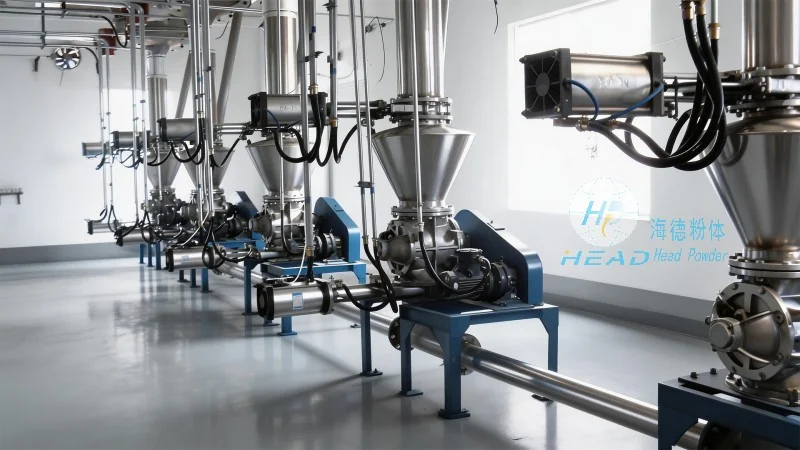
Introduction to Monocrystalline Silicon Powder Conveying Systems
At Shandong HeadPowder Engineering Co., Ltd., we specialize in the design and manufacturing of advanced powder conveying systems tailored for monocrystalline silicon applications. Our systems are built to meet the stringent requirements of modern production lines, where precision and consistency are paramount. The core of our equipment lies in its ability to handle the delicate nature of silicon powders, preventing agglomeration, caking, and contamination that could compromise product quality.
Key Components and Design Principles
The monocrystalline silicon powder conveying system typically consists of several key components, each playing a vital role in the overall operation. These include feeders, conveyors, and control systems, all integrated to work in harmony. The design principles focus on ensuring a smooth, continuous flow of material while maintaining the powder's purity and structural integrity. For instance, our systems employ specialized feed mechanisms that minimize particle breakage and ensure uniform feeding rates, which is crucial for downstream processing steps such as sintering or casting.
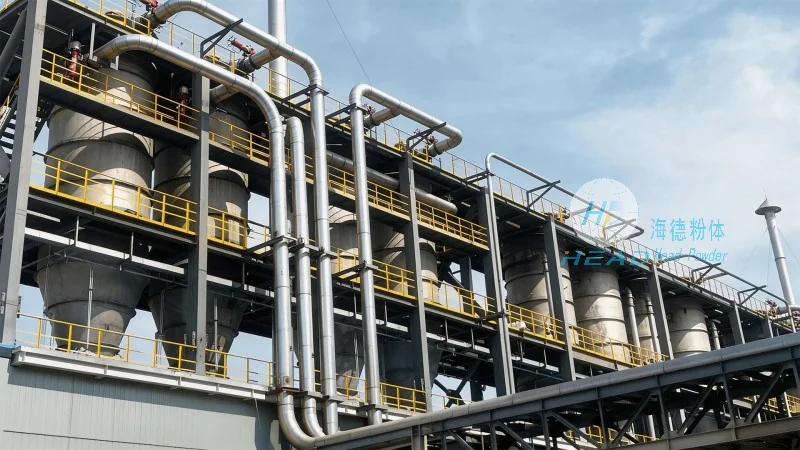
Conveying methods vary depending on the application, with options including pneumatic, mechanical, and hybrid systems. Pneumatic conveying, for example, uses compressed air to transport the powder, offering advantages like low maintenance and the ability to handle fine powders without the need for mechanical contact. Mechanical conveyors, on the other hand, rely on screw or belt mechanisms, providing high throughput and reliability for bulk material transport. The choice of system depends on factors such as the powder's properties, production scale, and environmental considerations.
Engineering Considerations for Material Handling
Handling monocrystalline silicon powder requires careful consideration of several engineering factors to ensure optimal performance. One of the primary challenges is preventing particle attrition and degradation during transport. Our systems incorporate features such as smooth, non-abrasive surfaces and gentle acceleration/deceleration to minimize damage. Additionally, the design incorporates dust control measures, such as sealed enclosures and filtration systems, to maintain a clean working environment and comply with industrial safety standards.
Another critical aspect is the system's ability to handle variations in powder flow characteristics. Monocrystalline silicon powders can exhibit different flow properties based on moisture content, particle size distribution, and agglomeration. Our equipment is equipped with adjustable parameters, such as feeder speed and air pressure, allowing operators to adapt the system to changing conditions. This flexibility ensures consistent performance even when dealing with different batches of material.
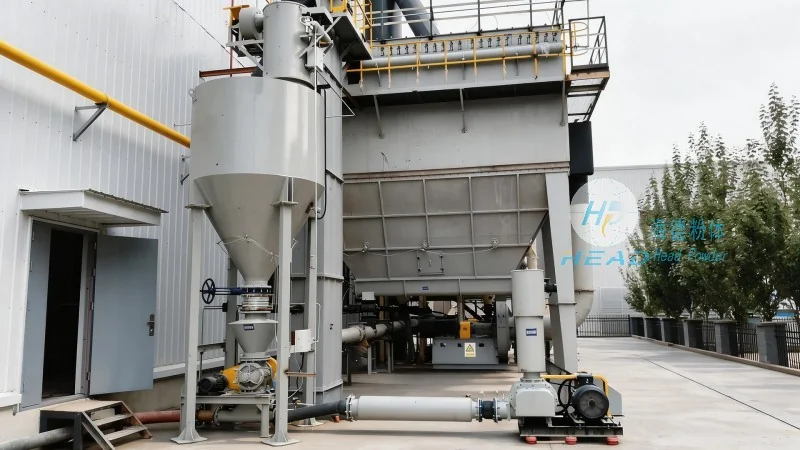
Applications and Industry Impact
Monocrystalline silicon powder conveying systems are widely used in the production of solar cells, semiconductor wafers, and other high-tech components. The efficiency of these systems directly impacts the overall productivity and cost-effectiveness of manufacturing processes. By ensuring that silicon powders are transported reliably and without loss, our equipment contributes to higher yields and reduced waste in production lines.
In the solar industry, for example, the conveying of monocrystalline silicon powders is essential for the production of photovoltaic cells. The purity and uniformity of the powder directly affect the efficiency of the solar panels. Our systems help maintain these critical properties, leading to higher energy conversion rates and improved product performance. Similarly, in semiconductor manufacturing, the precise handling of silicon powders is vital for the production of integrated circuits, where even minor impurities can lead to defects.
Company Overview: Shandong HeadPowder Engineering Co., Ltd.
Shandong HeadPowder Engineering Co., Ltd. is a leading manufacturer of specialized powder handling equipment, with a focus on monocrystalline silicon applications. HeadPowder has established itself as a trusted partner in the semiconductor and solar energy sectors, providing customized solutions that meet the unique needs of each client. Our team of engineers and technicians brings extensive experience in material science and mechanical engineering, enabling us to design systems that are both efficient and durable.
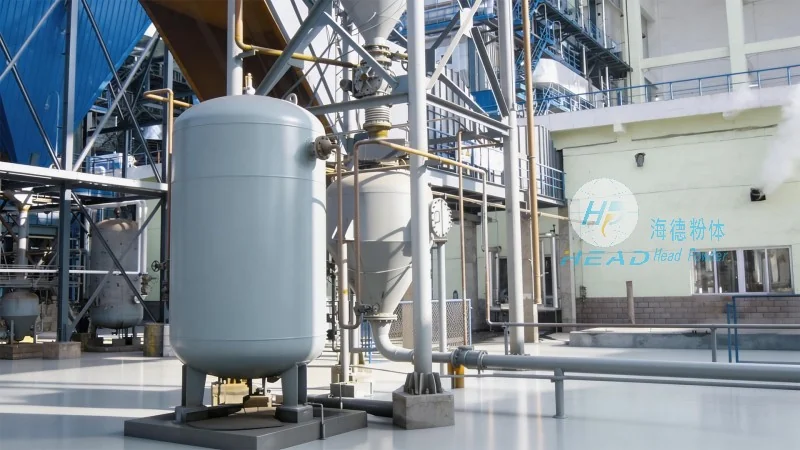
HeadPowder operates from its facilities in Shandong, China, where we maintain state-of-the-art manufacturing capabilities and quality control processes. We adhere to international standards and work closely with clients to ensure that our equipment meets their specific requirements. Our commitment to innovation and customer satisfaction has earned us a reputation for reliability and excellence in the industry.
Conclusion
Monocrystalline silicon powder conveying systems are sophisticated pieces of equipment that play a crucial role in modern manufacturing processes. The design principles and engineering considerations behind these systems are tailored to handle the unique challenges of monocrystalline silicon powders, ensuring efficient and reliable transport. At Shandong HeadPowder Engineering Co., Ltd., we continue to advance our technology to meet the evolving needs of the industry, providing solutions that enhance productivity and product quality.