

Lithium-Ion Battery Nanomaterial Powder Handling System Equipment: Exploring Its Function and Design
In the rapidly evolving field of lithium-ion battery technology, the efficient handling of nanomaterial powders is a critical aspect that directly impacts the performance, safety, and scalability of battery production. As the demand for high-energy-density batteries grows, the need for specialized equipment to manage these fine, often reactive materials becomes increasingly important. This article delves into the Lithium-Ion Battery Nanomaterial Powder Handling System Equipment, explaining what it is and detailing its underlying design principles.

Understanding the Lithium-Ion Battery Nanomaterial Powder Handling System Equipment
The Lithium-Ion Battery Nanomaterial Powder Handling System Equipment is a sophisticated piece of machinery engineered to safely and efficiently transport, process, and manage nanoscale powders used in the manufacturing of lithium-ion batteries. These powders, such as lithium cobalt oxide (LiCoO₂), lithium iron phosphate (LiFePO₄), and various conductive additives, are characterized by their extremely fine particle size, which can range from a few nanometers to several micrometers. Handling these materials requires specialized equipment to prevent agglomeration, contamination, and loss of material, all of which could compromise the quality and performance of the final battery product.
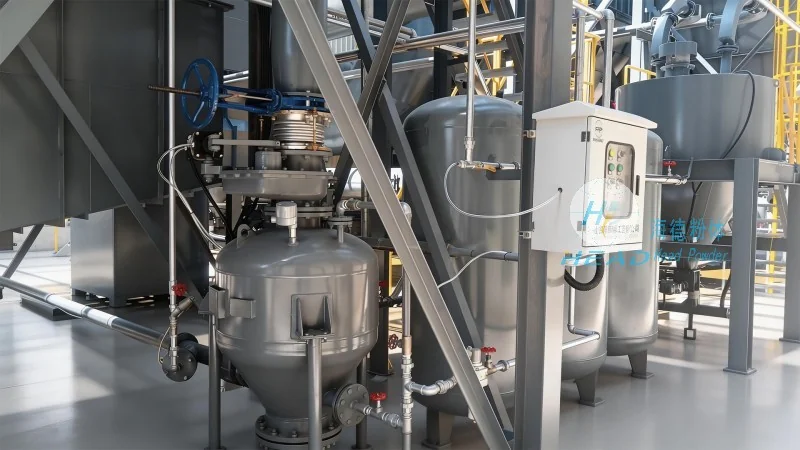
The system typically consists of several integrated components, including feeding mechanisms, conveying systems, mixing or blending units, and metering devices. Each component is designed to work in harmony to ensure the precise and controlled movement of the nanomaterials through the production line. For instance, the feeding section may use vibratory feeders or screw feeders to regulate the flow rate of the powder, while the conveying section employs air or mechanical methods to transport the material to the next stage of processing. The mixing or blending units are crucial for achieving uniform distribution of additives, and the metering devices ensure accurate dosing for consistent battery performance.
Key Design Principles of the Powder Handling System
The design of a Lithium-Ion Battery Nanomaterial Powder Handling System is guided by several fundamental principles that address the unique challenges of handling nanomaterials. First, the system must prioritize material containment and prevention of dust generation. Nanomaterials are often fine enough to become airborne, posing health risks and leading to material loss. Therefore, the equipment is typically enclosed with dust-tight seals and equipped with filtration systems to capture any airborne particles. This design ensures compliance with occupational health and safety regulations while maintaining material integrity.
Second, the system must consider the material's physical properties, such as particle size distribution, density, and flowability. Different nanomaterials have varying flow characteristics; some are free-flowing, while others are cohesive or have poor flowability. The design of the feeding and conveying mechanisms is tailored to match these properties. For example, cohesive powders may require the use of vibratory or air-assisted feeding to prevent blockages, while free-flowing powders can be handled more easily with screw or belt conveyors. The system's design also accounts for the potential for electrostatic charging, as many nanomaterials are prone to generating static electricity. Anti-static measures, such as grounding and ionizers, are integrated into the equipment to prevent static buildup and ensure safe operation.
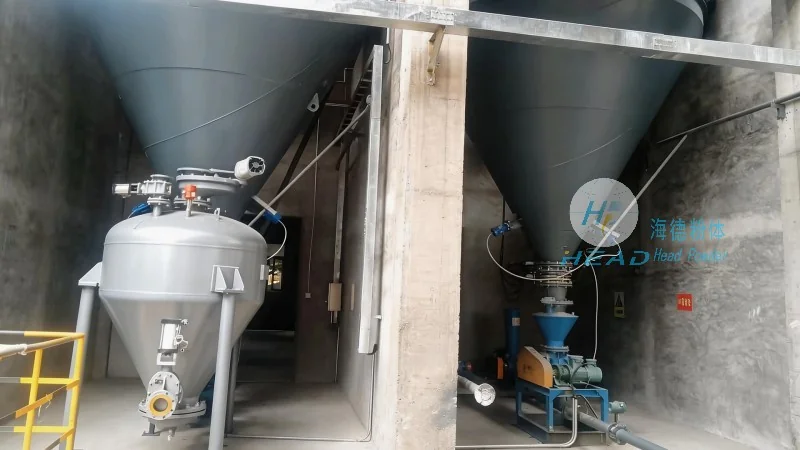
Third, the system emphasizes precision and control. In battery manufacturing, the exact amount and uniformity of each additive are critical to achieving the desired battery performance. The design incorporates advanced control systems, including sensors and feedback loops, to monitor and adjust the flow rate, mixing ratio, and other parameters in real time. This precision is essential for maintaining consistent battery quality and reducing waste. Additionally, the system is designed for scalability, allowing manufacturers to adjust the capacity and throughput based on production needs without compromising performance or safety.
Company Background: Shandong HeadPowder Engineering Co., Ltd.
At the forefront of providing advanced solutions for powder handling in the battery industry is Shandong HeadPowder Engineering Co., Ltd. Based in Shandong, China, HeadPowder has established itself as a leading manufacturer of specialized equipment for handling nanomaterials in lithium-ion battery production. The company combines years of industry experience with cutting-edge technology to develop systems that meet the stringent requirements of modern battery manufacturing. HeadPowder's expertise lies in understanding the unique challenges of nanomaterials and designing equipment that addresses these challenges effectively. The company's products are known for their reliability, efficiency, and compliance with international standards, making them a trusted choice for battery manufacturers worldwide.
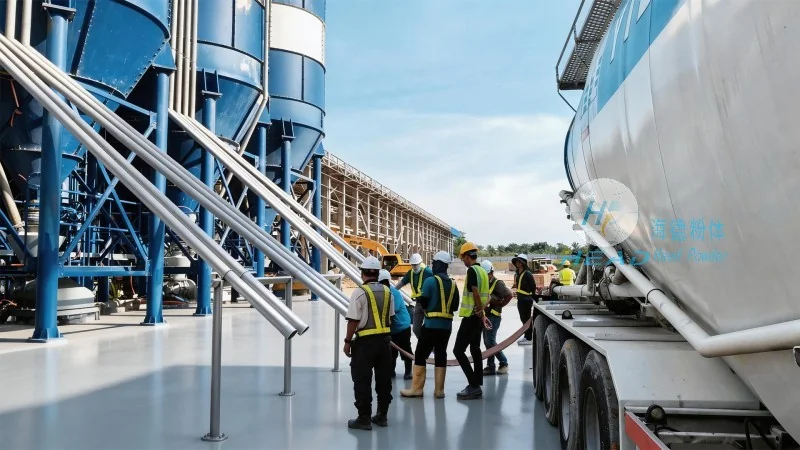
HeadPowder's commitment to innovation is evident in its continuous research and development efforts. The company invests in R&D to stay ahead of industry trends and to develop new solutions that enhance the performance and safety of powder handling systems. By collaborating with clients and leveraging the latest advancements in engineering, HeadPowder ensures that its equipment remains at the cutting edge of technology. The company's focus on customer satisfaction and technical support further solidifies its position as a leading provider in the field.
Conclusion: The Importance of a Well-Designed Powder Handling System
The Lithium-Ion Battery Nanomaterial Powder Handling System Equipment plays a pivotal role in the battery manufacturing process, ensuring the efficient and safe handling of critical nanomaterials. The design principles, including material containment, consideration of physical properties, and precision control, are essential for maintaining the quality and performance of lithium-ion batteries. Companies like Shandong HeadPowder Engineering Co., Ltd. are instrumental in providing the specialized equipment needed to meet these demands, supporting the growth of the battery industry and the transition to sustainable energy solutions. As the demand for high-performance batteries continues to rise, the importance of reliable and advanced powder handling systems will only increase, making them a key component in the future of energy storage technology.