

Advantages and Disadvantages of Negative Pressure and Positive Pressure Pneumatic Conveying for Mela
Melamine powder, a critical industrial material used in coatings, plastics, and adhesives, demands efficient and safe handling during transportation. Pneumatic conveying is a widely adopted technique for moving bulk powders like melamine, offering advantages over traditional mechanical systems. This article provides a detailed comparison of negative pressure (suction) and positive pressure (blow) pneumatic conveying systems, focusing on their respective advantages and disadvantages in the context of melamine powder handling.
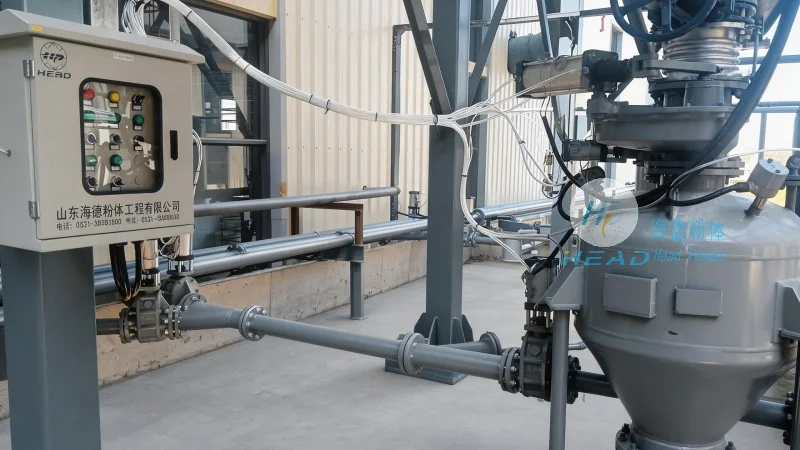
HeadPowder: Your Expert in Pneumatic Conveying Solutions
Shandong HeadPowder Engineering Co., Ltd., a leading provider of specialized engineering solutions, has extensive experience in designing and implementing pneumatic conveying systems tailored to the unique needs of industrial applications. With a focus on precision, efficiency, and safety, HeadPowder offers customized solutions that enhance the performance of melamine powder handling processes. The company’s expertise lies in understanding the specific challenges associated with melamine powder, such as its fine particle size, hygroscopic nature, and potential for dust generation, and addressing these through advanced conveying technologies.
Negative Pressure (Suction) Pneumatic Conveying
Negative pressure conveying, also known as suction conveying, operates by creating a vacuum at the material inlet to draw the powder into the system. This method is particularly effective for handling powders prone to dust generation or requiring a closed system to prevent contamination. The primary advantage of negative pressure systems is their ability to handle powders with high dust content or in environments where dust control is critical. By drawing material from a source, the system maintains a negative pressure zone, reducing the risk of dust escaping into the environment. This makes negative pressure conveying suitable for applications where hygiene and environmental compliance are paramount.
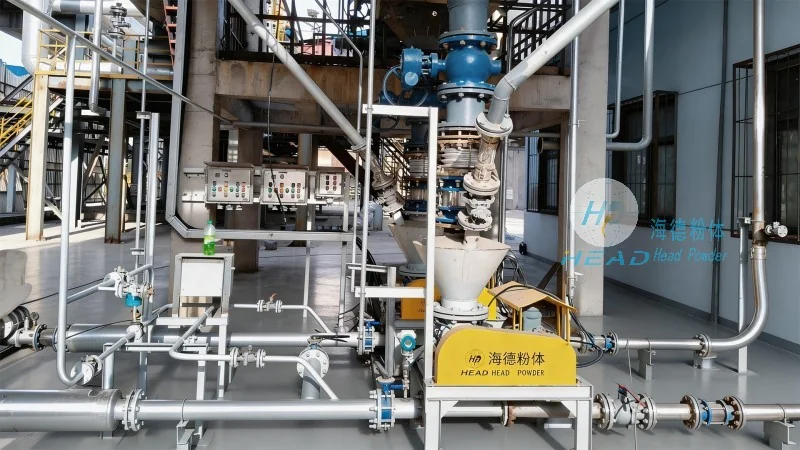
However, negative pressure systems have several limitations. One main drawback is their lower conveying capacity compared to positive pressure systems. The vacuum created at the inlet restricts the volume of material that can be transported efficiently, making them less suitable for long-distance or high-volume applications. Additionally, the system requires careful maintenance to prevent blockages, as the suction mechanism can easily get clogged by fine particles. Another challenge is the need for a dedicated vacuum source, which may increase operational costs and complexity. Furthermore, the design of the suction inlet must be optimized to ensure consistent material flow, as variations in particle size or moisture content can affect performance.
Positive Pressure (Blow) Pneumatic Conveying
Positive pressure conveying, or blow conveying, works by forcing air or gas through a pressurized system to push the powder from the source to the destination. This method is generally more suitable for high-volume and long-distance conveying of melamine powder due to its higher capacity and ability to handle larger particle sizes. The primary advantage of positive pressure systems is their superior conveying capacity, which allows for efficient transport of larger quantities of material over extended distances. This makes them ideal for industrial settings where large-scale production and material movement are required.
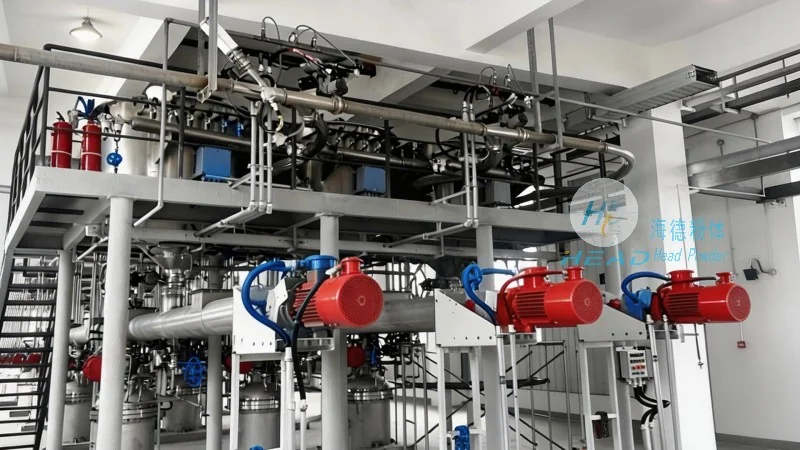
Despite their efficiency, positive pressure systems have notable disadvantages. The most significant drawback is the risk of dust and contamination, as the pressurized air can disperse fine particles into the environment if proper containment measures are not in place. This poses health and safety risks and may violate environmental regulations. Additionally, the system requires robust sealing and filtration to prevent dust leakage, which increases the complexity and cost of installation and maintenance. Another challenge is the potential for material degradation, as high-pressure air can cause friction and heat generation, potentially affecting the quality of melamine powder. Furthermore, positive pressure systems may be less effective for handling hygroscopic powders like melamine, as the high air flow can accelerate moisture absorption and lead to clumping or caking.
Comparative Analysis: Negative vs. Positive Pressure Conveying for Melamine Powder
When selecting between negative and positive pressure pneumatic conveying systems for melamine powder, several factors must be considered. The choice depends on the specific application requirements, including material characteristics, conveying distance, volume, and environmental regulations. For applications where dust control and hygiene are critical, negative pressure systems are often preferred due to their ability to maintain a closed system and minimize dust exposure. However, for high-volume and long-distance transport, positive pressure systems offer better efficiency and capacity.
Cost is another important consideration. Negative pressure systems typically have lower initial costs due to simpler design and less complex equipment, but their lower capacity may require more frequent maintenance and higher operational costs for large-scale operations. Positive pressure systems, while more expensive initially, may be more cost-effective in the long run for high-volume applications due to their higher efficiency and lower maintenance requirements for large volumes.
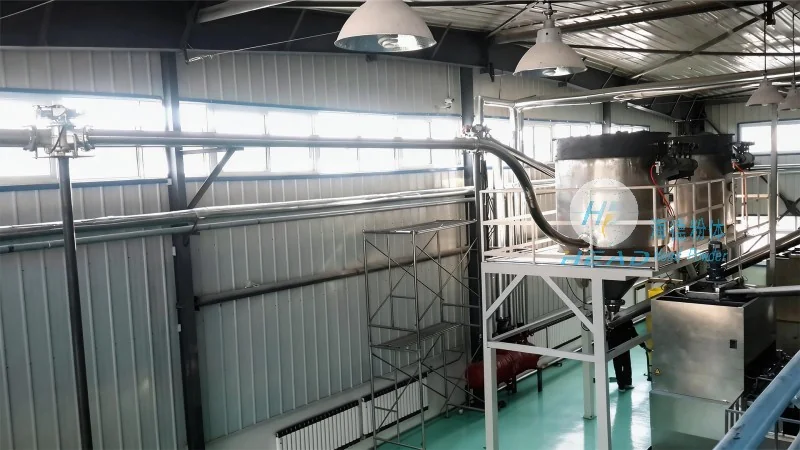
Environmental factors also play a role. Negative pressure systems are generally more environmentally friendly as they minimize dust emissions, making them suitable for applications in sensitive areas. Positive pressure systems, on the other hand, require additional filtration and containment measures to comply with environmental regulations, which can increase costs and complexity.
Conclusion and Recommendations
Both negative and positive pressure pneumatic conveying systems have their strengths and weaknesses when handling melamine powder. The optimal choice depends on the specific needs of the application, including the volume of material, conveying distance, and environmental considerations. For applications requiring high dust control and hygiene, negative pressure systems are recommended. For high-volume and long-distance transport, positive pressure systems are more suitable. Shandong HeadPowder Engineering Co., Ltd. offers customized solutions that can be tailored to these specific requirements, ensuring efficient and safe handling of melamine powder. By understanding the advantages and disadvantages of each system, industrial operators can make informed decisions to enhance their material handling processes and improve overall operational efficiency.