

Principles and Application Characteristics of Pneumatic Conveying Lines for Adipic Acid Materials
Shandong HeadPowder Engineering Co., Ltd., commonly known as headpowder, is a professional engineering company based in Shandong, China. The company specializes in the design, manufacturing, and installation of pneumatic conveying systems, particularly for handling materials like adipic acid. With years of experience in the field, headpowder has established itself as a reliable partner for industries requiring efficient material transport solutions.
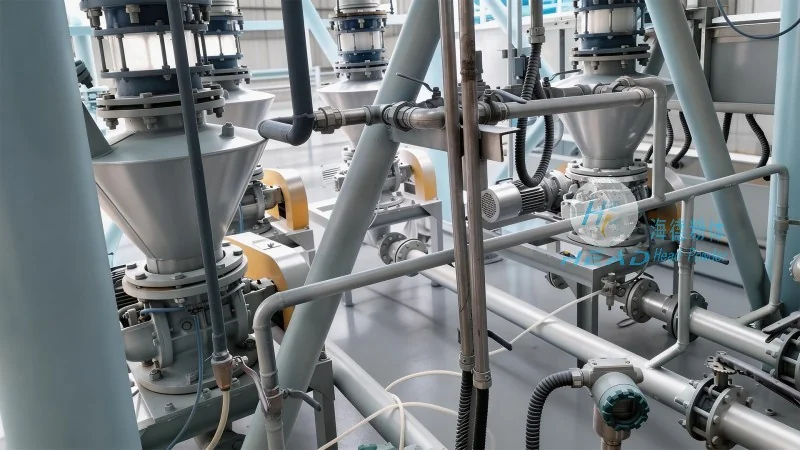
Principles of Pneumatic Conveying Lines for Adipic Acid Materials
Pneumatic conveying lines operate by using compressed air or other gases to transport bulk materials through a pipeline system. In the case of adipic acid, which is a solid chemical compound commonly used in the production of nylon and other polymers, the system typically employs a positive pressure or negative pressure method. The positive pressure system involves blowing air into the pipeline to push the material forward, while the negative pressure system uses suction to draw the material from the source. The choice of method depends on factors such as the material's properties, the distance to be conveyed, and the required flow rate. The conveying line consists of several key components, including a hopper for material storage, a feeder to control the flow rate, a pipeline network, and a receiver for the discharged material. The compressed air is introduced at specific points along the pipeline to maintain the material in a suspended state, ensuring smooth and continuous transport. This method offers advantages like low maintenance, minimal product contamination, and the ability to handle materials that are difficult to convey using traditional methods like belt conveyors or screw conveyors.
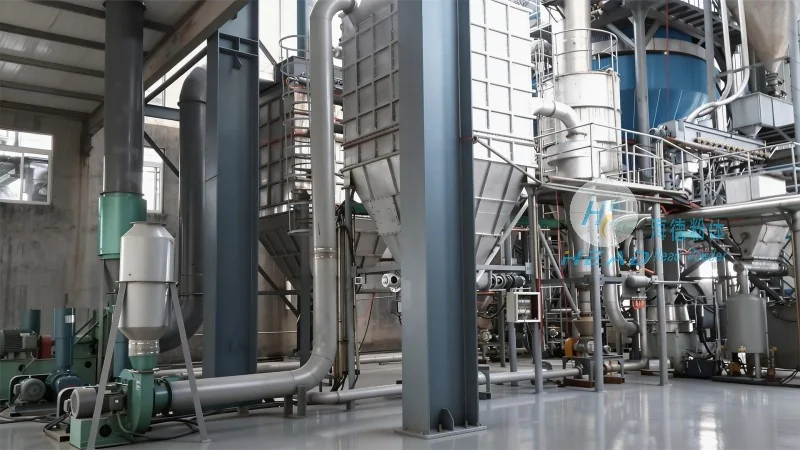
Application Characteristics and Working Scene Features
The pneumatic conveying lines for adipic acid materials are designed to meet the specific demands of industrial applications. One of the key features is their ability to handle abrasive and corrosive materials, which is crucial for adipic acid due to its chemical properties. The system is constructed with materials that are resistant to the effects of the acid, such as stainless steel or special coatings, to ensure durability and longevity. Another important characteristic is the system's flexibility in terms of layout and integration with existing production lines. The modular design allows for easy installation and customization to fit different plant configurations. The working scene typically involves the material being stored in a hopper, then fed into the conveying line at a controlled rate. The material is then transported to the processing or storage area, where it is collected in a receiver. The system operates continuously, with minimal downtime, and can be integrated with other equipment like mixers, reactors, or packaging machines. The control system is designed to monitor and adjust the flow rate and pressure in real-time, ensuring optimal performance and preventing issues such as blockages or material degradation. The safety features, including pressure relief valves and emergency shut-off mechanisms, are also integrated into the design to protect both the equipment and personnel.
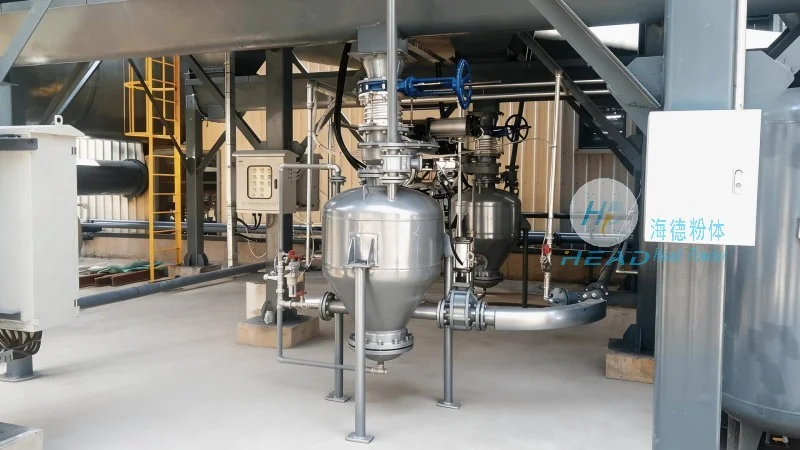
Product Application and Performance
For industries dealing with adipic acid, the pneumatic conveying line is an essential component of the production process. The system's ability to transport the material efficiently and safely is critical for maintaining production efficiency and product quality. The positive pressure conveying method is often preferred for long-distance transport, as it provides consistent pressure and flow. The negative pressure method is more suitable for short-distance or low-volume applications, where the material is less abrasive and the cost of compressed air is a consideration. The system's performance is measured by factors such as the conveying capacity, which is typically expressed in tons per hour, and the pressure drop across the pipeline, which indicates the energy efficiency of the system. The conveying capacity depends on the material's density, the pipeline diameter, and the air velocity. The pressure drop is influenced by the length of the pipeline, the number of bends, and the type of material being conveyed. The system is designed to minimize the pressure drop by using smooth pipelines and appropriate air velocities, which reduces energy consumption and operating costs. The reliability of the system is also a key factor, as downtime can result in significant losses for the production process. The use of high-quality components and regular maintenance ensures that the system operates with minimal failures and requires only routine checks and adjustments.